
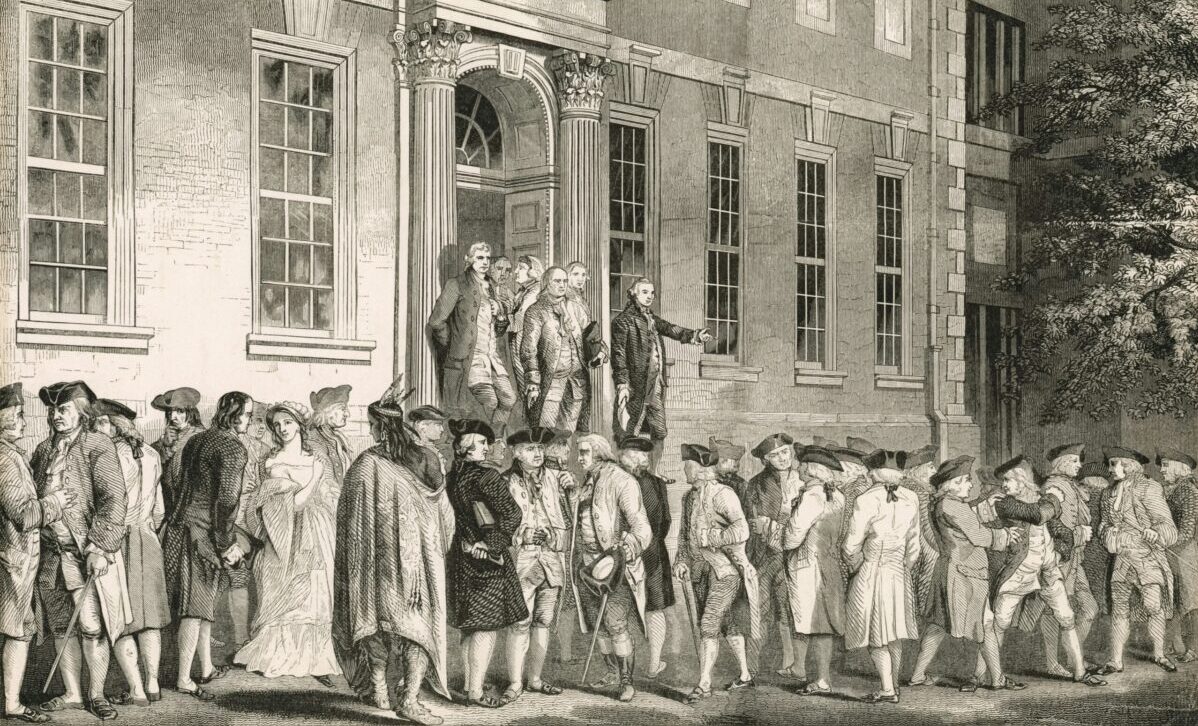
As America celebrates her 250th birthday, citizens across our nation will gather beneath fireworks, wave flags and remember the extraordinary events that gave birth to the United States.
Two and a half centuries after the signing of our Declaration of Independence, we still enjoy freedoms that millions of people around the world only dream about. This national milestone deserves more than a casual acknowledgement. Gratitude, reflection and an honest appraisal of the principles that made America exceptional are in order.
Stay updated on stories like this — Get news delivered to your inbox
Celebrating America’s Christian heritage does not require blind assertions that all the founders and our earliest citizens were orthodox Christians. History does not support such claims, though the modern insistence that the majority were deists is demonstrably false. Fifty-two of the fifty-five signers of the Declaration of Independence were Protestants, along with roughly 75% of the population.
Despite their rejection of a state church, the founders possessed a deep conviction that Christianity was the necessary garden from which freedom would flourish. The men who established our nation overwhelmingly believed that a Christian foundation would protect broad religious liberty for minority groups.
The Declaration of Independence itself reflects sincere spiritual conviction. America’s founders grounded human rights not in government, public opinion, or political power, but in God. Because Scripture so clearly teaches that every human being bears the image of his Maker (Gen. 1:26-27), they insisted that all people are “endowed by their Creator with certain unalienable rights.” Those words changed the world.
For the first time in history, a nation unashamedly asserted that government does not grant rights; it merely recognizes the rights God has already given. The founders submitted to governmental structures that exist under God’s authority to restrain evil and promote good (Rom. 13:1–4; 1 Pet. 2:13–17). Their goal was not to create truth, define morality, or to determine ultimate worth. At its best, government recognizes what God has already revealed.
Check out more articles on faith and culture from pastor Adam Dooley.
Our forefathers feared what would happen if Americans abandoned the moral principles that Christianity supplied. George Washington famously observed in his farewell address that religion and morality serve as “indispensable supports” for political prosperity. John Adams wrote that the Constitution was made only for a “moral and religious people” and proved wholly inadequate for any other. Their concern aligns with Scripture’s repeated warning that righteousness strengthens a nation while sin destroys it (Prov. 14:34). To them, freedom could not endure among a people who lacked virtue, self-restraint and moral conviction.
These concerns were not unfounded.
Free societies demand something unique from their citizens. Tyrannies control behavior through force. Dictatorships rely on fear. Constitutional republics require citizens to govern themselves. When people refuse to exercise self-control, government eventually steps in to impose external control. As virtue declines, freedom dissipates with it. Lasting liberty requires moral restraint.
The founders recognized that Christianity supplied the moral framework necessary for self-government. Scripture commands honesty (Eph. 4:25), personal responsibility (2 Thess. 3:10–12), humility (Phil. 2:3–4), justice (Mic. 6:8), compassion for the poor (Prov. 19:17), and love for neighbor (Mark 12:31). These virtues do more than shape private character; they strengthen public life.
What was — and wasn’t — on Jefferson’s mind
Today, many voices insist that faith and public life should remain entirely separate. Thankfully, our history tells a different story. America did not emerge from an ethical vacuum. Biblical ideas influenced our national understanding of right and wrong. Churches helped shape communities, Christian convictions informed public virtue, and religious faith strengthened the cultural foundations upon which constitutional republic rested.
Even Thomas Jefferson, who admittedly wanted more separation between church and state than his contemporaries, envisioned nothing remotely like the aspirations of the ACLU or the Americans United for Separation of Church and State.
While governor of Virginia, Jefferson issued a prayer proclamation for the purpose of solemn thanksgiving and petitions to “Almighty God.”
Additionally, he drafted bills outlining the governor’s prerogative to call for days of fasting and humiliation, as well his ability to punish Sabbath breakers and religious malcontents. Jefferson’s proposal for a national seal was depiction of the Red Sea crossing from the book of Exodus under the motto “Rebellion for tyrants is obedience to God.” Freedom from religion was the farthest thing from our third president’s mind.
‘Secret ingredient’
Of course, Christians should not view America as the Kingdom of God or confuse patriotism with discipleship. God’s family transcends every nation, including our own. Our highest allegiance belongs to Jesus Christ (Phil. 3:20). No nation can replace the church, and no flag should receive the devotion that belongs to the cross. Yet believers can still thank God for the remarkable blessings He has given this country while recognizing the profound influence Christianity exerted on its development.
As we mark 250 years of American independence, we should celebrate both the freedoms we enjoy and the foundations that sustain them. Liberty remains a precious gift, but it requires moral responsibility. Freedom flourishes when citizens, even nonbelievers, embrace virtue, honor truth, strengthen families, and love their neighbors. A Christian worldview remains the secret ingredient for protecting the pluralistic realities of the American melting pot.
America’s founders understood these realities.
EDITOR’S NOTE — This article was edited for style and brevity, and written by Adam B. Dooley, pastor of Englewood Baptist Church in Jackson, Tennessee, and author of “Hope When Life Unravels and Exalting Jesus in 1-2 Chronicles.”


Share with others: