
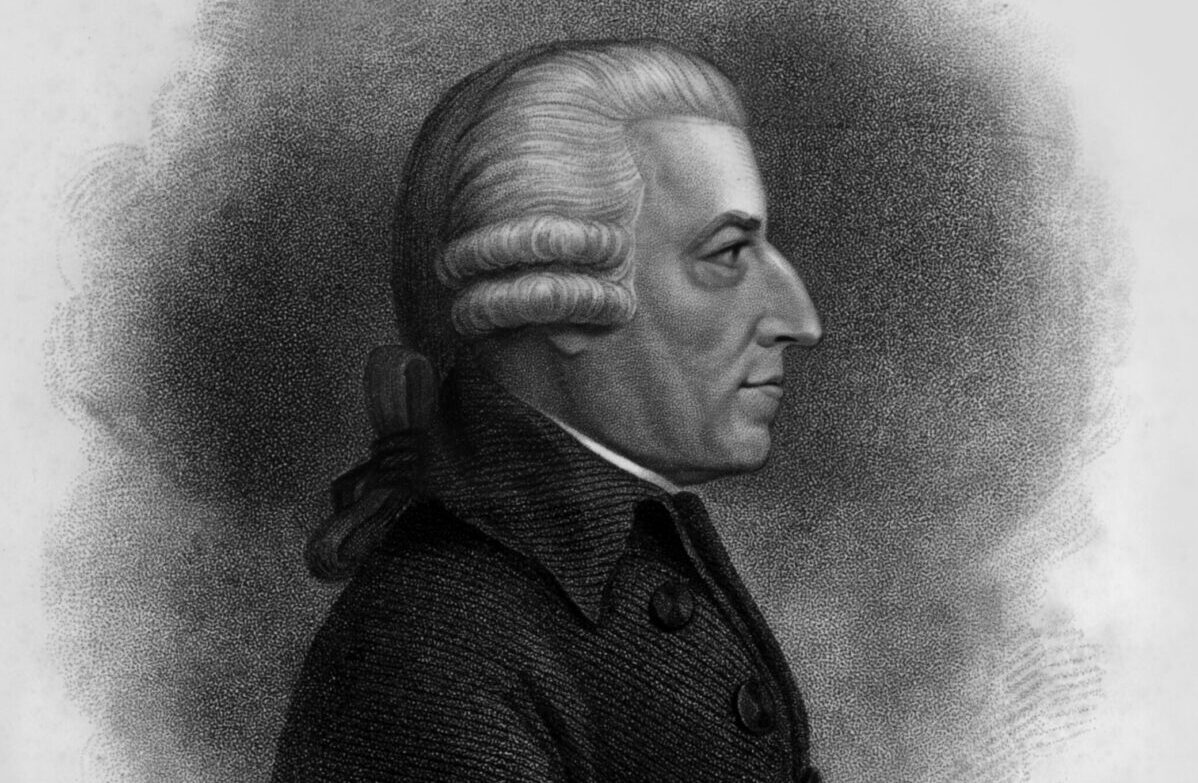
In 1841, James H. DeVotie, pastor of Siloam Baptist Church in Marion, took a vague idea for a men’s college and made it a reality.
In just a few months, DeVotie secured the consent of the Alabama Baptist State Convention, found a suitable building, raised money from wealthy slaveholders, helped establish the first board of trustees, hired the college’s first leader, and gave the institution its name: Howard College. DeVotie named the college for John Howard, a British philanthropist and prison reformer who had died more than 50 years earlier.
Selecting John Howard’s name was an intentional choice. It was less about what Howard had done than about the kind of individual he was. Howard exemplified enlightened Christian benevolence. He was a man whose Christian faith shaped his intellect, whose intellect informed his moral vision, and whose moral convictions compelled him to serve others.
For DeVotie and the board of trustees, Howard provided a role model for the type of young men they hoped the college would produce.
Seeking answers
They wanted to educate the type of Christian who sought answers to life’s deepest questions:
Who am I?
Who is God?
What is my relationship with God and to my neighbors?
In other words, they wanted to develop useful and enlightened Christian citizens like John Howard.
They envisioned students who would embrace and advance the gospel through faith, pursue a deeper understanding of God’s creation through intellect, serve their neighbors and their country through benevolence, and develop the habits of virtue necessary for good citizenship.
Cornerstones of education
These four ideas (faith, intellect, benevolence, and virtue) were the cornerstones of education at Howard College, and John Howard was their example.
This September, on the 300th anniversary of his birth, we have an opportunity to remember John Howard again and to recover a more accurate portrait of his life and work.
That recovery matters because the language used to commemorate Howard today can subtly separate his accomplishments from his Christianity which gave his life meaning and purpose. Through some of today’s lenses, Howard, the Christian philanthropist becomes a social reformer; his Christian vocation becomes social activism; his moral responsibility before God becomes a commitment to social justice.
In this narrative of Howard life, the story remains recognizable, but the worldview that made the story coherent is missing.
This is what philosopher Gilbert Ryle described as a “category mistake.” The logical error of placing a person in a category where he does not belong. It happens when we redefine someone according to our own assumptions, treating him as though he belonged to a fundamentally different category than the one that defined his life.
This is how institutions lose historical memory. Any commemoration of Howard’s life that attempts to recover his legacy while ignoring the very thing that made his legacy distinctive is incomplete.
Christian worldview
Howard’s understanding of human beings, morality, suffering, and social responsibility was formed within a Christian worldview. His Christianity was not an accessory to his social concerns. It was the intellectual and theological framework within which those concerns made sense. Howard did not use the language of “social justice” (a term coined decades after his death). He operated with a different moral vocabulary — one rooted in Scripture, Christian discipleship, the convictions of English dissent, and the responsibilities of Christian citizens.
Placing his life’s work entirely into contemporary categories fails to make him more relevant, it makes him less historically remarkable.
During Howard’s lifetime and the years following his death, several of his peers misunderstood his motivation. One of Howard’s most significant contemporaries, Jeremy Bentham, admired Howard, but the atheist philosopher and originator of utilitarianism, approached human behavior through reason, utility, and measurable consequences rather than through Christian theology.
Yet Bentham recognized that Howard embraced empiricism. He praised Howard as someone who was “accurate to an extreme,” who rejected secondhand accounts and drew his conclusions from “what has come under the cognizance of his senses.” Bentham saw clearly what later social scientists would also recognize. Howard counted. He measured. He inspected. He recorded. He gathered evidence and refused to rely simply on hearsay.
As a Fellow of the Royal Society, Howard’s commitment to observation and firsthand evidence provided a method but not a motive. Data gathering failed to explain why Howard entered filthy prisons, visited diseased hospitals, endured personal hardship, or believed himself morally responsible for the suffering he encountered. Bentham admired Howard’s method without sharing Howard’s faith. Method is not motive.
This same pattern of “category mistake” appears in some contemporary research.
Proto-social scientist or philanthropist?
A writer of a recent essay in a criminology journal, described Howard as a “steadfast diligence of a government bureaucrat” and argued that he was “more accurately described as a theatrical proto-social scientist” than as a philanthropist. The essay emphasized Howard’s empirical methods and his contributions to the development of penal reform. Yet it never seriously addresses his Christian faith and humility.
Howard’s own words reveal a different perspective.
When he learned in October 1786 that a public subscription was being raised for a statue in his honor, he wrote from quarantine in Venice that the proposal “mortifies, humbles, and distresses” him. He described himself as “merely a miserable alloy, of Folly and Sin.” He later referred to the monument as “a punishment.” Howard defined himself as a sinful and fallible human who was required by God to serve the less fortunate. His objection to the location of his monument was not mere humility; it reflected his Christian identity.
A replica of the statue resides in Brooks Hall on Samford’s campus and stands as an unusual testament to Howard’s legacy. Although it is an imposing sculpture in a relatively small space, the statue itself is not the concern. Rather, the problem is that some people at the place that still bears his name have forgotten why it resides there in the first place.
Larger question
The monument raises a larger question about how John Howard’s legacy is remembered.
Is Howard’s legacy best understood through modern secular ideas about social justice or Christian convictions about calling, virtue, and humility? At the same time, his important role in the founding of a Christian college receives less consideration, leaving the “category mistake” in place and losing an opportunity to recover a fuller picture of the man and the Christian convictions and benevolence that shaped his legacy.
A social-justice interpretation can explain much about Howard’s concern for prisoners, poverty, disease, and institutional reform. It can justify his empirical methods and his insistence upon firsthand evidence. It can make Howard appear relevant to contemporary discussions about justice. But it struggles to explain why his reform program was faith based.
Howard’s Christianity was never a private matter.
His reform program included chaplains, religious instruction, Bibles, Sabbath observance, and solitude intended to encourage reflection and repentance. Even the word penitentiary carries the language of penitence.
Howard gave £400 toward the Bunyan Meeting House in Bedford. Religious reform was not a residue left over from an otherwise secular program. It was part of his understanding of what genuine reform required. He spoke the language of sin, repentance, and humility. He never referred to himself as a reformer but a sinner accountable to God. For Howard, it was more about who he was in Christ and less about the deeds he accomplished. It was not about the pursuit of justice as social power, but rather the pursuit of justice as a virtue; a virtue that had deep roots in the Western and Christian intellectual traditions.
Understanding complete portrait
It is important to understand the whole person of John Howard.
The complete portrait of Howard helps Alabama Baptists and supporters of Samford University understand why DeVotie named a start-up college after him in 1842.
When we reconstruct the intellectual and theological worlds in which DeVotie and the trustees made their decision, Howard emerges not as a secular mascot for contemporary social activism but as a Christian model of faith united to intellect, benevolence, and virtue. That was the John Howard that the founders of Howard College knew. They were not looking for a secular symbol of social reform. They were looking for a Christian example. They saw in Howard a person whose Christianity produced intellectual seriousness, whose faith and intellect produced moral clarity, and whose faith and moral convictions produced action. They believed that an education at Howard College would cultivate these same combinations in their students. His name carried the theological weight behind a Christian education.
Christian identity matters
Recovering Howard’s Christian identity matters.
Acknowledging Howard’s Christian motivations does not make him less relevant to contemporary concerns about prisons, poverty, inequality, or human dignity. Quite the opposite. It allows students to encounter societal concerns through the faith of an actual historical person rather than through secular categories we have imposed upon him.
Howard might illuminate some of our contemporary concerns. He might also challenge some of our assumptions. He might force us to ask whether concern for human dignity can be separated from beliefs about human nature. He might make us reconsider whether moral responsibility can be sustained without some accountability beyond ourselves. He might remind us that intellectual rigor and Christian faith are not enemies, and that careful observation of the world can be an expression of Christian vocation.
Most importantly, he might remind a Christian university that its heritage is not merely a collection of worthy causes. It is a way of understanding the world.
EDITOR’S NOTE — This article was adapted by S. Jonathan Bass, professor of history at Samford University, from his book on Samford‘s history to coincide with the 300th anniversary of John Howard’s birth. The book “From Every Stormy Wind That Blows: The Idea of Howard College and the Origins of Samford University” can be found on Amazon.




Share with others: