

Across Spain, people looking for connection and meaningful conversation turn to the internet to find groups where they can meet others.
At a café by the river, Caleb and Carina Beaty engage in conversations about finding purpose, beauty and “what’s wrong with the world.”
A website called Meetup allows people to search for groups to meet in person. The description of the Beatys’ group indicates that it discusses spiritual topics. People come expecting to talk about faith, so it’s not a surprise when they arrive.
Caleb said he always has a list of questions that begin broadly and funnel into questions such as, “If there were a God …” or “What do you think Christians believe about that?” or “Why do you think religions have such different perspectives?”
The Beatys’ goal in these conversations is to work toward deeper worldview questions within 45 minutes to an hour.
Most of the people who attend their Meetup group are from Madrid, but they also have conversations with people from other countries.
Perfect creation
During one Meetup, Caleb and Carina shared how creation was perfect, but sin led to a world separated from the Father. God offers salvation through the death and resurrection of Jesus, they explained.
“There are times we’re able to get to a clear gospel presentation with a group of people, and sometimes we’re doing pre-evangelism.” Caleb said.
Some repeat attendees who have been attending for more than a year quickly jump to the heart of the discussion.
“All right, Caleb, what’s the Bible say about suffering?” they’ll ask.
Caleb and Carina then have the opportunity to share the Christian perspective.
Spain has secularized rapidly since the 1990s, Caleb said. While many may think of it as a Catholic nation, many people do not know the basic tenets of Christianity.
“We’ve got all the churches, we’ve got the cathedrals and they do processions, but the average person on the street does not know anything about the gospel and does not know anything about Jesus,” Caleb said.
Younger Spaniards are drawn to their group and are receptive to the gospel because they don’t have a spiritual foundation or know anyone who does.
“There’s just this curiosity because, for a lot of them, they’ve never met someone who actually believes that God exists, and that changes your life,” Carina said. “I’ve had people completely shocked that we believe in God. ‘You really believe that God exists?’ They can’t wrap their mind around that.”
Focus on resurrection
During one Meetup, a man contrasted Protestant and Catholic beliefs by saying Protestants focus on Jesus’ suffering and Catholics on Mary’s grief. Caleb responded that evangelicals focus on the resurrection. When Caleb said Jesus rose from the dead, the man replied that he needed to look into that. Caleb said encounters like that reveal how little many Spaniards know about the gospel.
Caleb noted the irony of the man’s sharing the Catholic perspective without truly understanding it. He is not the only person the Beatys have met who has missed the heart of the gospel.
A friend of the Beatys told them she’d heard Jesus died, but she hadn’t heard he rose from the dead.
Across Spain, people looking for connection and meaningful conversation turn to the internet to find groups where they can meet others.
At a café by the river, Caleb and Carina Beaty engage in conversations about finding purpose, beauty and “what’s wrong with the world.”
A website called Meetup allows people to search for groups to meet in person. The description of the Beatys’ group indicates that it discusses spiritual topics. People come expecting to talk about faith, so it’s not a surprise when they arrive.
Caleb said he always has a list of questions that begin broadly and funnel into questions such as, “If there were a God …” or “What do you think Christians believe about that?” or “Why do you think religions have such different perspectives?”
The Beatys’ goal in these conversations is to work toward deeper worldview questions within 45 minutes to an hour.
Most of the people who attend their Meetup group are from Madrid, but they also have conversations with people from other countries.
During one Meetup, Caleb and Carina shared how creation was perfect, but sin led to a world separated from the Father. God offers salvation through the death and resurrection of Jesus, they explained.
Sharing good news
“There are times we’re able to get to a clear gospel presentation with a group of people, and sometimes we’re doing pre-evangelism.” Caleb said.
Some repeat attendees who have been attending for more than a year quickly jump to the heart of the discussion.
“All right, Caleb, what’s the Bible say about suffering?” they’ll ask.
Caleb and Carina then have the opportunity to share the Christian perspective.
Spain has secularized rapidly since the 1990s, Caleb said. While many may think of it as a Catholic nation, many people do not know the basic tenets of Christianity.
“We’ve got all the churches, we’ve got the cathedrals, and they do processions, but the average person on the street does not know anything about the gospel and does not know anything about Jesus,” Caleb said.
Younger Spaniards are drawn to their group and are receptive to the gospel because they don’t have a spiritual foundation or know anyone who does.
“There’s just this curiosity because, for a lot of them, they’ve never met someone who actually believes that God exists, and that changes your life,” Carina said. “I’ve had people completely shocked that we believe in God. ‘You really believe that God exists?’ They can’t wrap their mind around that.”
During one Meetup, a man contrasted Protestant and Catholic beliefs by saying Protestants focus on Jesus’ suffering and Catholics on Mary’s grief. Caleb responded that evangelicals focus on the resurrection. When Caleb said Jesus rose from the dead, the man replied that he needed to look into that. Caleb said encounters like that reveal how little many Spaniards know about the gospel.
Caleb noted the irony of the man’s sharing the Catholic perspective without truly understanding it. He is not the only person the Beatys have met who has missed the heart of the gospel.
A friend of the Beatys told them she’d heard Jesus died, but she hadn’t heard he rose from the dead.
Seasonal outreach
The Beatys also host seasonal outreach events through the Meetup.
Members from their church in Madrid have started attending the Meetup to learn how the Beatys lead discussions. Their group has become so popular, a waitlist has formed.
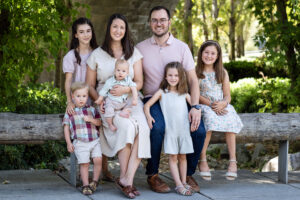
Caleb and Carina host a small-group Bible study in their home.
Five atheists who joined their Meetup now attend the Bible study. Caleb said they cannot stop reading the Bible and asking questions. They are students who make time amid busy schedules and exams to attend.
Raphael and Santiago are two of those attendees. They first came to a Thanksgiving outreach and heard a Spanish believer their age share how he came to Christ.
“We wish we had faith like you guys,” Carina said they often tell her. “But we’re too smart to be Christians.”
During a visit to the Beatys’ house, Raphael asked, “Wait, so you guys believe in God, but you’re not creationists, are you? There’s no way God created the world.”
Carina told him they do believe God created the world because that is what the Bible teaches.
“They think it’s crazy, but then they’re like, ‘Well, what does the Bible say?’” Carina said. “They really want to know what the Bible says.”
One week, Santiago and another atheist were the only people who attended the Bible study. The group had been working through the Gospel of Luke, but the two men asked if they could read something else.
“We’re bored with the Gospels. What’s the opposite of this?” they asked.
“I was highly offended about that at that time,” Carina said. “I was like, ‘Excuse me?’”
Feeling led by the Holy Spirit, Caleb suggested Ecclesiastes.
Carina shot him a look, “What are you doing? Why are you taking these guys to Ecclesiastes? We’ve got to read about Jesus. He’s the main character.”
Walking through Scripture
Caleb walked the men through the book from start to finish.
“Honestly, this is infuriating, because how can this book that is so old feel like it was written yesterday?” Santiago asked.
“He couldn’t believe it,” Carina said. “I think he realized this is not an irrelevant, stupid book. There’s something to it.”
That was when they finally took the Bibles the Beatys had been offering them.
After reading Ecclesiastes, Santiago asked what he should read next.
The Beatys suggested Job, another book many Christians might not choose first for nonbelievers.
Caleb and Carina pray that reading the Scripture produces more than curiosity and ultimately leads to a commitment to follow the Lord. It’s a slow work, they say, but they remain committed to answering questions and pointing people to the gospel.
“We proclaim to people we’ve never met before at the Meetups and to people the Lord has placed in our life for years,” Carina said. “He’s going to work how He chooses. We just pray that we can be part of that.”
EDITOR’S NOTE — This story was written by Tessa Sanchez and originally published by the International Mission Board.



Share with others: