
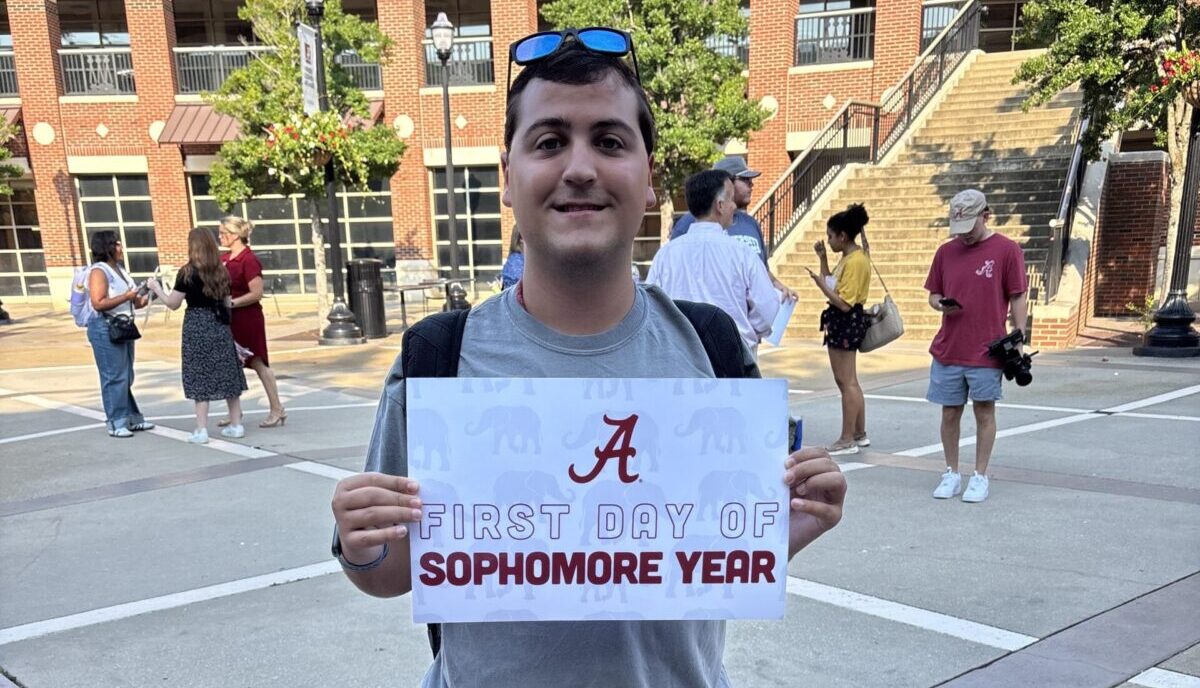
University of Alabama student Morgan Kohn has a busy schedule. He is involved in Al’s Pals, a mentoring program with local schools in Tuscaloosa, and he is active in several ministries at Calvary Baptist Church. His career goal is to be a paraeducator in a school system — and UA’s CrossingPoints Program is helping him prepare.
CrossingPoints is one of 371 inclusive post-secondary education programs in the U.S. for students like Morgan with intellectual developmental disorder, a condition which covers a range of delays beginning before age 22 and resulting from a range of causes, including genetic conditions like Down syndrome, perinatal causes like premature birth or postnatal injury such as stroke or certain infections.
Stay updated on stories like this — Get news delivered to your inbox
Children with intellectual disability may walk and talk later than their peers; struggle with memory, problem solving and understanding social rules; and/or need varying levels of support throughout their lives, from mild assistance to lifelong care.
Children with intellectual disorders benefit greatly from early identification and supportive interventions. But for the estimated 420,000 school-age children with intellectual disability, the end of high school can also mean an end to the academic, social and practical structures they have known.
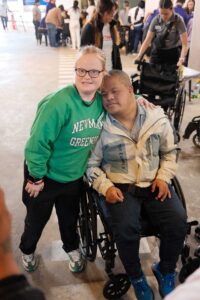
Think College, an organization that provides resources, technical assistance and training related to college options for students with intellectual disability, says fewer than 2% of affected students will attend college.
“Many people do not know students with intellectual disability have the desire and ability to attend college with their peers and siblings,” according to information posted at the Think College website. Yet the benefits of IPSE include not only learning options, but also opportunities for better employment, social and independent living outcomes.
Programs like CrossingPoints are filling a much-needed gap for these students and their families.
CrossingPoints students are full- fledged UA students, said program director Amy Williamson. They have access to academic classes, internships, social clubs, Greek life, athletics, recreation, residence and dining halls, campus offices and employment opportunities. They are fulfilling the same dreams that any other student has, she said.
“Our students have the opportunity to get involved on and off campus in meaningful and inclusive ways,” Williamson said. “In the classroom, our students have a tailored, specific-to-the-student plan of study that equips them for the career of their choice. We love seeing their success once they leave us as they find gainful employment, become contributing members of society and move out of their family’s home.”
Answered prayer
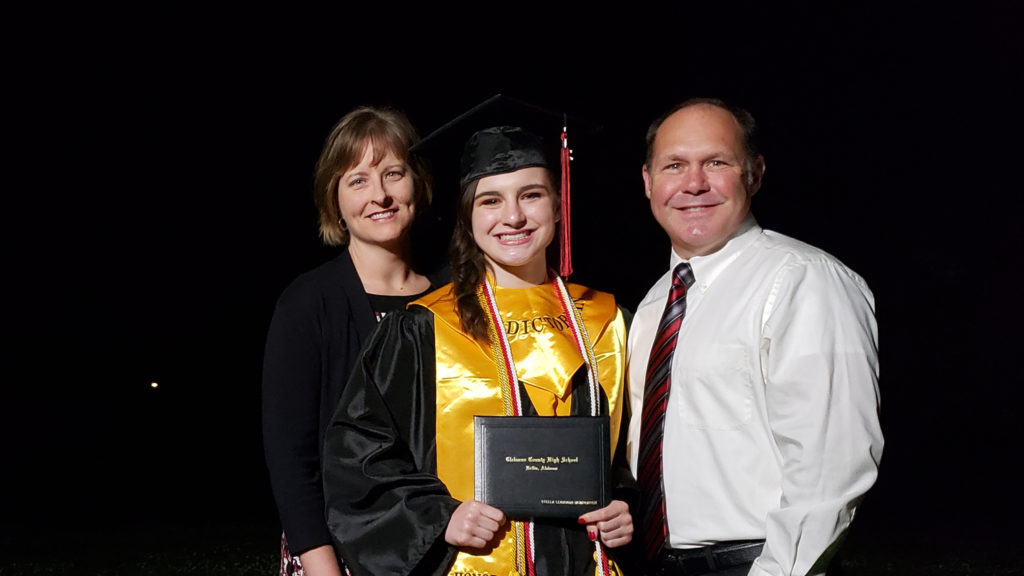
Audrey Owens has those same dreams. She especially loves to sing and act. But Audrey, 23, along with her twin sister, Abby, was a micropreemie, born at just 23 weeks gestation. As a result of her premature birth, she has several disabilities that make it more difficult to see, write and process information.
When her family found Union University’s EDGE Program, it was an answered prayer.
“Before EDGE, there was not a program where I could go learn those things (singing and acting). When I go to EDGE, I can also participate in clubs and college classes,” Audrey said. She looks forward to living on her own, learning more about shopping and cooking, and enjoying the Night to Shine event at Union.
Audrey will join an active and engaged community of students, said Rebecca Holloway, EDGE Program director.
“Students in the EDGE Program are not only allowed to be here at Union University; rather, they are meaningfully included and are a celebrated part of our campus culture,” Holloway said.
“We believe our students are created in the image of God, created a specific way, for a plan and a purpose. We see it as our responsibility to walk alongside our students to help them discover who God created them to be.”
Holloway said people often see the EDGE Program as a service to families and students, but she sees it differently.
“In reality, the students in the EDGE Program are serving our campus and community in larger ways than we can ever serve them,” Holloway said. “I experience the love, joy, goodness and kindness of God in larger ways from my students than from anyone else. I am constantly reminded by my students to reset my priorities to what matters most — people, community and the gospel.”
Other IPSE programs in Alabama include the EAGLES Program at Auburn University, Falcon Flight at the University of Montevallo, PASSAGE USA at the University of South Alabama and The Horizons School in Birmingham.
For a national list and more information, go to thinkcollege.net.

Share with others: