
This summer, I’ve been preaching a sermon series titled “Q&A,” addressing theological and practical questions from our church family. The topics have addressed everything from heaven and hell to spiritual growth to gray areas for believers. One of the more provocative questions I received was: “Can you provide guidance about sports gambling?”
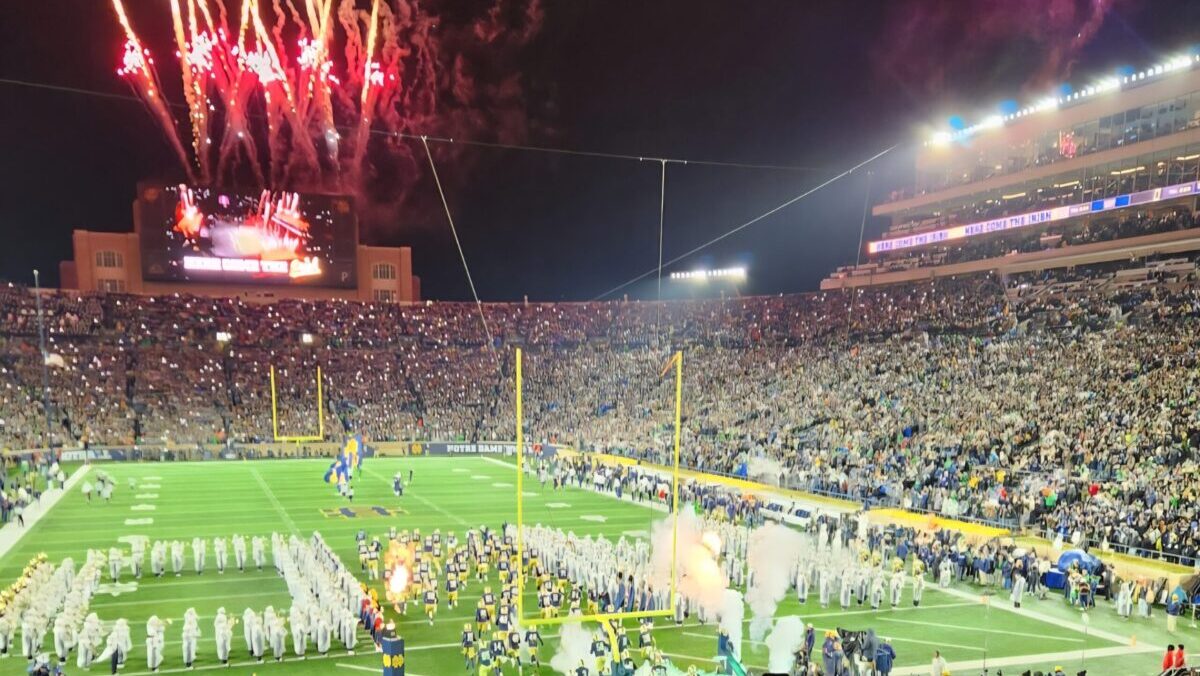
I’m an avid sports fan. As college football kicks off, I’ll be watching. What I won’t be doing is gambling on the outcomes. But that’s not the case for millions of Americans, especially countless young men, including those in our churches.

That question reminded me how important it is for Christian leaders to warn of the pitfalls at the intersection of technology and sinful desire. A new generation of gamblers no longer has to drive to an out-of-state casino to try to hit it big, but too often lose it bigger.
After the U.S. Supreme Court struck down the federal ban on sports betting in 2018, legal sports betting has expanded from just one state (Nevada) to 39 states plus Washington, D.C., and Puerto Rico, covering more than 90% of American adults. More than 80% of those bets now happen on a phone instead of at a betting window.
Big money
Since restrictions loosened, legal sports betting surged from under $5 billion a year to roughly $150 billion last year, according to The Guardian’s “The Big Bet” series and STAT News’ coverage of the public health toll.
Recent statistics show that 22% of Americans now have an active online sports betting account, a figure that climbs to 48% among men 18 to 49, according to a 2025 survey by the Siena College Research Institute and St. Bonaventure University.
Additionally, 1 in 4 sports bettors have missed bill payments, and 30% have dipped into savings meant for rent and other essentials, a 2025 U.S. News & World Report survey found.
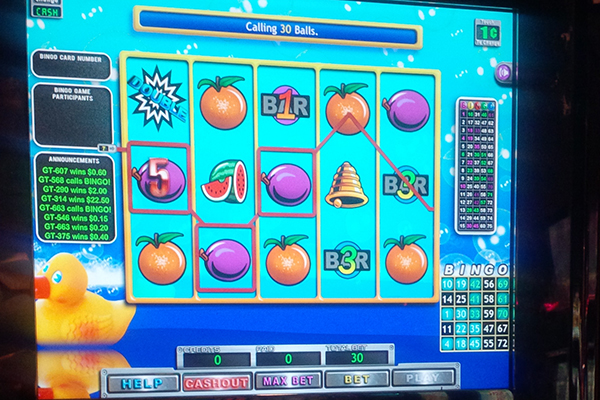
On top of those numbers, the gambling world is masquerading as finance. Apps like Kalshi and Polymarket reframe bets as “predictions,” borrowing language from Wall Street instead of the casino. An entire generation of young men who are at their most financially vulnerable stage of life carries a casino in their pocket, wagering with the tap of a button and then reveling in the win, grieving the miss and planning the next bet.
Need for biblical wisdom
Because this gambling avalanche isn’t slowing down, we need biblical wisdom and guidance for this shifting landscape. Scripture points to at least four ways gambling in general, and sports gambling in particular, undermines God’s design.
— First, gambling undermines stewardship. Jesus warns that whoever is dishonest in little will be dishonest in much, and that those unfaithful with “unrighteous wealth” can’t be trusted with true riches (Luke 16:10-11). When we gamble, we squander what’s been entrusted to us, treating as disposable what God calls good. Like the prodigal son, we squander what was hard-earned or freely given, which is the opposite of wise stewardship.
— Second, gambling undermines honest work. Proverbs 13:11 teaches that “wealth gained hastily will dwindle, but whoever gathers little by little will increase it.” The Howard Center for Investigative Journalism found lottery advertising is heaviest in impoverished communities, targeting those most likely to see winning as their only way out. Getting rich quick actually means getting poor quicker.
— Third, gambling undermines contentment. Hebrews 13:5 and 1 Timothy 6:6-10 both tie contentment to warnings about loving money. The dopamine hit from gambling erodes that contentment. It’s no longer the game’s outcome that draws a wager, but real-time, in-game bets on what’s happening on the field. What UCLA’s Dr. Timothy Fong calls “fast-food gambling” turns the next pitch or tackle into a micro-bet, deepening the addiction cycle through rapid dopamine reinforcement.
— Fourth, gambling undermines love of neighbor. Gambling is a zero-sum game. It always involves a winner and a loser. Whether the bet is on a final score or lottery numbers, someone else’s loss pays for someone else’s gain. Scripture calls believers to love their neighbor through action. Paul puts it plainly in 1 Corinthians 10:24: “Let no one seek his own good, but the good of his neighbor.” Can you look someone in the eye and say, “I love you, so I’m hoping my gain requires your loss”?
This is where gambling differs from the stock market. When I invest, I’m risking what’s in my own account. No one else has to lose for me to win. Not so with sports betting, the casino or the gambling apps. They all require one side’s loss for the other side’s win.
So what’s the antidote? Godliness with contentment. Paul writes in 1 Timothy 6:6, “But godliness with contentment is great gain.” Godliness means living oriented toward God in worship and devotion. Contentment means being satisfied regardless of circumstance. Together, Paul says, they produce “great gain” — a return that doesn’t depend on the next pitch or the next play.
The ongoing conversations since the gambling sermon underscore the importance of letting biblical truth shape us. Discipleship isn’t just memorizing Scripture and praying together. It involves choosing and knowing how to choose God’s best in every area of life.
So watch the game. Celebrate the win. Just don’t bet on it.
EDITOR’S NOTE — This story was written by Robert Hefner and originally published in North Carolina’s Biblical Recorder. Hefner serves as lead pastor of Pleasant Garden Baptist Church in Pleasant Garden, North Carolina.



Share with others: