
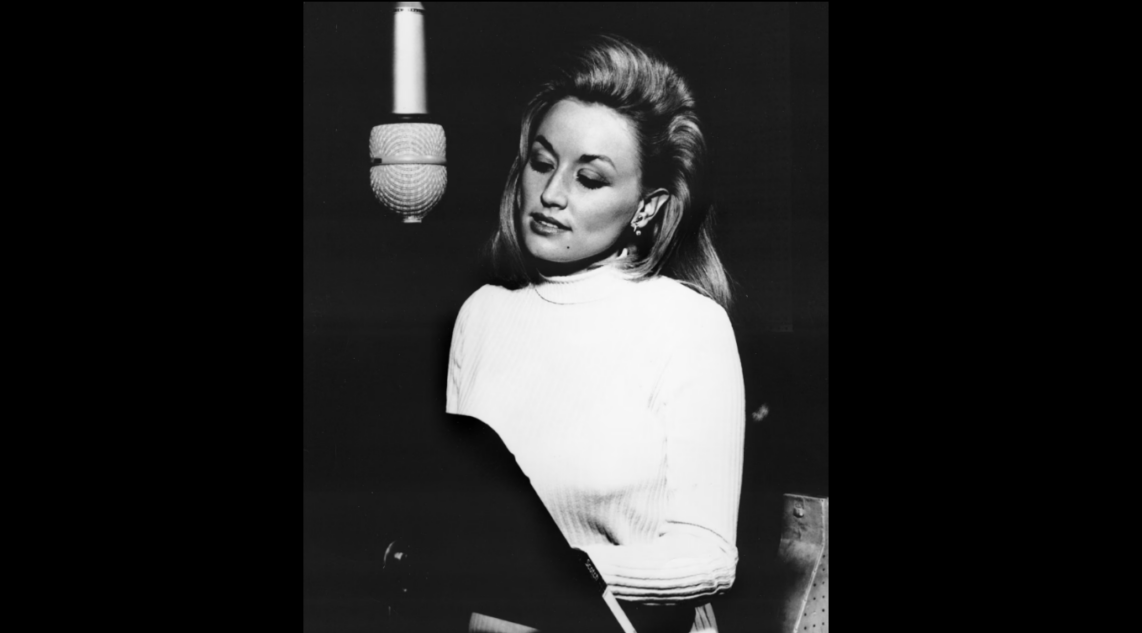
Dolly Parton, the renowned singer, songwriter, gospel artist, actress and philanthropist whose faith shaped much of her life and work, died Tuesday, Aug. 25, in Nashville, Tennessee, at age 80.
While Parton built a legendary career in music and entertainment, her faith remained a steady thread throughout her life. From the church pews of her childhood in Locust Ridge, Tennessee, to gospel recordings and a lifelong commitment to serving others, Parton frequently spoke of her success as an opportunity to fulfill a purpose she believed God had given her.
Background
Parton was raised in extreme poverty in a one-room cabin in the Smoky Mountains of East Tennessee, where she grew up in a deeply religious family surrounded by Southern gospel music.
She sang in church as a child, and her grandfather, a Pentecostal preacher, helped shape her faith. In a 2019 interview with The Christian Post, she spoke about discovering what she believed was her God-given purpose and said she wanted to “do something for God.”
That faith became a recurring theme throughout Parton’s music. She recorded gospel music throughout her career, including the 1971 album Golden Streets of Glory, and wrote and performed songs centered on God, prayer, heaven and faith.
Recent years
In more recent years, Parton collaborated with Christian music artists such as for KING & COUNTRY and Zach Williams. In her official biography, Parton is described as remaining “grounded in faith and family.”
Those themes also carried over into some of Parton’s work in television. Her productions included the Christopher Award-winning films “Coat of Many Colors,” “Christmas of Many Colors,” and “Dolly Parton’s Heartstrings: These Old Bones,” which explore themes of faith, family and perseverance.
In an interview posted to The Christopher’s Blog, Parton said: “God is my cowriter and my copilot. Anything that I do, I always keep God first and foremost because I feel like that’s where I draw my strength. … [Songwriting] is my God-time. I have a little world that I work in with God and leave myself open [to Him]. Some times are better than others, but I enjoy the process because God gave me my gift.”
Parton’s charitable work
Parton used the success she found in entertainment to support charitable causes, particularly those benefiting children. Through multiple charitable efforts, including the Imagination Library, she worked to improve the lives of children by providing books and encouraging a lifelong love of reading.
The program has distributed more than 120 million books worldwide. Her philanthropy extended beyond literacy, as she also supported medical research and disaster relief, including a $1 million donation to COVID-19 vaccine research, while encouraging her fans during the pandemic to “keep the faith.”
Parton’s commitment to children and education also led her to establish the Dollywood Foundation in 1988, a nonprofit organization created to improve educational opportunities and provide community support for children.
In late 2016, Parton and the Dollywood Foundation launched the My People Fund to provide direct financial relief to families affected by the devastating Sevier County wildfires in Tennessee.
Through the My People Fund, every family impacted by the fires received $1,000, and roughly $8.9 million to $9 million was distributed directly to victims with no conditions on how the money was spent.
Her connection to her Appalachian roots and Christian faith can also be seen at Dollywood itself.
A small white chapel stands among the attractions at Parton’s 165-acre theme park in Pigeon Forge, Tennessee. The Robert F. Thomas Chapel, originally built in 1973, was named for the doctor and preacher who delivered Parton. The chapel hosts weekly worship services during the park’s operating season.
Legacy of kindness
Sarah Lucky, staff member of First Baptist Church Plano, described how Dolly Parton’s life and character influenced her and her children growing up.
“I did not grow up in Tennessee, but I grew up in Southeast Kentucky, which is kind of the same Appalachian area that Dolly Parton was from. … You heard a lot about her growing up and about the things that she was doing, and just the way that she always was very selfless in how she helped,” Lucky said.
“In flooding and wildfires, … anytime something would happen that caused widespread devastation, she was the first name that you always heard about being there,” Lucky said.
For Lucky, the biggest thing she remembered about Dolly Parton was her song “The Coat of Many Colors.”
“It’s about a coat that was made for [Dolly], but people made fun of her for it. But it was all that her mom could put together for her. And we had a book that [described] the story of the song,” Lucky explained.
“I just remember hearing that lesson from her and being told, you know, love like Dolly, and treat people the way Dolly would. Like it was kind of a catchphrase that we always heard growing up. … It’s something that’s always stuck with me, that we need to be treating people that way and treating them with kindness,” she said.
Influence
Parton’s influence also reached Lucky’s two daughters, who grew up hearing the same lessons of kindness and generosity their mother had learned from Parton and are now enrolled in her Imagination Library program.
“Both of my girls are signed up. … They get a book every month from Dolly Parton, and I mean, if you ask my girls, they think Dolly Parton herself is sending them. But I mean, they’re four and six, and they are growing up hearing about and know who Dolly Parton is and know what she does and that she sends them a book every month, and they have a library because of the work that she has done,” Lucky said.
Parton’s influence also had a personal connection for Lucky, whose uncle works at Dollywood. Lucky said Parton made a point of recognizing employees and making them feel valued.
“She would go out of her way to make sure when she would come visit that every person that worked there, if she saw them, she would thank them. … There were no little people in her world. Everybody was on the same level, and I think that comes a lot from the way she grew up.”
EDITOR’S NOTE — This story was written by Faith Pratt and originally published by Baptist Standard.
Share with others: