
Many pastors spend so much time helping others that they neglect helping themselves, according to one seminary professor.
Stay updated on stories like this — Get news delivered to your inbox
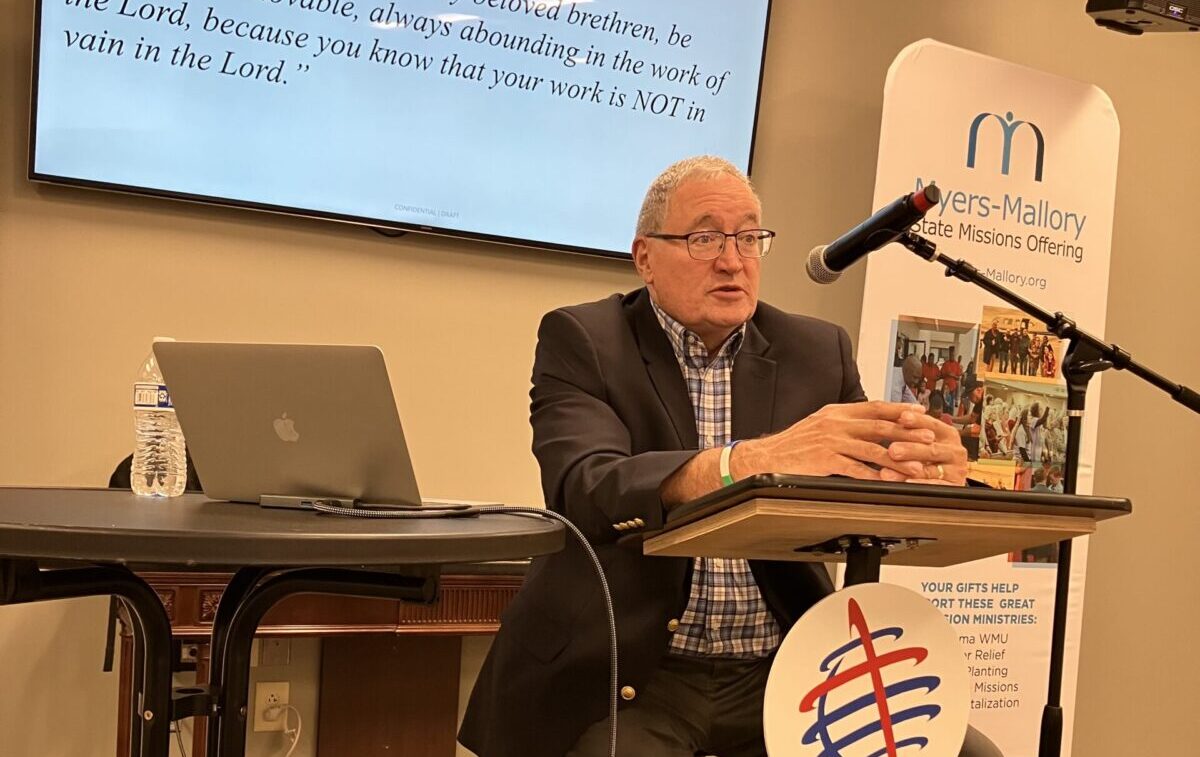
“The old adage is that we’d rather ‘wear out’ than ‘rust out,’ but there’s another, more biblical, option,” Tim Beougher, associate dean of the Billy Graham professor of evangelism and church growth at Southern Baptist Theological Seminary, told participants at an Intentional Leader event July 14. “Pastors can ‘live out’ their ministries in a way that pleases God.”
5 areas that need attention, growth
Beougher shared five areas that need attention and growth.
Care for the soul
“We must care for our soul,” he declared. “The constant temptation is to keep the Bible at arm’s length. We dig into it for sermons and studies and may spend little time applying it to our lives. We must work every passage into our own hearts.”
Beougher noted that 19th century pastor Robert Murray M’Cheyne taught “the greatest need of my people is my own holiness,” and his prayer was, “Lord, make me as holy as it is possible for a saved sinner to be.”
Suggesting pastors always be on guard against temptation, Beougher said, “The Bible forthrightly says ‘flee’ temptation. Satan is a ‘roaring lion,’ so we can’t treat this lightly.
“I like to contrast the stories of Joseph and Potiphar’s wife and David and Bathsheba,” Beoughter continued. “David maximized the pleasure of sin. Sin makes us stupid. But Joseph maximized the consequences of sin and he was wiser.”
Physical health
Beougher also exhorted pastors to be aware of the physical.
“Our bodies are temples of God and we must take care of them,” he declared. “Diet and exercise are necessary, and today there are cellphone apps that help us track calories, carbs and protein.”
Hand in hand with that is emotional health.
“Pastors face discouragement because their work is endless and [often] unseen,” Beougher noted.
“I recommend every pastor have a weekly Sabbath. … Some days are filled with emergencies, and we can’t balance work and rest on those days, but we can seek to balance weeks and months.
“And every pastor should find a hobby that brings diversion and relaxation.”
Mind and emotions
Beougher said the third area of attention is “mind and emotions,” suggesting pastors are prone to discouragement when they work hard, do the right things and still don’t see growth or success.
“My Old Testament hero is Jeremiah,” Beougher said. “As far as we know, he preached for 40 years and nobody did what he said. He was an abysmal failure in the eyes of his fellow countrymen. But the Lord encouraged him in his trials.
“It’s easy to grow bitter when we think life is unfair, our message is unheard or when people are unkind to us, but we have to trust in the good plan of God. And we learn to forgive those who hurt us,” he noted.
“Someone suggested forgiveness is releasing the prisoner, and then realizing the prisoner is yourself.”
Family
Family also should be prioritized, Beougher said.
“Pastors and their wives are both sinners who live in a broken world, so there’s bound to be some tension. I tell my students and pastors, ‘If you were married to yourself, you would be disappointed constantly,’” Beougher quipped.
“I believe the greatest issue in marriage is selfishness,” he added. “I’ve found it helpful to read 1 Corinthians 13 and substitute my name for ‘charity,’ such as, ‘Tim suffers long and is kind.’ This makes it personal and convicting for me as I strive to learn to live in ‘agape.’”
Beougher noted pastors’ children can feel neglected and many believe they grow up with impossible standards.
“We purposely scheduled family time for trips and fun,” Beougher recalled. “And we tried to teach our children that we had standards for them as parents, not because they were the pastor’s children.
“And we must be willing to ask for their forgiveness when we make wrong decisions.
“I once told my 16-year-old daughter I needed grace because I’d never had a 16-year-old daughter before. She said, ‘Dad, I’ve never been 16 before, so I’m trying to figure it out.’ Now [she] is using this same approach with her own daughters!”
Finishing well
Finish well, Beougher concluded.
“Max Lucado once said that most major decisions should be made in the cemetery. He meant that the reality of death and judgment motivates us to be faithful until the end. We don’t wish to ‘crash and burn,’ but to leave a legacy of faithfulness to the Lord,” Beougher said.
“To accomplish this means we must protect our time with the Lord, grow in His grace and guard our integrity.”
The final Intentional Leader event is scheduled for Sept. 15 featuring Kevin Blackwell executive director of the Mobile Baptist Network.
For more more information visit leadercareal.org.




Share with others: