
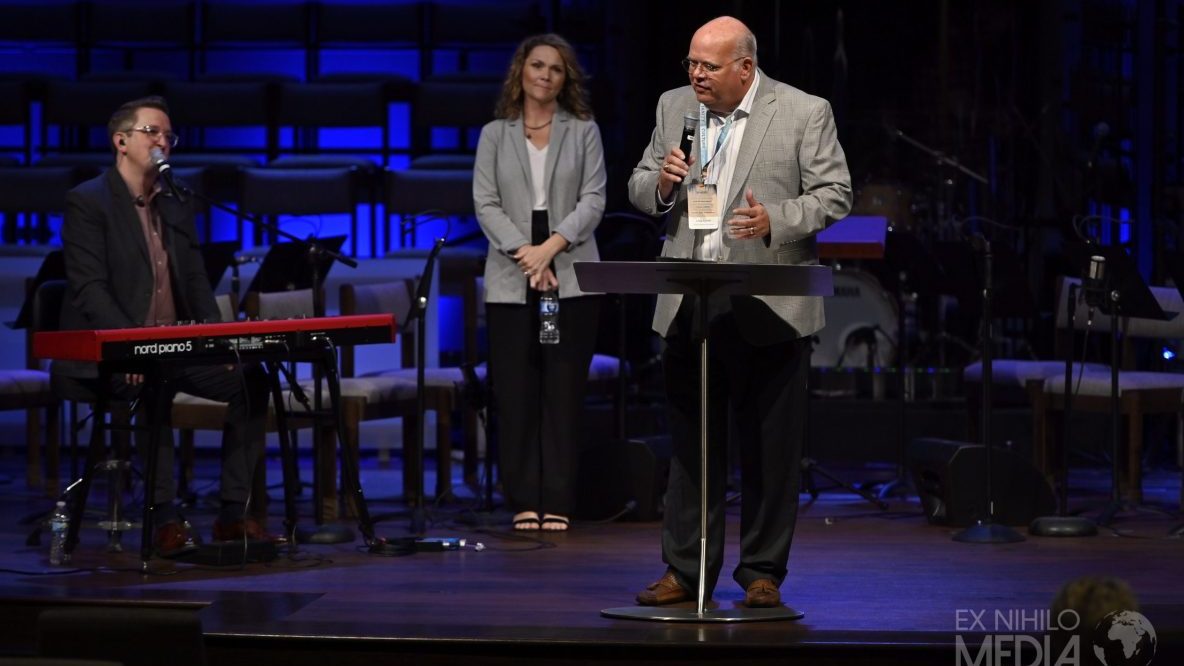
Chuck Lawless said when he began serving as a pastor 44 years ago, he felt overwhelmed by the task.
“I didn’t know how to preach, or how to manage a deacons’ meeting, nor did I know anything about Roberts or rules or order!” he quipped. “But I prayed, ‘Lord, just help me.’
“Now I tell other ministers to trust the Lord for His power and do the work.”
Subscribe to The Alabama Baptist and The Baptist Paper today!
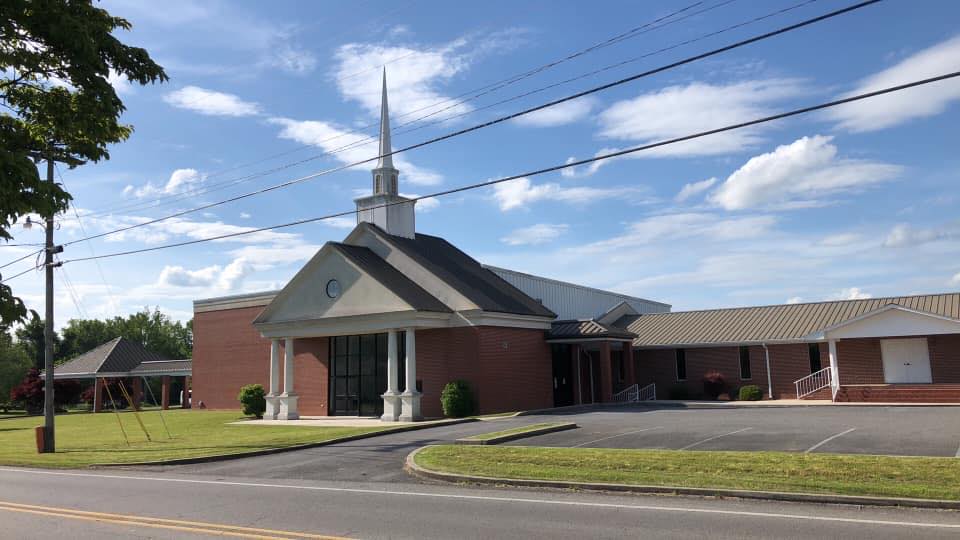
Lawless was one of five presenters at the School of the Prophets, sponsored April 28 by Etowah Baptist Association and hosted by MeadowBrook Church Gadsden.
Battle
Craig Carlisle, Etowah Baptist Association director of missions and current president of the Alabama Baptist State Convention, said this year’s conference was the seventh under his leadership, although the original School of the Prophets began in 1946.
“I grew up with the School of the Prophets at 12th Street Baptist Church in Gadsden,” Carlisle recalled, “and I wanted to bring it back and offer encouragement to our churches. We’ve had great presenters, including four seminary presidents, [and] this year is no different. Our theme is ‘Christianity vs. Culture,’ and it’s a battle we have every day.”
Lawless, dean of doctoral studies and vice president for spiritual formation at Southeastern Baptist Theological Seminary, Wake Forest, North Carolina, told participants, “The Lord leads us into impossible battles so that He might be our warrior, and the nations might know His name.
“Our struggle is missional because it shows the power of God to a needy world,” Lawless added.
He contrasted the David of 1 Samuel 17 with that of 1 Chronicles 21.
“When David faced Goliath, he trusted God; but when he numbered the people to see how powerful he was, he trusted himself,” Lawless noted. “A danger in ministry is that we can be educated and equipped beyond dependence on God.
“I continue to cry out, ‘Lord, just help me.’”
The rest of the story
Dean Inserra, lead pastor of City Church, Tallahassee, Florida, asserted that the United States is filled with “cultural Christians” who live moral lives but are confused by culture “moving the goalposts” on absolutes.
“They don’t reject the word of God, but give it a ‘shoulder shrug,’” Inserra said.
He suggested church leaders work with cultural believers and tell them “the rest of the story — cultural Christianity can’t save; only Jesus can.”
“Paul told Timothy to instruct the church in love [1 Timothy 1],” Inserra noted. “We can’t be like the somber palace guards in London, but must strive to be joyful when we guide people to serve and obey. We’re all called to serve and be faithful.”
Acknowledging that it’s difficult to do vocational ministry in today’s culture, Jonathan Hayashi, founding and lead pastor of Sola Church Kansas City, cited a study that said 80% of pastors will not be in ministry in 10 years.
“I believe our struggles are part of God’s plan for our sanctification,” Hayashi asserted.
“We don’t like that, but that’s His tool. [Charles] Spurgeon said that we often engrave our tribulations in marble and our blessings in sand. Paul’s word in Romans 5 teaches us that we can find joy in trouble and the past can make us better.”
Faith and culture
Brent Leatherwood, president of the Southern Baptist Ethics & Religious Liberty Commission, agreed that faith and culture are at odds.
“Even after the Roe vs. Wade decision was overturned in 2022, the number of abortions in America has increased,” he told the audience.
“The number in 2024 was 1.4 million and this doesn’t include chemical abortions now that these drugs are readily available. Religious liberty is still under assault,” Leatherwood declared.
“A recent Wisconsin Supreme Court decision argued that a Christian benevolent ministry can’t be Christian since many whom they served weren’t Christians! And gender issues continue to confront us. It’s no wonder that 65% of Americans say they’ve turned off newscasts due to fatigue.”
Citing Colossians 3, Leatherwood noted Christians must set themselves apart from culture but put aside anger and ill-will.
“Paul actually says to be ‘enrobed in Christ,’ so this is our challenge.”
Concluding presenter Brian Kennedy, associate professor of preaching at Gateway Seminary in Ontario, California and senior pastor of Mount Zion Baptist Church there, suggested Christians cannot ignore or “run and hide” from cultural diversity, but “look for creative ways to bring the power of the gospel into the diversity of the world.”
“Our faith does not require us to embrace what God calls sin,” Kennedy said. “But we never respond in anger. The command to ‘love our neighbor as we love ourselves’ was given 2,000 years ago and is still valid.”
Kennedy urged participants to believe in the power of the gospel to change hearts, which changing laws can’t regulate.
“Lawbreakers will continue to break the law,” he declared. “We must follow the example of Paul who believed and fearlessly proclaimed the power of the gospel. He had ‘no shame in his game,’ but trusted God to change the hearts of men and women.
“There are no ‘red’ churches or ‘blue’ churches,” Kennedy continued. “There’s only the church of Christ. We proclaim Him as the only hope for change.”

Share with others: