
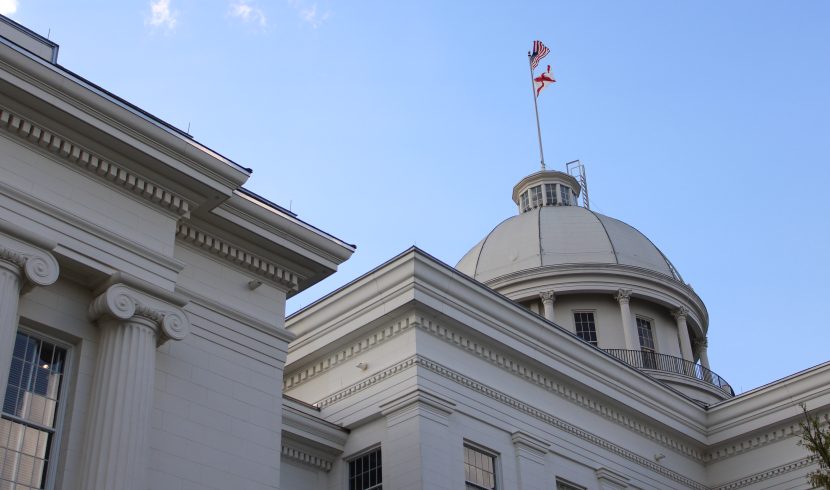
Every Friday for about six weeks, a working group filled with state health leaders and lawmakers, is meeting to determine how to spend hundreds of millions of dollars on rural health care.
It’s a herculean task to figure out how the state should allocate money to address the significant challenges facing rural areas while the program only lasts five years, health leaders told Alabama Daily News.
Subscribe to The Alabama Baptist today!
SIGN UP for our weekly Highlights emails.
“If we move a needle a little bit, I fear we’ll see setbacks as soon as the funding has gone away,” Danne Howard, president of Alabama Hospital Association, told ADN. “So that is a challenge to implement initiatives that will be sustainable over the long term.”
The Rural Health Transformation Program is a $50 billion fund for states to tap into as part of the Republican tax and spending law, intended to offset significant cuts to Medicaid. Alabama leaders hope to direct some of the funds to incentivize providers to serve in rural areas and to support labor and delivery services and primary care.
“The linchpin behind a lot of this is technology, so trying to utilize technology in a more efficient and effective way, whether that’s artificial intelligence and the ambient AI that’s becoming very popular right now,” Ryan Kelly, president of Alabama Rural Health Association, told ADN. “Telehealth, I think, will play a huge role (and) anything more like a clinically integrated network.”
Gov. Kay Ivey selected the State Health Planning and Development Agency to oversee the application, along with a working group that’s meeting weekly. The state team has also been gathering input from health care stakeholders across Alabama.
If Alabama submits an approved application by the Nov. 5 deadline, it will receive at least $500 million distributed equally over five years beginning in 2026. The Centers for Medicare and Medicaid Services will allocate the other half of the $50 billion fund based on certain criteria, such as the state’s rural health population and its proposed policies in the application.
“I’m entirely speculating out of this, but just based on the numbers and the population, I would see Alabama doing far better in this than, say a California as an example, but I could be completely wrong,” Kelly said.
The CMS outlined 10 approved uses of the funding. States must use the money for at least three of them, which include chronic disease management, training and technical assistance for health care technology and workforce recruitment and retention.
Limitations
And there are limitations to the funds. The money can’t be used for existing programs or construction.
“There’s a lot of exclusions about capital outlay,” Dr. Scott Harris, state health officer, told ADN. “So, (we) can’t build new buildings, hospitals can’t remodel, can’t build new clinics, things that would actually be sort of long-term projects that would last a long time, are specifically prohibited.”
Harris said the Alabama Department of Public Health is particularly interested in investments in population health programs directed at diabetes and cardiovascular health and boosting the department’s telehealth program.
“For example, pharmacies and other groups that do counseling around diabetes for people,” he said. “We work with UAB and some other folks to try to gather the identified (electronic health record) data to look at cardiovascular risk factors and try to make sense of who’s at risk for heart disease.”
For Kelly, the Alabama Rural Health Association submitted ideas for the state’s proposal focused on reimbursements, the state’s federally qualified health centers and rural health clinics and encouraging providers to practice in smaller communities.
“Growing the residency structure of dentists in the state, working with UAB dental school and making sure that we’re able to grow the number of students in dental school and then that we retain them in the state,” he told ADN.
The Medical Association of the State of Alabama primarily wants to direct money toward workforce development and boosting programs that make it easier for providers to practice in rural communities, executive director Mark Jackson told Alabama Daily News. One of those is a loan forgiveness program called the Board of Medical Scholarship Award.
“So anybody who’s graduated or going to medical school and agrees to locate a practice once they finish their residency in a rural area then they can have their tuition debt paid for with a commitment to locate in a rural area,” he said.
Pressures
On the hospital side, Howard said the “financial pressures are profound” in Alabama, and it’s difficult to condense priorities down to just a few things. But workforce, labor and delivery services and addressing maternal and infant mortality rates stand out.
“Primary care, because women need to be healthy before they get pregnant in order to have healthier babies,” she said. “So there’s so many things that interplay with each other, so that and behavioral health issues.”
Republicans included the $50 billion program in their massive budget legislation to offset the Medicaid spending reduction, which totals more than $900 billion over the next decade and could harm rural hospitals. The cuts from the law won’t be as deep as in other states since Alabama has not expanded Medicaid.
An estimated $137 billion of the Medicaid spending cuts could hit rural areas, according to the Kaiser Family Foundation, revealing a significant gap between the fund’s total amount and the cuts.
The law also caps provider taxes, a Medicaid funding mechanism. The Medicaid cuts are not set to start until 2028 and have no end date, while the rural health fund money will start to be distributed next year, ending in 2030.
Though helpful, the rural health program will only make a dent in Alabama’s crippled health care system right now, health leaders said.
“It’s useful. It’s welcomed,” Harris told ADN. “We’re happy to do it, but it’s certainly not going to make up for the cuts in other areas, I guess, or even really come close.”
The funds are a start, but not a cure, Howard said.
“No one should be disillusioned that with this amount of money and with this money, even after the first year, even after the five years that the issues are fixed or addressed, they’re not,” she said. “But this is an opportunity to start a pathway that will address things long term.”
EDITOR’S NOTE — This story was written by Alex Angle and originally published by Alabama Daily News.

Share with others: