
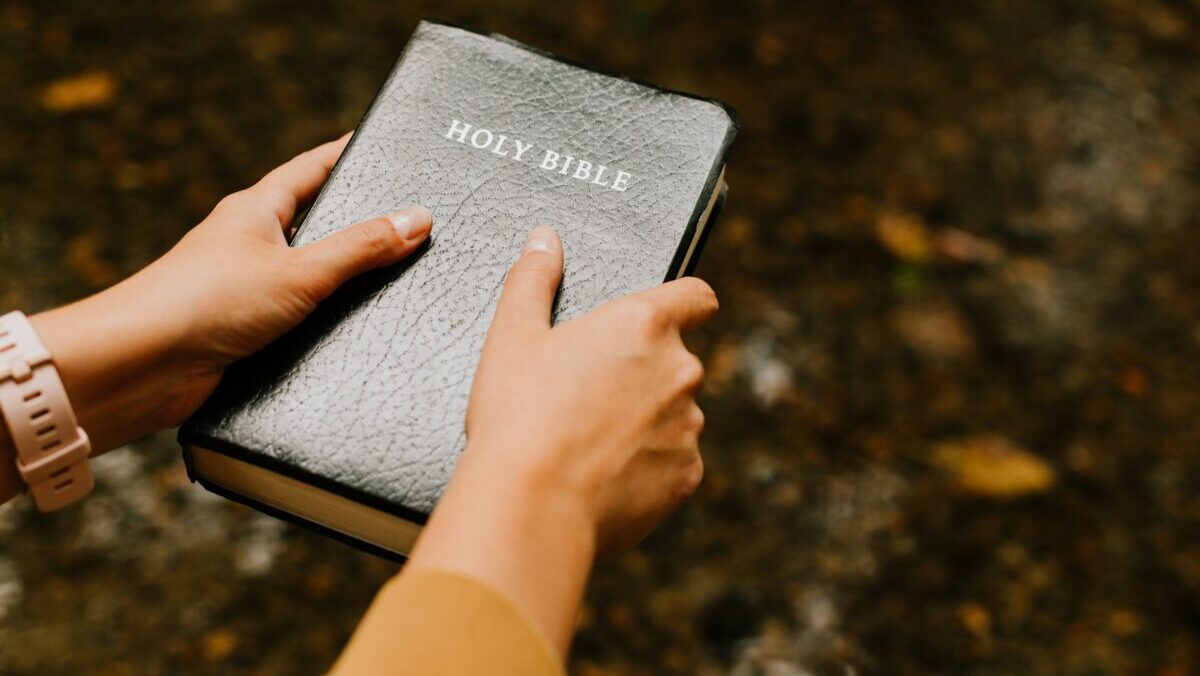
About a quarter of surveyed U.S. adults think the Bible is “just another book of teachings written by people,” the American Bible Society said in its latest release from the 2025 State of the Bible.
More people are skeptical of the Bible’s teachings than those who think the Bible is “totally accurate in all the principles it presents,” the American Bible Society said Oct. 14 in releasing the study’s chapter focused on trust.
Subscribe to The Alabama Baptist today!
SIGN UP for our weekly Highlights emails.
“A half-century ago, Americans generally trusted the Bible. Attitudes are more complex these days,” John Plake, ABS chief innovation officer and State of the Bible editor-in-chief, said of the findings. “Our latest survey finds a mixture of belief and questioning in the American public.”
Research revealed:
- 24% think the Bible is just another book of instruction.
- 18% think the Bible was written to control and manipulate people.
- 36% agree the Bible is totally accurate.
- 39% disagree that the Bible is totally accurate.
“It’s true that nearly one in five Americans think the Bible was written to control and manipulate, but twice that many trust the Bible as ‘totally accurate in all the principles it presents,’” Plake said. “The numbers show a nation grappling with Scripture — and its meaning for our lives.”
The non-religious — or the 25% of U.S. adults considered Nones — are more distrustful of Scripture, with 60% believing the Bible is just another book of advice and stories written by others, and half of Nones saying the Bible was written to control and manipulate others.
Majority say Bible has transformed their lives
Despite the numbers, most Americans — 58% — say the Bible has transformed their lives. The percentage statistically represents 148 million adults, researchers said.
“They might define those terms in various ways, they may understand the message differently, the transformation might be big or small,” researchers wrote of the 148 million, “but these people … are willing to say on a survey that they’ve been changed by the Bible’s message.”
In the chapter focused on interpersonal and institutional trust, researchers not only queried levels of trust in Scripture, but also asked how much respondents trust institutions to do what they’re intended to do, including medicine, education, the government, religion, arts and entertainment, banking and business, and the media.
Researchers gauged interpersonal trust in family and other individuals, and how variables such as Scripture engagement, age, political beliefs and trauma impact institutional and interpersonal trust.
Scripture-engaged individuals are more trusting of others, researchers said, with 35% of Scripture-engaged adults have a high level of interpersonal trust, compared to 23% of Scripture-disengaged, and 24% of those in the movable middle, a category of people whose Bible use falls between Scripture-engaged and Scripture-disengaged.
“It appears that many of those who read and apply the Scriptures are trying to practice Christian love by thinking the best of people, by giving them the benefit of the doubt, by trusting them,” researchers wrote.
Regarding trust in institutions, the Scripture-engaged register higher levels of trust in families, religion, and banking and business, lower levels of trust in arts and entertainment, and slightly lower or about the same levels of trust as Scripture-disengaged and the movable middle in medicine, education, government and media.
Trust is ‘often a casualty of trauma’
Trust — in Scripture, in institutions such as the church and in interpersonal relationships — “is often a casualty of trauma,” the report stated.
Nearly half of Americans (46%) have “experienced or witnessed physical, psychological or emotional trauma,” and trauma continues to impact individuals “far into the future,” researchers wrote.
Assault, abuse and unwanted sexual contact damage interpersonal trust, researchers found.
“These traumatic events all happen at the hands of other people, often people whom the sufferer knows and perhaps has trusted,” researchers wrote. “For people who rate the continuing effects of these traumatic events ‘moderate’ to ‘overwhelming,’ there’s a significant drop in interpersonal trust.”
But suffering the violent or sudden death of a friend impacts interpersonal trust only minimally, researchers said, and suffering a life-threatening illness or injury actually improves interpersonal trust, “suggesting that perhaps they have learned to depend on other helpful people.”
Link between forgiveness, trust
Researchers also explored the link between forgiveness and trust. Two-thirds of all respondents (66 percent) agreed — at least somewhat — with the statement, “I am able to sincerely forgive whatever someone else has done to me, regardless of whether they ever ask for forgiveness or not.”
“Trauma survivors often need to travel a long, hard road toward forgiveness,” researchers wrote. “Volumes have been written on what forgiveness is and isn’t; it’s a worthy study.
“Yet we find that the ability to forgive is connected to higher levels of interpersonal trust. Just as trauma damages trust, forgiveness may restore it.”
The State of the Bible is based on a nationally representative online survey of 2,656 adults in all 50 states and the District of Columbia, conducted Jan. 2–21 for ABS by NORC at the University of Chicago, using its AmeriSpeak panel.
EDITOR’S NOTE — This report was written and originally published by Baptist Press. With additional reporting by the Baptist Standard.

Share with others: