
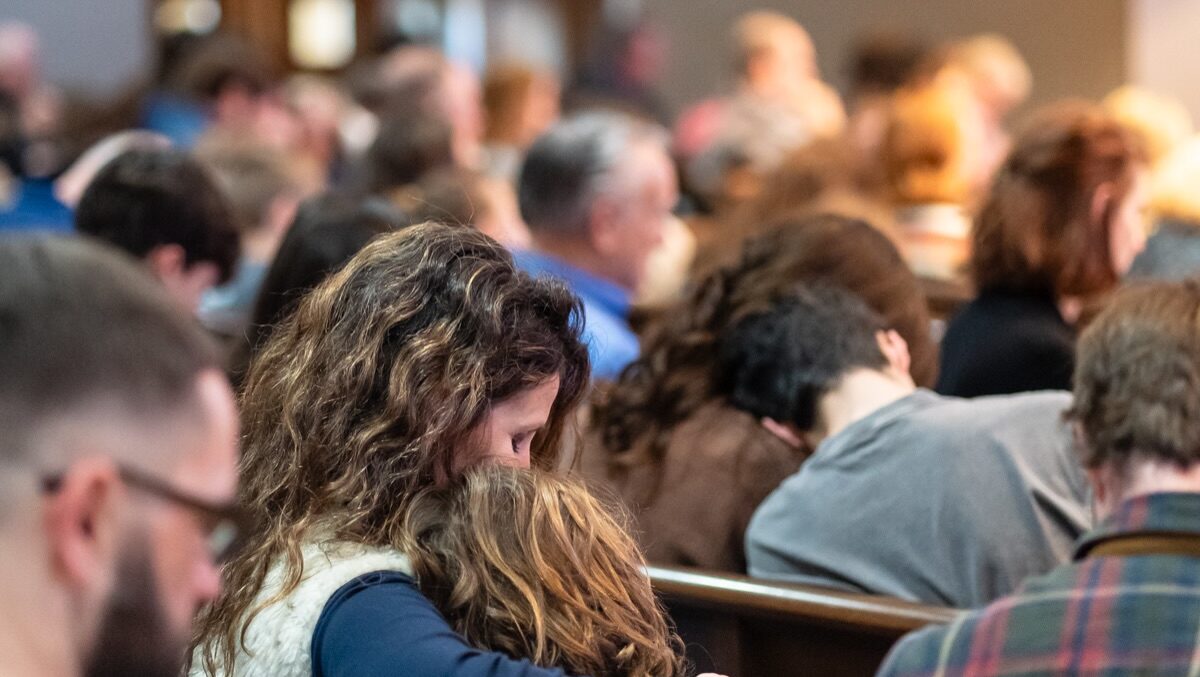
There is a troubling silence surrounding the recent disruption of a Sunday worship service at a church in Minnesota. That silence deserves scrutiny, not because of the personalities involved, but because of the principle at stake.
This was not a protest in a public square. It was not a demonstration outside a building or a challenge to speech offered freely to the public. It was an intentional invasion of a house of worship during active religious services. That distinction matters legally, morally and civically.
Subscribe to The Alabama Baptist today!
SIGN UP for our weekly Highlights emails.
The First Amendment protects both free speech and the free exercise of religion. Those protections are not in competition here. The law is clear that free speech does not extend to unlawful conduct, trespass, intimidation, or the obstruction of others’ constitutional rights. A church sanctuary during worship is not a public forum. It is a protected space, and the people gathered there were engaged in a protected activity.
When worshippers are prevented from praying, singing, or hearing Scripture because protesters refuse lawful requests to leave, a line has been crossed. This is not abstract. The videos show a pastor repeatedly asking protesters to exit. Worshippers remained seated and passive, praying quietly. Some were visibly shaken. That is not protest. That is coercion.
I speak to this not only as a citizen, but as someone who served for years as an intelligence officer in the U.S. Army, including in Iraq and elsewhere in the Middle East. Part of my responsibility was identifying and disrupting insurgent and terrorist networks. In that work, I frequently encountered credible reporting that violent actors used mosques to meet, plan, train or store weapons.
And yet, even in a war zone, we exercised restraint.
We understood that houses of worship carried moral, cultural and strategic weight. We knew that violating sacred space, even when it offered tactical advantage, carried consequences that extended far beyond a single operation. Respect for worship was not weakness. It was legitimacy.
That experience makes this incident at home all the more jarring.
What U.S. forces were careful not to do in combat zones was done deliberately, in peacetime, against unarmed civilians gathered to worship. Worse, it appears the sanctuary was chosen precisely because it would inhibit response, because restraint would be assumed. That is the exploitation of decency, not an appeal to conscience.
‘Measured outrage’
There is also a legal concern that cannot be ignored.
When identities are known, evidence is public, and the conduct clearly implicates trespass and interference with religious exercise, failure to investigate and enforce the law risks becoming something more than oversight. It risks signaling tolerance, and possibly endorsement, of conduct that the Constitution exists to prevent.
Government neutrality toward religion does not mean indifference to its obstruction. The state has an affirmative duty to protect the free exercise of religion, just as it protects free speech. Selective silence erodes confidence in equal protection under the law.
This issue should concern every American, including those who hold no religious belief at all. Once the norm that worship spaces are off limits collapses, no faith community is secure. The boundary that protects churches today protects mosques, synagogues, temples and minority faiths tomorrow.
Civil society depends on restraint, on knowing not just what we can do, but what we should not do. Protest has a long and honorable place in American life. But when it enters a sanctuary uninvited, during worship, and refuses to leave, it ceases to be protest and becomes an act of intimidation.
Measured outrage is appropriate here. Silence is not.
EDITOR’S NOTE — This opinion piece was written by Matt Lovelace of First Baptist Church Enterprise and shared with The Alabama Baptist.


Share with others: