
The Alabama House could soon vote on a bill creating a new crime for the disruption of a worship service.
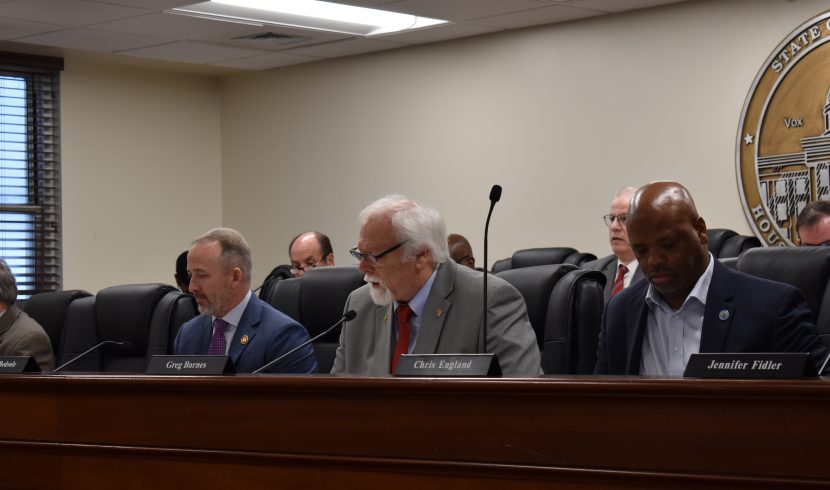
House Bill 363, sponsored by Rep. Gregory Barnes, R-Jasper, would make disrupting a worship service a Class C felony. If convicted, a person could be sentenced to up to 10 years in jail.
Subscribe to The Alabama Baptist today!
SIGN UP for our weekly Highlights emails.
Barnes explained to the House Committee on Public Safety and Homeland Security last week that to be guilty of the new crime, an individual would both have to enter the church with the intent to disrupt and then engage in the disruption. The bill lists unlawful protest, riot, disorderly conduct, harassment or obstruction of people entering or exiting church property as disruptive activities.
The bill states that Alabamians’ right to meet and assemble for religious worship is “imperative” and suggests that right must be weighed against people’s right to protest.
“The exercise of the right of an individual to protest at places of worship must be balanced against the right of another individual to meet and assemble for religious worship in an unobstructed manner,” the bill reads.
The disruption of worship has been in the news lately as an anti-U.S. Immigration and Customs Enforcement protest interrupted a church service in St. Paul, Minnesota, last month. Republican leaders, including Vice President JD Vance, have called for the protestors to be punished with the maximum penalty allowable by law.
Voiced concerns
At the committee meeting, Democratic lawmakers expressed concerns that ordinary disagreements between parishioners or visitors to the church worshipping in different ways might get caught in this new crime.
Rep. Chris England, D-Tuscaloosa, also brought up that the necessary proof for someone to be convicted of the crime and the probable cause for someone to be arrested at the time of the crime are different, meaning that someone who did not enter the church with disruptive intentions could get caught up in a long and expensive legal battle.
Katie Langer with the District Attorneys’ Association addressed the committee and explained that the bill was narrowly tailored so that the statute does not ensnare people not trying to disrupt.
The bill was passed out with a favorable report. It now heads to the House floor.
EDITOR’S NOTE — This story was written by Claire Harrison and originally published by Alabama Daily News.

Share with others: