
For close to 30 years, International Mission Board missionaries were absent from Liberia. Civil war and unrest tore through the small West African nation, forcing missionaries to evacuate and leave churches without the support they once knew.
Subscribe to The Alabama Baptist today!
SIGN UP for our weekly Highlights emails.
When peace returned, the IMB posted a job request for someone to serve in the nation’s capital, Monrovia. It was a high priority need for this healing country. The request sat unanswered for six years.
Then Matt and Kayla Searson saw it.
The ministry seemed tailor-made for the couple and their growing family. They’d work with the Liberian Baptist Convention to multiply healthy churches. They packed up their lives in North Carolina and moved to Liberia nearly a year ago.
“You left us!” Liberian Baptist leaders teased the new arrivals about going decades without an IMB missionary presence. “Now we rejoice in your return.”
The Searsons felt the weight of what those years meant to Liberian Baptists.
“They value our [IMB] partnership,” Matt said. “It’s a joy to learn with and from the Liberian church.”
Rebuilding on a historic foundation
The Searsons build their ministry on the foundation of countless Southern Baptist missionaries who came before them. Liberia was one of the first mission fields when the Foreign Mission Board (now known as IMB) was formed in 1845. John Day, Southern Baptists’ first Black missionary, was appointed to Liberia to start churches and disciple believers while working within the government to help establish Liberia as a nation.
Political instability disrupted this work in 1875. Southern Baptist missionaries returned in 1960, but civil war in the 1990s forced another evacuation. Even the Liberia Baptist Theological Seminary closed for seven years before it was deemed safe to open by the convention. The IMB continued working through the seminary.
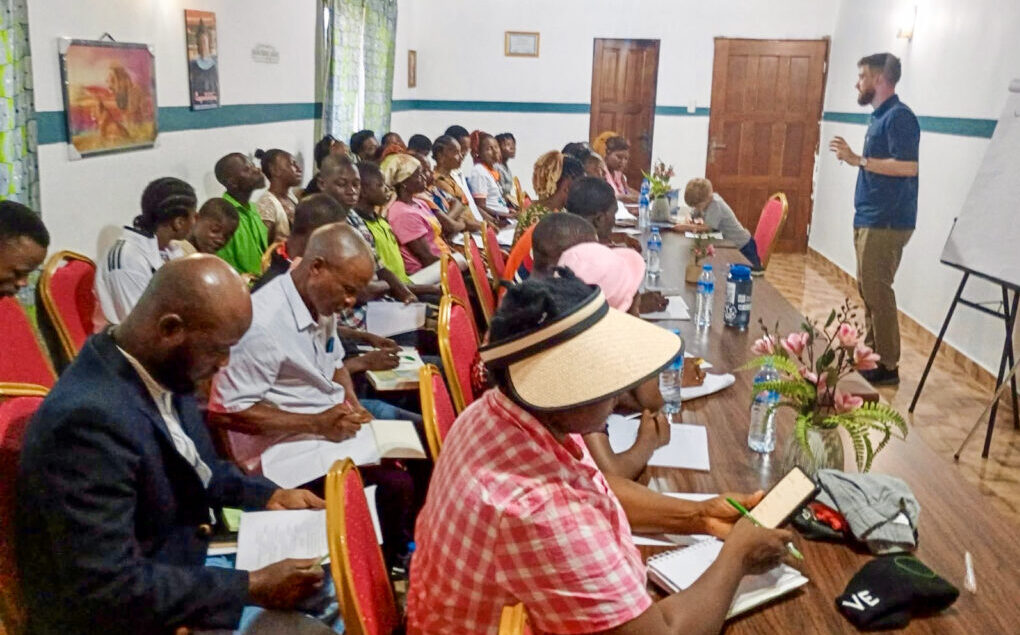
This seminary is where Matt and Kayla currently spend most of their time. Matt teaches Hebrew and Old Testament classes. He and Kayla attend chapel, lead Bible studies and invest in their students.
“I love teaching at the seminary,” Matt said. “It is such a strategic way to invest in the Liberian church.”
A nation hungry for truth
Years of conflict and displacement make it hard to measure the health of Liberia’s churches. The country is considered “culturally Christian,” with more than 80% claiming it as their religious belief.
“A lot of early discipleship is actually evangelism of people who don’t have a clear understanding of the gospel,” Matt said, estimating around 10-12% are evangelical. “You can’t have healthy churches where there is gospel confusion.”
Matt challenges students to take this knowledge beyond the classroom to their community. One of those students is Benjamin Mulbah. He and his wife lead a discipleship class in a relative’s place of business each Saturday using content from Matt’s spiritual formations class at the seminary. The small group started when the young couple purposefully played checkers and openly chatted about the gospel and Scripture. This soon developed into a Bible study.
Recently, Mulbah taught John 3:16 to the group.
“We told them this is how we become a Christian, by believing in Christ as Lord and Savior, not by going to church or being born into a Christian home,” Mulbah said. “We are saved by grace through faith in Christ and not by works.”
For many in the group, these truths were brand new concepts even though they all claim Christianity as their religion. Mulbah said the seminary lessons helped him become a better disciple and learn to build a healthy church.
Matt believes this bridge between the seminary and the local church is important.
“We’ve been given a blessed opportunity with this partnership to help strengthen the Liberian church,” he said. “Please pray for all of us — our family, the seminary and its students — in this task.”
EDITOR’S NOTE — This story was written by Sue Sprenkle and originally published by the International Mission Board.
Share with others: