
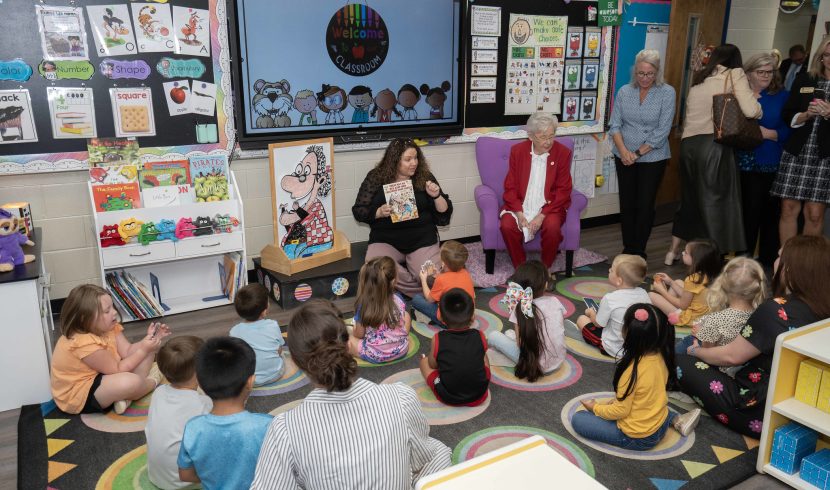
Alabama’s state-funded First Class Pre-K program stands out nationally for meeting recommended standards for assistant teacher training and professional development, according to a new report examining policies across the country.
The report from the National Institute for Early Education Research reviewed qualification requirements and professional development policies for assistant teachers in 64 state-funded preschool programs.
Subscribe to The Alabama Baptist today!
SIGN UP for our weekly Highlights emails.
It found that only 21 programs require assistant teachers to hold a Child Development Associate credential or equivalent early childhood coursework. Just 19 meet recommended benchmarks for annual training and classroom-based coaching support.
Alabama meets both standards.
“Assistant teachers are an integral part of the teaching team in an early childhood classroom and take on many responsibilities, including planning and implementing educational activities and supporting individual children and small groups,” said researcher G.G. Weisenfeld, lead author of the report.
The report’s authors recommend that assistant teachers have at least a CDA credential or the equivalent of 9 to 12 college credit hours in early childhood education or child development. Alabama requires assistant teachers in its First Class Pre-K program to meet that standard.
The second benchmark calls for at least 15 hours of annual in-service training for both lead and assistant teachers, along with written professional development plans and job-embedded coaching. Alabama exceeds that requirement, mandating 30 hours of professional development for lead teachers and 20 hours for assistant teachers.
Coaching and instructional supports
Alabama also reserves roughly 8% of its preschool funding for coaching and instructional supports and provides paid planning time so teachers can participate in professional development.
The report also points to Alabama’s career and technical education program as a workforce pathway. Some First Class Pre-K classrooms operate in high schools, where students can earn a CDA credential and complete required classroom hours. Students can also take early childhood courses through dual enrollment.
That can mean that graduates can step directly into assistant teacher jobs after high school.
Alabama’s First Class Pre-K program has previously received national recognition for meeting all 10 of NIEER’s broader quality benchmarks and serves more than 24,000 4-year-olds across all 67 counties.
EDITOR’S NOTE — This story was written by Trisha Powell Crain and originally published by Alabama Daily News.




Share with others: