
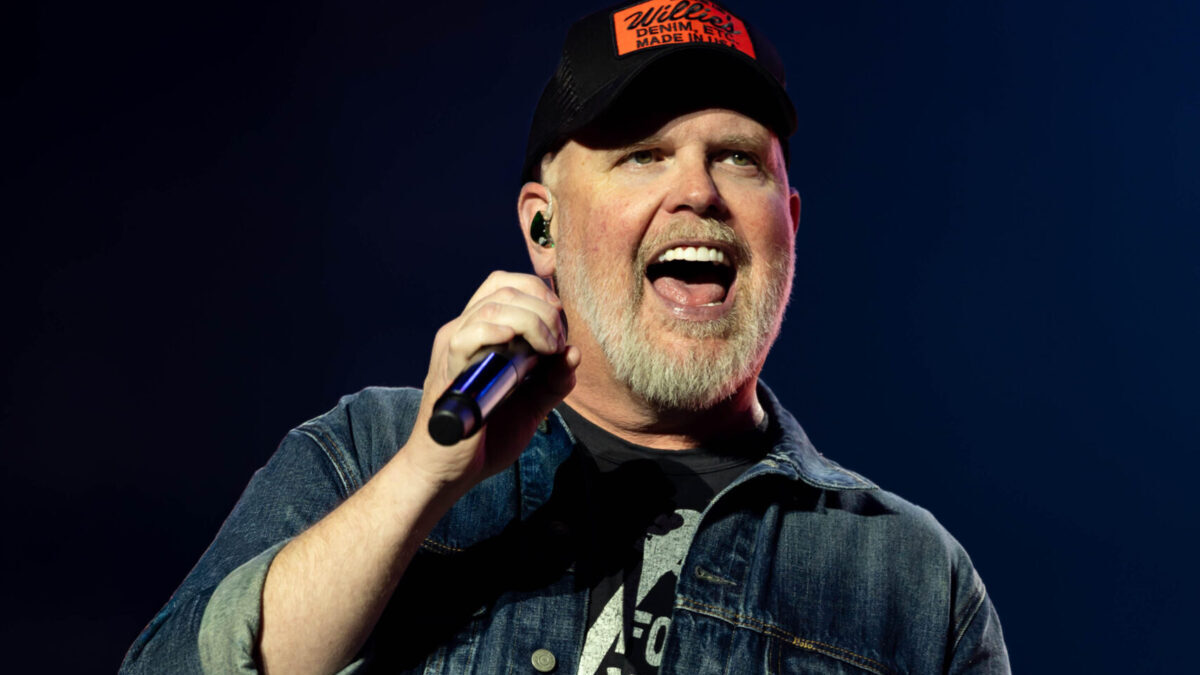
Said to be the bestselling Christian song ever, “I Can Only Imagine” resonated with fans worldwide. It would be easy to think that MercyMe’s lead singer, Bart Millard, would be set for life, especially after the song he wrote was followed by a movie and a book with the same name.
But the truth is that success, no matter how substantial, doesn’t keep away heartache, pain or depression. The February 2026 releases of the film “I Can Only Imagine 2” and book “Even If: Trusting God Through the Fire” share Millard’s own struggles in those areas — and the power of God’s grace.
Subscribe to The Alabama Baptist today!
SIGN UP for our weekly Highlights emails.

“That 100% was me for years. I would be the funny ‘aww shucks’ guy in public, but I would come home and turn that switch off and just was dealing with a deep depression for years,” Millard said. “It was difficult and challenging to show that side, but there’s no point in making the movie if we can’t be honest.”
However, a movie isn’t a documentary. In its attempt to portray what happened over the course of years, events are combined, and some important parts are left out. To tell the story behind the story, Millard, his wife, Shannon, and Robert Noland wrote “Even If: Trusting God Through the Fire.” Millard’s oldest son, Sam, also contributed.
From completely checking out in an old, beat-up chair with a flower pattern (called “the flower chair”) to becoming angry and then shutting down, Millard didn’t hold back when sharing through both the book and movie what he really looked like during the years after “I Can Only Imagine” became a hit.
Not long after that, Millard faced hardship after hardship. Within the same year, he saw the deaths of his greatly loved brother-in-law and amazing uncle, his daughter was born premature and his father-in-law had a brain tumor.
But the most life-changing event was that his oldest son, Sam, was diagnosed with Type 1 diabetes at age 2.
Everything changed.
Millard, who had been abused by his father while growing up, had to intentionally inflict pain on his child who had no way to understand that he was doing it to keep him alive.
“When Sam comes along with diabetes at 2 years old, and I have to be a grown up and I have to do hard things for my son, there was a lot of anger. The idea that I couldn’t fix my son — that he was broken kind of on my watch — led to a lot of depression and anger.
“I couldn’t fix it. The similarities between when I was a kid and my dad would put his hands on me — I was like, ‘Why are you hurting me?’ Then to hear my son say the same thing when I give him his first shot triggered something like I’m trying to be the furthest thing, but yet I’m still harming my child by giving him over 60,000 shots in his lifetime.
“When you hear your child say, ‘Dad, you’re hurting me,’ whether you caused the harm or whatever, it still has a damaging effect,” Millard said.
Never alone
But God didn’t leave Millard alone. He sent two men into Millard’s life who changed him — Rusty Kennedy and Tim Timmons. Kennedy was a pastor Millard had known for years. Timmons was a fellow musician Millard met when Timmons was the opening act for one of MercyMe’s tours.

Both men talked about grace in a way that Millard had never heard, and Timmons lived it out — literally. Diagnosed with an incurable cancer, Timmons considers every day he wakes up as a gift. Each morning, Timmons uses a permanent marker to write an “X” on the inside of his wrist as a reminder to be grateful.
When Millard vented his anger and hurt to Timmons during a songwriting session together, Timmons responded with the story of Shadrach, Meshach and Abednego. But Millard had a poignant question that couldn’t be resolved.
The song “Even If” became the answer to Millard’s question: “What if you aren’t saved from the fire?”
“Even If,” co-written by Millard, Timmons and others, became MercyMe’s next megahit because it resonated with listeners who had the same question. But much more than having another hit, Millard is simply thankful that God didn’t mind his questions and stayed by his side through it all and that the song can minister to others who feel the same way.
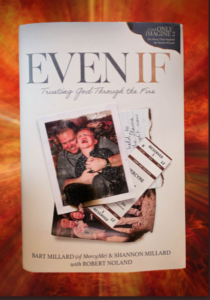 In the introduction to “Even If,” Millard says, “One thing the past 22 years — life after 2004 — has shown me: If we are actually going to follow Jesus, then we have to own up to and deal with our doubts as well as our faith, allow for the questions as well as the answers we just thought we knew and accept the trials along with the triumphs.”
He quotes Job 13:15: “Even if God kills me, I’ll still put my hope in Him.”
“One truth Shannon and I have come to better understand over the years is that when we truly follow Jesus through the dark valleys — through the rain, trouble and death we experience in this life — in His time, He will lead us to discover how good He is when we are broken.”




Share with others: