
Alabama lawmakers approved several education-related bills on the final day of the 2026 legislative session, advancing measures affecting public schools, colleges and universities, school athletics and graduation requirements.
The bills included proposals on Ten Commandments displays, weekly performances of The Star-Spangled Banner in public schools, athletic protections for CHOOSE Act students, faculty senate authority at public universities and violence prevention instruction for students.
Some now go to Gov. Kay Ivey, while those proposing constitutional amendments still must be approved by voters.
Here’s a look at some of the education bills that crossed the finish line April 9:
Weekly Star-Spangled Banner requirement
Senate Bill 5, sponsored by Sen. Gerald Allen, R-Cottondale, would place a constitutional amendment before voters requiring all K-12 public schools to “broadcast or sanction the performance” of the first stanza of The Star-Spangled Banner at least once each week during the school day.
The amendment will be on the November ballot and would become effective immediately if approved.
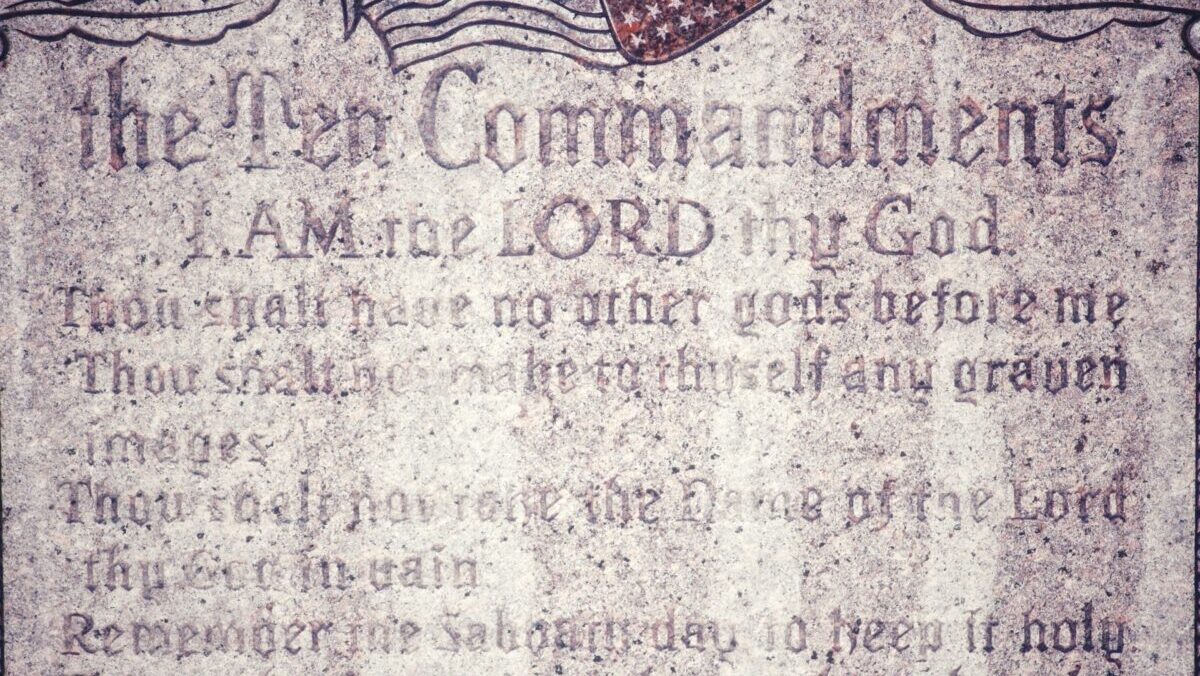
Ten Commandments required in public schools
Senate Bill 99, sponsored by Sen. Keith Kelley, R-Anniston, with a House companion sponsored by Rep. Mark Gidley, R-Hokes Bluff, would require public schools to place a poster of the Ten Commandments in fifth- through 12th-grade classrooms where U.S. history is taught and in a common area such as a cafeteria or lunchroom.
The poster must be at least 11 inches by 14 inches and approved by the state superintendent of education. The bill does not require school boards to purchase the display but allows schools to accept donations to cover the cost. It also requires the State Department of Education to identify and post on its website a list of free resources for schools.
The amendment would take effect Jan. 1, 2027.
CHOOSE Act and athletic eligibility
Senate Bill 342, sponsored by Sen. Clyde Chambliss, R-Prattville, allows a CHOOSE Act participant — a student, parent or participating school — to seek an injunction or damages against an athletic association that restricts a student’s participation based solely on the student’s CHOOSE Act status.
The bill also makes it easier for families to obtain a court order allowing a student to play while a dispute is being resolved. It also allows courts to award attorney fees to a prevailing CHOOSE Act participant.
It takes effect immediately.
Authority shifts for faculty senates, trustees
House Bill 580, sponsored by Rep. Troy Stubbs, R-Wetumpka, shifts faculty senates to advisory functions only and grants more authority over tenure policy and curriculum to university boards. The bill also says accrediting agencies could not require institutions to violate state law or penalize them for complying with it.
It becomes effective Oct. 1.
Higher education federal funding reports
Senate Bill 59, sponsored by Sen. Arthur Orr, R-Decatur, requires public colleges and universities to submit an annual report on the amount of state and federal funds they receive and spend, along with a plan for operating if funding is reduced by 5% or by 25% or more.
It becomes effective Oct. 1.
Conflict resolution, violence prevention course
Senate Bill 364, sponsored by Sen. Rodger Smitherman, D-Birmingham, requires public school students to complete a course or program in violence prevention, conflict resolution and mediation before graduating from high school. Students could complete the requirement in grades 6 through 12.
Local school boards would decide the course content as long as it meets minimum standards in the bill. The State Department of Education would prepare materials for school boards to consider.
The requirement would begin with the 2027-28 school year.
National Guard education assistance expanded
House Bill 233, sponsored by Rep. Ed Oliver, R-Dadeville, expands the National Guard Educational Assistance Program to include workforce development programs and allows assistance to be paid earlier in the academic term.
It becomes effective Oct. 1. Lawmakers appropriated $9.8 million for the program in the FY27 budget.
EDITOR’S NOTE — This story was written by Trisha Powell Crain and originally published by Alabama Daily News.




Share with others: