
The Alpha Generation, born 2010–24, are often described as “digitally-dependent” since they receive, on average, some 237 digital communications every day — primarily because they obtained a smartphone by age 10.
“The whole world is speaking to their hearts, and the church is a minor, though significant, instrument speaking to them,” noted Shelly Melia of Dallas Baptist University.
Stay updated on stories like this — Get news delivered to your inbox
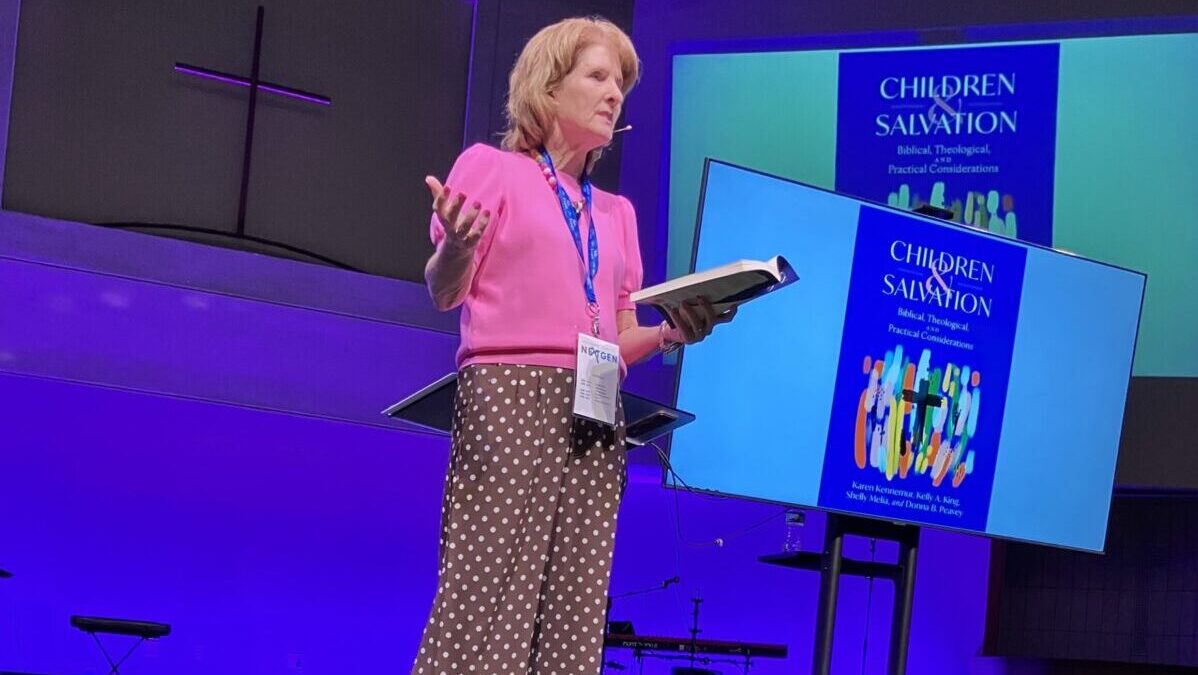
She was guest presenter at a “Reaching and Teaching the Next Generation” conference at Westwood Baptist Church Alabaster Aug. 9. Melia is associate dean and program director for the master of arts in children’s and family ministry at DBU.
Right mindset
Melia told participants the church must have a “missionary mindset” to minister to Alpha since their culture is so unique.
“These children were under 10 during COVID-19, and we’re still dealing with the social isolation of that era,” she noted. “Electronic communication became even more important, and our children are ‘click bait’ targeted by many sources. They’ve seen violent and horrible things and have become desensitized.
“Some research shows up to 40% of teens 13–17 routinely share nude photos, and the disconnect is that most parents don’t believe this is true.”
Electronic bombardment has fostered hyper-individualism, identity confusion and skepticism of religion and people of faith, Melia said.
“Additional research through MRI scans shows that our children have decreased capacity for visual processing, lower attention spans and decreased empathy.
“This is one reason many schools have moved to a ‘no phone’ policy during school hours. Most parents later regret having given phones to their children at the young ages they did,” Melia asserted.
Another issue among Alpha is fatherlessness. According to a 2019 survey, 40% of births in America are to unmarried women and 28% of children live in a single-parent home.
“This is why our time at church is so significant,” Melia declared. “The church offers something the screen cannot, and sometimes their homes do not, including conversation, relationship, wisdom, discernment and prayer. … Our children have a need for belonging. Some 25% of young people who attend church regularly claim ‘no one understands me,’ so we have to work hard at relationships in the church.”
Though some young people might have 5,000 followers on social media, Melia suggested they might have no one to call if they had a flat tire. Spiritual connection and genuine friendship are key.
“I exhort teachers of children also to open ‘real’ Bibles and read God’s word together with boys and girls. This is a unique and life-changing experience.”
AI influence
In a later presentation, Melia talked about the emerging influence of AI.
“It took Netflix 18 years to reach 100 million subscribers, but it took ChatGPT only three months to reach 123 million users,” she said. “AI is adding to dehumanization and detachment, and this is even more pronounced when AI provides ‘virtual companions.’ Half of AI users use [them] regularly.”
Though productivity is a primary buy-in to AI, Melia said, higher education struggles with how to teach young people to think.
“Effortful thinking builds the brain and reflection promotes neural growth,” she explained. “That’s why oral presentations are making a comeback. We can’t always detect AI in written comments, but we can be sure our students learn when we become like a two-way radio, talking and listening.”
Need to highlight discipleship
In a third session Melia suggested that though there is no clear pattern in the New Testament of how to evangelize children, other than “allow the little children to come to me,” children are a “fertile soil” for the gospel.
“I think we’ve dropped the ball on discipleship,” Melia asserted. “We often celebrate our [Vacation Bible School] conversions but fail to offer a program for maturity. So many of us made public professions as children, but either were genuinely saved later as teenagers or perhaps experienced a renewal of our faith.
“Our work is just beginning at conversion, and we must follow up with sound teaching.”
DBU has noted the current trend of having fewer young people committing to vocational ministry, Melia said.
“Churches call us wanting resumes for ministry leaders, and we don’t have as many as we used to. In our book, ‘Children and Salvation,’ we note the greatest challenge to the future of faith is the discipleship of our children. I think if we highlight discipleship God will be faithful to call others to serve our churches.”
Melia is co-author of, “Children and Salvation: Biblical, Theological, and Practical Considerations.” Her website is shellymelia.com.




Share with others: