
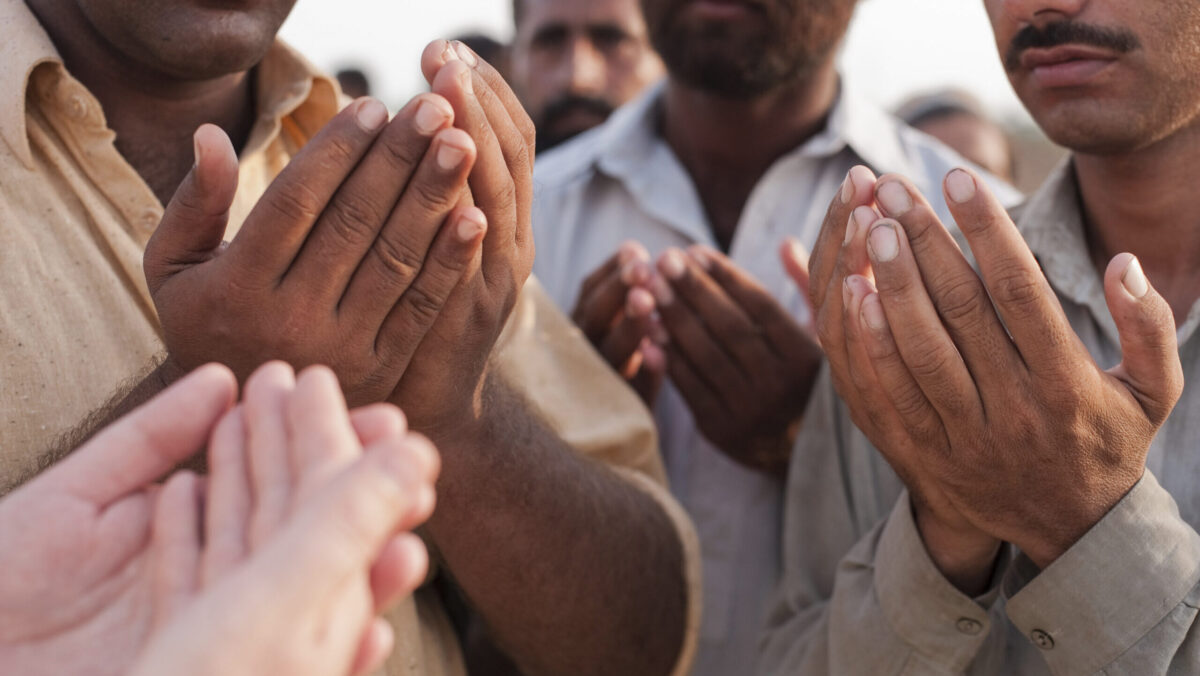
In a South Asian area of more than 100 million people, a stark reality shapes the work of local believers: there’s no place to buy Bibles.
For James Andretti, an International Mission Board missionary, that reality highlights both an enormous challenge and a remarkable opportunity.
While God is bringing people to faith across the region, demand for Scripture is growing faster than traditional distribution methods can keep pace.
Check out more stories on international missions.
“We can’t multiply disciple-makers fast enough to keep up with the number of new believers,” Andretti said. “So we’re asking, how do we get God’s truth to more people?”
Andretti, his wife, Angela, and their family arrived in South Asia more than 10 years ago, expecting a difficult spiritual landscape shaped by deeply rooted religious traditions. What they discovered instead was a growing movement of believers hungry for God’s Word.
As they invested in discipleship and church planting, they saw firsthand how Scripture fuels spiritual growth. Yet with limited access to printed Bibles, many believers were left without one of the most important tools for their faith.
Gaining support
To help meet that need, ministry partners have stepped forward in significant ways. One donor committed to funding the distribution of 10,000 fully printed Bibles each year, a goal the team is now meeting for the second consecutive year. Additional New Testaments and Scripture portions are also being distributed throughout the region.
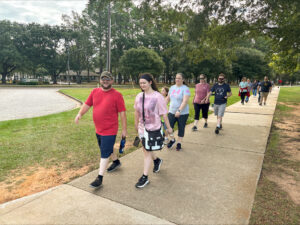
A Southern Baptist church in Mobile, Alabama, is also supportive. The church participates in a Walk for Bibles event, which supports another Bible distribution ministry, but the church wanted to also support the work Andretti is doing.
The church in Mobile had 91 members making the trek in Walk for Bibles last year. This resulted in church leaders delivering a check of $9,100 to Andretti in South Asia.
“We take our partnership with the IMB seriously,” the pastor said. “We know one tangible way we can support is visiting believers in South Asia and helping them get God’s Word in their hands, so they can grow in their walk with the Lord.”
‘We don’t want Bibles sitting around’
But Andretti knew printed copies alone would never be enough.
“We don’t want Bibles sitting around,” he said. “We want to get as many people as possible access to God’s Word.”
Rather than concentrating thousands of Bibles in a few locations, Andretti and his team strategically distribute them across districts, placing them in the hands of pastors and lay leaders who can share them with others. A tracking system helps teams monitor where Scriptures are being distributed and identify areas where relationships and discipleship networks are growing.
As demand increased, the team began exploring digital solutions.
Last Christmas, they printed 10,000 wallet-sized cards containing QR codes. One side links users to an online Bible, while the other connected them to a video presentation of the Christmas story. The cards cost about a penny each and could be distributed widely through local churches and ministry partners.
The response was immediate.
“After Christmas, our partners came back and said, ‘We need more of those cards,’” Andretti recalled.
Another 10,000 cards were printed in January. Then, 20,000 more were distributed at Easter. Today, the team plans four quarterly distributions of 20,000 cards each year, putting digital access to Scripture into the hands of approximately 80,000 people annually.
The strategy reaches both literate and non-literate audiences, providing access to written Scripture as well as video and audio resources through smartphones.
“We’ll keep giving out these cards until our partners tell us everybody who wants a Bible has one on their phone,” Andretti said.
Training others to share God’s Word
The effort reflects a broader commitment to ensure God’s Word remains central to the growth of the church. Andretti points to believers like Anand, a national ministry partner whose life demonstrates the transformative power of Scripture.
Years ago, Anand led a growing network of house churches. What impressed Andretti most was not the size of the ministry but Anand’s devotion to God’s Word. After learning a simple Bible study method built around questions about God’s character, humanity, obedience and personal application, Anand systematically worked through the entire Bible, recording insights passage by passage.
For many believers in the region, Scripture is often the only Christian resource available.
“There are no theology books in their language, no commentaries,” Andretti said. “The Word of God is all they have, and they treasure it.”
That reverence for Scripture extends beyond believers. Andretti remembers sitting in a circle reading the Bible when a volunteer accidentally touched God’s Word with his foot. A collective gasp filled the room.
“The local people couldn’t believe somebody would touch a holy book with their foot,” he said. “They have such deep respect for God’s Word.”
That respect fuels Andretti’s desire to place more Bibles in more hands. He believes Christian leaders like Anand will become spiritual “feeders,” believers who nourish themselves through Scripture and then help others grow in faith.
“They’re going to feed others,” he said. “There are people around them who need to be fed.”
Praying for more Bible distribution
Looking ahead, the team is also exploring partnerships that could expand access to audio Bibles for oral learners and non-literate populations. While the devices remain costly, Andretti hopes collaboration with like-minded ministries can open new doors.
Pray that printed Bibles and digital resources reach the right people. Pray for logistics that allow Scriptures to move freely across the region. Pray for those who still lack access to smartphones. And pray that God’s Word continues spreading far beyond what any team can measure.
“We probably won’t even know the fruit for years,” Andretti said. “That’s OK. God knows.”
Names have been changed for security.
EDITOR’S NOTE — This story was written by Chris Doyle and originally published by the International Mission Board.
Share with others: