
Gathering numbers on church worship styles and music programs can be a difficult task, said Keith Hibbs, an associate in the office of worship leadership/church music at the Alabama Baptist State Board of Missions (SBOM).
“Our idea is that if a church has any type of music in worship, we consider that a music ministry,” Hibbs said.
“So almost every church has a music ministry of some kind, even if it’s just playing hymns and singing in worship services. But it’s difficult getting people to report that (as music ministry) because they don’t consider that ministry.”
A variety of factors other than church size affect the types of music programs a church offers and the church’s worship styles. Indeed, the only aspect that size tends to affect is whether a church offers age-graded programs.
“The smaller churches tend to have programs that aren’t as age specific,” Hibbs said. “While most churches from 100 members up would have some type of age-graded programs.”
For example, a small church may have one choir for church members of all ages, from eight years old to senior adult, or two choirs, one for adults and another for youth, ranging in age from small children to teenagers.
The age-graded programs would reach more specific age groups, such as preschool, school-age, teenagers, adult and senior adult.
“The biggest positive of age-graded programs is they are a better-tailored ministry toward individual development and needs, and with all-inclusive music, the vocal range of a child and his understanding of the music is different from that of an adult’s,” Hibbs said.
Some churches are even moving away from the choir structure and diversifying into other music ministries, such as praise teams and orchestras.
But Hibbs pointed out that tradition, geographic location, leadership and outreach targets all factor in to music program styles.
“A church’s size could be grounds for a wider variety of programs, but tradition could dictate exactly what those are,” Hibbs said. “For example, it would be hard to change a church with a strong tradition of a particular style of music, such as gospel, no matter the church’s size.”
The location of a church can also influence music styles, with rural churches more influenced by gospel music and urban churches that use more urban or contemporary music.
A church’s style of worship, whether contemporary, traditional or a mixture of both, is usually independent of size and strongly dependent on outreach emphasis.
“Usually traditional worship styles are targeted more toward the older generation,” Hibbs said. “Whereas a church targeting the younger generation might have a contemporary service or have a youth service on Wednesday night.”
This generational targeting can affect a church’s music programs as well. “A church chartered with the purpose of reaching the younger generation may go more to the praise team format, rather than a graded choir. It would be more concerned with meeting worship ministry needs as opposed to educational music classes,” Hibbs explained.
The leadership of a music ministry is important, Hibbs added. Currently shortages exist in two areas of music ministry.
One is that of bivocational or volunteer music/worship leaders, and the other is a need for volunteer or part-time accompanists. Having either position unfilled or poorly filled affects the quality of the individual church’s music ministry.
Hibbs said the diversity of worship styles and forms in Alabama’s churches is a positive thing.
Ray Burdeshaw, director of the SBOM’s office of worship leadership/church music, agrees. “We are a very diverse denomination. We have every kind of worship that you can imagine, and we need to celebrate that,” he said.
Regardless of worship style or type of programs, it is important for church members to be involved in a participatory role in worship, Hibbs said.
“Ninety percent of the average church member’s theology is formed through hymnology, singing songs,” Hibbs said. “The simplicity of the language in hymns is easier to understand. The heart and mind both receive that and remember it better because it is set to music.”
Carey Baptist Association opens new thrift store
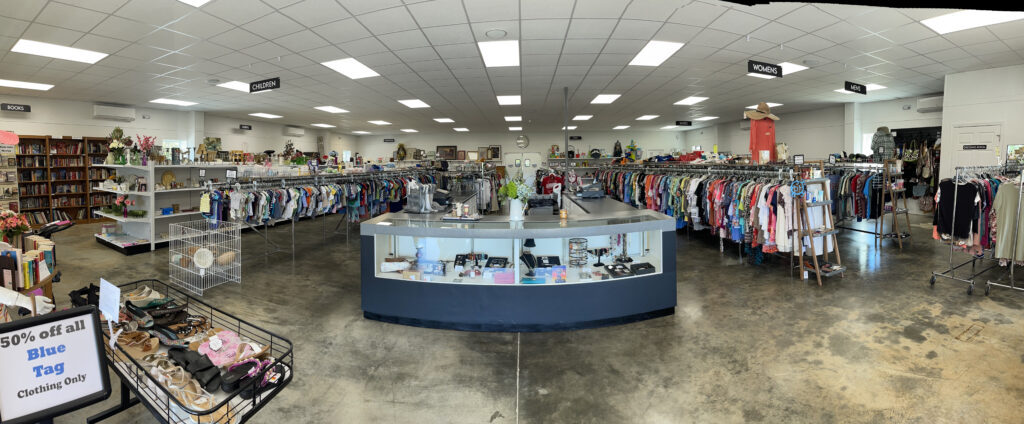
Carey Baptist Association is blessing the community through a new thrift store at 82030 Highway 9, Ashland.

Birmingham after-school program making a difference in the lives of children
Discovery Clubs, an after-school program in 23 schools in the Birmingham Metro area, is all about sharing the redemptive story of Scripture with children who might have no other exposure to the gospel.
Headline news from around the Southeast for September 30
Arkansas Seeking a creative way to engage with students at the start of the academic year, Mark Parsley, student pastor

First Priority of Alabama seeing students ‘hungry’ for fellowship, spiritual answers
Supporters of First Priority of Alabama joined together for the Topgolf challenge Sept. 9 in Birmingham. The lunch event drew
Share with others: