
Jacobo Garcia is a man possessed by a vision. That is why he resigned as general director of the National Baptist Convention of Venezuela to become director of missions and evangelism for the national body. Garcia did not mind taking a lower position because it allowed him to devote all his energy to the vision of winning Venezuela to Christ.
At the convention’s annual meeting, held Feb. 24–27 at Camp Carabobo near Valencia, he saw some of that vision nearing reality.
On the stage for the first time were representatives of indigenous tribes of Venezuela. Garcia made his first visit to the Amazon area of Venezuela in the early 1970s, and now he was seeing some of the fruit of his leadership and the result of the work of national missionaries.
During the 30-plus years between Garcia’s first visit and the meeting, some indigenous Christians were trained in the Venezuelan seminary and returned to the Amazon area to win others to Christ. Today there are scores of churches and preaching points among the indigenous people. And during the annual meeting, the convention voted to create its 12th association, this one composed of indigenous churches.
In the years before the partnership with Alabama Baptists, four or five churches might present themselves for membership annually. This year, 24 churches were voted into the convention. More than 20 others have applied.
Another sign of progress was the baptismal report. Venezuelan Baptists set a goal of 10,000 new baptized believers by the end of the partnership. The total number reported exceeded 12,000.
“We do not have the best records,” Garcia confessed. “We may have had more baptisms than that, but according to the statistics available to us from the churches, we exceeded the goal in number of baptisms.”
The convention also surpassed its goal of 35,000 church members. At the beginning of the partnership, churches reported 25,000 members. Now the number is nearly 36,000.
While Garcia is quick to praise Alabama Baptists for their contributions to the growth, he also points to the convention’s participation with other South American nations in the New Life in Jesus campaign. Venezuelan Baptists set their goals for the New Life campaign, and then Alabama Baptists agreed to help them work toward those goals. “Whatever God did, He did it through us working together,” observed the missions leaders. “We worked as a team to do God’s work. To Him be the glory.”
While the convention did not reach its goals for new churches or new missions, it did make remarkable progress. The number of churches increased from 273 to 473, and the number of missions grew from 175 to 380.
The convention also doubled its missionary force. In 2000, Venezuelan Baptists supported 25 missionary units through three different plans. Today there are 50 missionary units on the field. “God is doing a great thing in Venezuela,” Garcia declared. “This nation is on the verge of becoming what you Southern Baptists call ‘a harvest field.’”
As rewarding as the partnership was, he still wonders about “what might have been.”
“In 2001, you sent your largest team of the partnership to Maracaibo, and God did a great work there. More than 5,000 public decisions were reported. We were better prepared for the next year’s campaign in Caracas and Valencia.”
But that campaign never happened. The terrorist attacks of 9/11 frightened many Americans away from traveling overseas. Venezuela also experienced political chaos that saw the forced resignation of the president, his reinstatement, nationwide strikes and violent political unrest.
Garcia said the cancellation discouraged a lot of pastors and partnership officials had to work hard to restore enthusiasm for the effort. “Apart from the Spirit of God, Reggie Quimby (Alabama Baptist missions partnership director) deserves the credit for the success of the partnership. Reggie kept on coming and encouraging the pastors.”
In the end, more than half the churches and all 12 of the associations joined in partnership projects.
Even though the partnership has ended, efforts to reach Venezuela for Christ continue. Immediately before this year’s convention, Venezuelan Baptists sponsored what Alabama Baptists know as a Crossover event in the barrio adjoining the convention site. The effort climaxed with an evangelistic campaign in a nearby stadium. When the invitation was given, 350 people registered first-time public decisions for Christ.
Garcia left the meeting rejoicing in the blessings of God on the Alabama–Venezuela partnership.
First Baptist Church, Union Springs, Heart of Missions
About 30 members from First Baptist Church, Union Springs, and other area churches will travel to Caruthersville, Mo., July 19–26
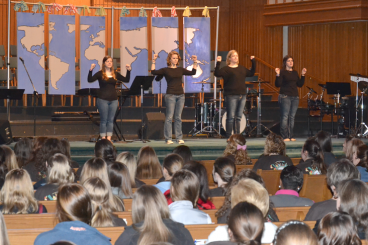
Teen girls learn about missions at Complete
The sent life is not the safe life. That was the message driven home to nearly 500 teen girls and
Lottie Moon gave her life to answer question, ‘How many can I reach?’
She died on board a ship 100 years ago Christmas Eve — sick, exhausted, brokenhearted over leaving her beloved Chinese
100 years after Lottie Moon’s death, IMB missionaries still risking it all
Nepalese pastors brave threats and bombs to see Christ’s name glorified in the Himalayas. Believers in West Africa bury a
Share with others: