
Political leaders and grass-roots petitioners have asked President George W. Bush to issue an executive order that would allow chaplains to pray in public according to their religious beliefs.
Jay Sekulow, chief counsel of the American Center for Law & Justice, a Washington-based legal organization, is spearheading a petition drive that has collected more than 80,000 signatures. Rep. Walter Jones, R-N.C., and dozens of members of Congress have made a similar request.
The requests come at a time when the Air Force faces legal action about alleged proselytism in its ranks. It also recently released interim guidelines about religious expression, fueling concern among Christian conservatives that religious freedom is under assault.
On his live radio show, Sekulow called the issue “one of the hottest topics” this year. “It’s not just the guidelines issue,” he said. “It’s an undercurrent inside the chaplaincy right now that has military chaplains feeling like they’re muzzled.”
Air Force Chaplain (Maj.) Jim Glass said he does not feel that he has had to compromise his beliefs or the gospel to fulfill his role as chaplain. Glass, who calls Alexander City home, served as an Alabama Baptist pastor before re-entering the Air Force as chaplain. He currently serves as chief of the excellence division at the Center for Character Development at the U.S. Air Force Academy in Colorado Springs, Colo.
Glass said some chaplains, especially those coming from a civilian background, may feel restricted in the military because they are either used to a freer environment or thought the military would be a “wide-open place to witness.” But “(Chaplains) adapt the delivery of (their message) to different audiences so the message comes across clearly without being compromised,” he said, noting the apostle Paul’s directive to be “all things to all people.”
Military officials say a chaplain’s speech should depend on his setting. “The typical chaplain is able to function as he/she would in their native faith group setting the vast majority of the time,” said Air Force Col. Richard K. Hum, executive director of the Armed Forces Chaplains Board. “The government cannot dictate to a chaplain how they should pray. … But DoD (Department of Defense) directives require that chaplains be cognizant of the ‘pluralistic military environment.’”
Chaplain (Capt.) Scott Bush, an Individual Ready Reservist with the Army National Guard and pastor of Southcrest Baptist Church, Bessemer, in Bessemer Baptist Association, said, “Sadly (pluralism) has come to mean something like ‘lowest common denominator’ spirituality.” But for chaplains, “pluralism means we acknowledge (the military’s) diversity, not that we accept all views as correct. It also means that we must be committed to the distinctives of our own faith.”
Glass agreed, saying, “(Chaplains) need to know who we are and what we are about for people to come to us for help.”
This includes being ready to share one’s faith and beliefs when asked, he said. “You have to be very discerning and respectful.”
Part of the military’s pluralism means ministering to soldiers of all faiths and denominations, said Matthew Madison, an Alabama native serving as a career Southern Baptist chaplain in the Army.
“The main reason chaplains exist in our armed forces is to ensure that soldiers’ religious ‘free exercise’ rights are protected,” Madison wrote in an e-mail to The Alabama Baptist from his base in Afghanistan. “No matter what faith group my soldiers belong to, I am an advocate for them to exercise their faith within the constraints of the military.”
The guidelines for Air Force chaplains, which could be finalized by year’s end, have prompted additional concerns about what chaplains can and cannot do. Jones’ letter to the president, signed by 74 members of Congress, states the new guidelines will limit how Air Force chaplains can pray. “Praying in the name of Jesus is a fundamental part of Christian belief and to suppress this form of expression would be a violation of religious freedom,” Jones and others wrote.
Sen. Sam Brownback, R-Kan., expressed in another letter to Bush his concern about a section on chaplains in the guidelines, which reads: “They must be as sensitive to those who do not welcome offerings of faith, as they are generous in sharing their faith with those who do.”
The guidelines also state “a brief, non-sectarian prayer” can be used in “non-routine military ceremonies.” Air Force spokeswoman Jennifer Stephens said the Air Force may be “refining” that section for the future set of guidelines.
As it mulls the exact wording of the rules, the Air Force faces a lawsuit from Air Force Academy graduate Mikey Weinstein, who wants to halt what he considers unconstitutional evangelistic practices within its ranks, among chaplains and others. His suit cited an Air Force deputy chief of chaplains who said chaplains would not proselytize but could evangelize the unchurched.
The Air Force chaplains issued a code of ethics statement in January with similar wording. It differentiated between converting people of other faiths and evangelizing those “not affiliated” with any religion. Stephens said that statement was “withdrawn for further study” two months before Weinstein filed suit.
While some groups claim the eventual guidelines and an executive order from President Bush will help clarify permissible activities for chaplains, Glass said much of the perceived confusion stems from lawsuits such as Weinstein’s and “other attacks on faith expression.”
He said one solution is to follow the example of service men and women adjusting to the military’s diversity. “I think … we need to sit back and learn from each other.” (RNS, Erin Webster contributed)
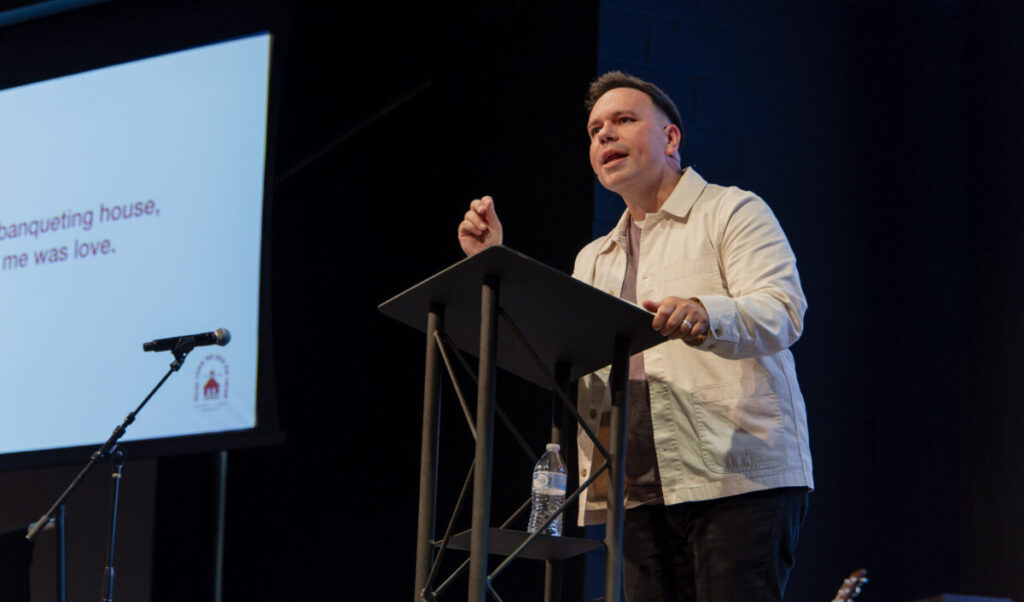
Medders encourages students to embrace love of Christ
Jeff Medders reminded University of Mobile students during a recent chapel service that they cannot lose their salvation — because they are secure in Christ.
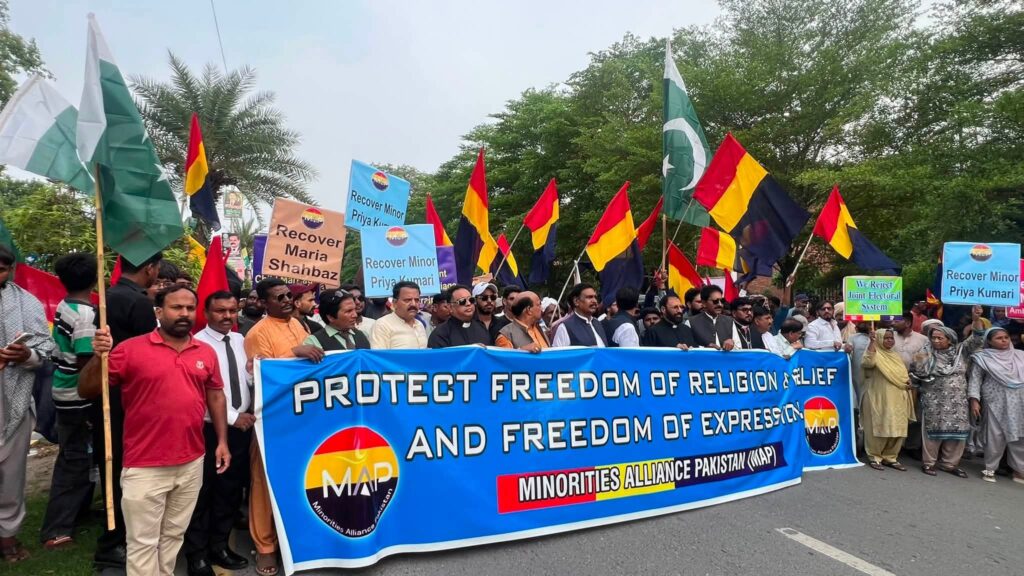
Two Christians may face death penalty on blasphemy charges
Blasphemy allegations that could result in the death penalty have been logged against two Christians in Pakistan.
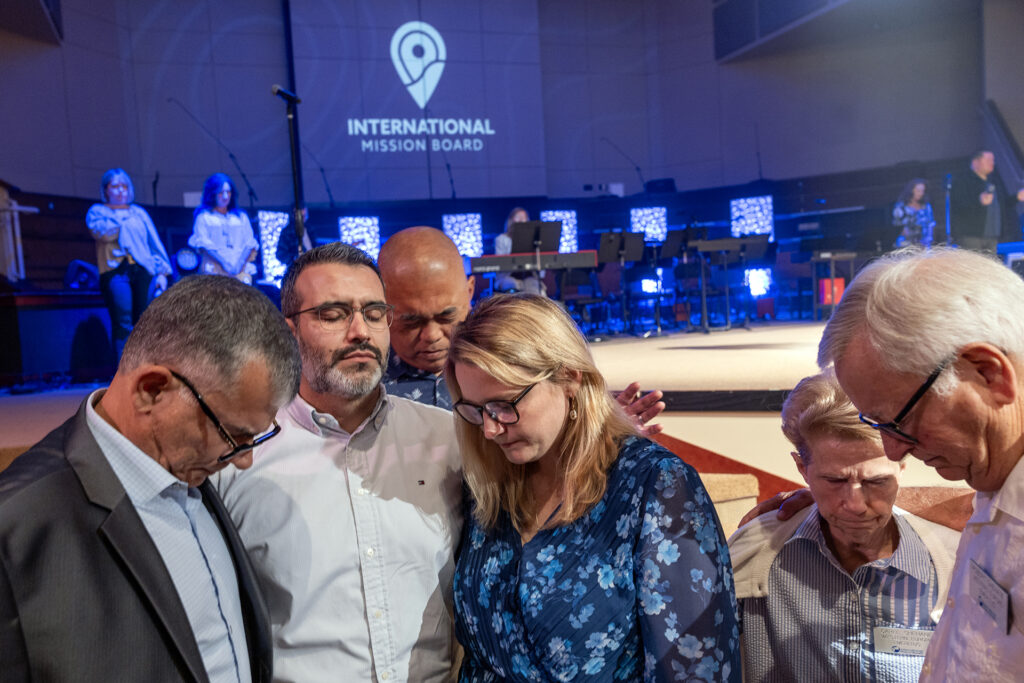
Southern Baptists celebrate 46 new IMB missionaries
Southern Baptists gathered Sept. 16 at The Heights Baptist Church in South Chesterfield, Virginia, to celebrate 46 International Mission Board
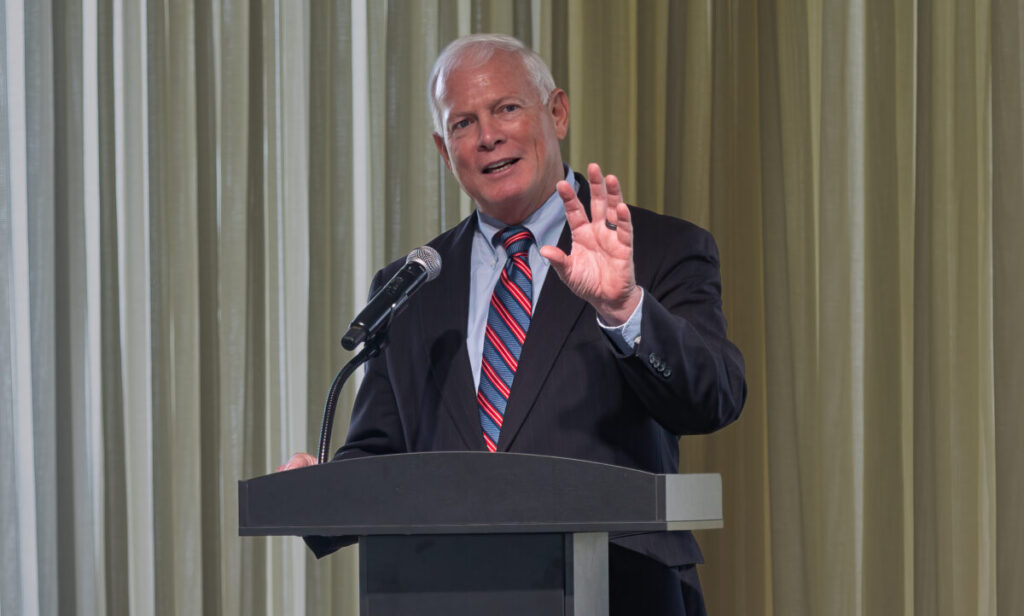
Christ followers must live with ‘sense of urgency,’ IMB’s Fort says
Gordon Fort was a world away from home when he awoke in the middle of the night to a Facetime call from his daughter.
Share with others: