

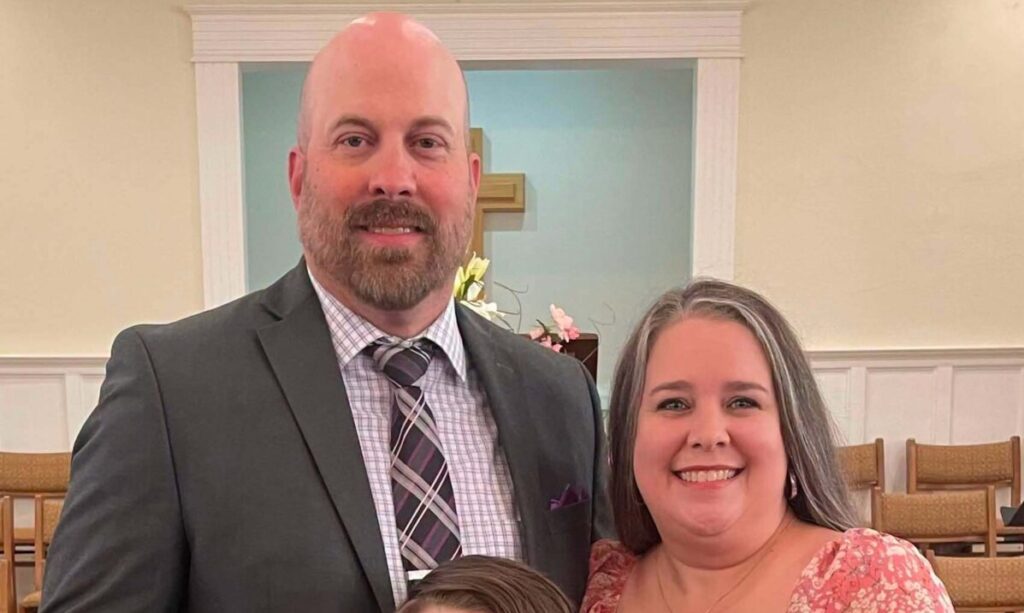
Dennis Sims has been in the construction industry for 20 years, so he’s learned how to juggle that with raising a family. But for the past 15 months, he’s been squeezing in another calling, too — one that has him in the pulpit quite a bit when he’s not at the work site.
"This is my first church to serve as a pastor, and the Lord is just blessing beyond measure," said Sims, who serves part time as pastor of Chapel Hill Baptist Church, Florala, in Sardis Baptist Association.
He said the biggest challenge is just trying to be there when his congregation needs him — and juggling his construction job; an hour-and-a-half, one-way commute to his construction company; and his family time.
"The Lord always puts the strength there, but it’s definitely kind of full," Sims said of his schedule with a laugh.
He’s not alone in his plight.
According to a new study done by LifeWay Research, the top challenge facing small-church pastors is finding enough hours in the day to do the Lord’s work. The study surveyed 400 pastors of small churches, which are defined as congregations with 100 or fewer in attendance on Sundays.
Brad Waggoner, vice president of B&H Publishing Group and former LifeWay Christian Resources vice president over the research and ministry development division, said 32 percent of the study’s respondents said they are bivocational pastors and don’t have enough hours in the day to do what they were called to do.
"I read comment after comment that said pastors were under pressure to juggle responsibilities," Waggoner said. "The fact is they have 24 hours a day, seven days a week. They worked at their job somewhere and also dealt with the church. They were tired, drained of energy. They try to fulfill their calling and get the job done. There’s no easy way to get it all done.
"All pastors fight that battle. Every leader is tired. But at the end of the day, they trust the Lord to do the best they can with [the] energy they have and just trust Him."
According to the study, other challenges faced by pastors of small churches included:
– Resistance. Small-church pastors said their congregation doesn’t want to change, which leads to stagnation. Pastors have to deal with individuals who want to usurp authority from the pastor, forgetting that it’s God who controls His church.
"We have to patiently hold the standard high and teach the Word of God," Waggoner said. "It takes awhile for the church to grow biblically … and takes expositional teaching for the church to get healthy. We can’t lower the standards of church. Preaching precedes change. We have to raise the bar of expectations."
– Lack of commitment from members. Many pastors said they deal with apathy and indifference. Waggoner said it doesn’t matter what the size of the church is but small churches feel it more. "There are no quick fixes," Waggoner said. "It can’t be about the man in the pulpit. We hear so much fluff and stuff. We try to sneak up on people with discipleship. You have to start out with discipleship. We’ve underestimated the power of a godly man or godly woman."
– Too few workers. If the church’s philosophy is that the pastor is a hired gun, the professional, it will wear the pastor out, Waggoner said.
He also said most churches do not have a strategy to equip the laity for ministry.
"You have to teach what the Bible says about the pastor’s role," Waggoner said.
"I think every church should have a class on teaching spiritual gifts so people … can take the next step on finding a place in the church ministry. You have to look people in the eye. There needs to be a strategy for involvement which fits the size of your church," Waggoner said.
– Age of the congregation.
As the church gets older, young people do not feel attracted to the church.
Waggoner said there’s no easy answer but pastors have to serve whomever God brings into their midst.
"Talk to the young people," Waggoner said. "There may be things that can be done to reverse it."
– Lack of money.
Waggoner said he has no easy answers for pastors who say they don’t have resources.
He did say pastors have to do a better job of teaching about the importance of tithing.
"Too often we preach [on money only] when we go into a building campaign or there’s a budget shortfall," Waggoner said. "I think we should teach God’s standards on biblical discipleship along the way. It should be part of disciple making. You honor the Lord with your wealth."
– Worldliness of the church. Waggoner said he saw in the survey something he called "cultural seepage."
"We allow the world’s standards to come into the church," he said. "Sometimes we have propagated that through our arrogance. We’re dictatorial, self-absorbed. Often preaching becomes a performance. Preaching is not an end but a means. Have we allowed the world to permeate how we think?"
– Age of the pastor. Several said they are getting too old in the survey.
– Too few people. In the survey, pastors said they couldn’t get things done because not enough help was available.
– Demographics. The community around the church is changing but the church isn’t growing. (BP, TAB)


Share with others: