
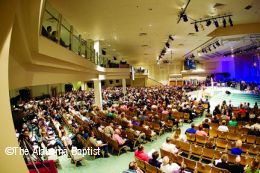
Research conducted for Facts & Trends magazine shows two-thirds of all American Protestant churchgoers feel they will continue attending the same church in the near future.
Facts & Trends
The findings are from a study conducted for Facts & Trends by Ellison Research of Phoenix among a representative sample of 1,184 adults who attend a Protestant church in the United States at least once a month. The study examined loyalty to denominations and specific churches, as well as length and frequency of attendance.
The average length of time adults have been attending the same church is 13.7 years. However, averages can be skewed by a relatively small number of people who cite very high numbers, with some churchgoers having attended the same congregation for decades. Probably a more accurate reflection of churchgoers in general is the median figure of 6.6 years, which means half of all churchgoers have been attending the same church for less time and half for a greater length of time.
Out of all churchgoers, 13 percent have been attending their current congregation for less than a year. Another 16 percent have been at their current church for one to two years, 11 percent for three to four years, 18 percent for five to nine years, 16 percent for 10 to 19 years and 26 percent for two decades or longer. People who are 55 or older are particularly likely to be longtime participants in the same church, with a median length of attendance of 15 years.
The denominational groups most likely to show frequent attendance or participation in church (i.e. more than once a week) are Pentecostals and Baptists. In general, people attending evangelical churches are more likely to be involved more than four times per month than those attending mainline Protestant churches (46 percent to 36 percent). People under the age of 35, meanwhile, are less likely than others to be involved more than four times per month.
While two-thirds of all churchgoers said they definitely will continue to attend the same church in the near future, 25 percent said they "probably" will continue attending the same church, while 7 percent said they may or may not do so and 1 percent were already making plans to leave their current church.
Loyalty to a specific church varies by length and frequency of attendance. Seventy-four percent of those who attend weekly or more definitely plan to continue attending the same congregation, compared to 48 percent of those who attend less than once a week. Similarly 72 percent of adults who have attended the same church for four or more years definitely plan to continue doing so, versus 62 percent among those who have attended for one to three years and 49 percent for those who have attended their current church for less than a year.
Although most people are not planning to change churches, the study looked at denominational loyalty by asking what they would do if they had to change (for instance, if they moved to a different area).
Twenty-eight percent of all churchgoers said they would only consider attending a church of the exact same denomination they attend right now, while another 41 percent strongly preferred this but would have at least some openness to another denomination. Fourteen percent showed some preference to their current denomination but were open to others, 16 percent said the exact denomination of the church really doesn’t matter to them and 2 percent would prefer to switch denominations.
There are not strong differences in denominational loyalty between people in mainline and evangelical churches, but there are some very distinct differences among different major denominational groups. Lutherans are clearly the most loyal group, as 52 percent of them say they would only consider attending a church within their current denomination.
is published bimonthly by LifeWay Christian Resources of the Southern Baptist Convention.
Methodists are less likely than average to say they would only attend their current denomination (16 percent) but more likely to say they would strongly prefer to remain in their denomination (59 percent). Baptists are about average in their denominational loyalty.
Denominational loyalty, like church loyalty, is strongly connected with the length of time people have spent in their current congregation. The longer they have been attending the same church, the more likely they are to say they strongly prefer or would only consider a church in that same denomination.
Ron Sellers, president of Ellison Research, noted that it would be a mistake for individual churches or denominations to assume a level of loyalty among attendees that may not exist. "It’s important that pastors or denominational leaders don’t automatically assume the people in the pews are ‘our people,’ because the data suggests a significant minority don’t hold a level of loyalty that would make that an accurate assumption."
Sellers also noted that the study may help pastors think about and understand their own congregation a bit more. "In the typical Protestant church, about one out of every eight people in the congregation has been attending that church for less than a year. What should this mean for the typical church? Does the church have a strategic plan for involving newcomers in the life of the congregation?" (BP)


Share with others: