

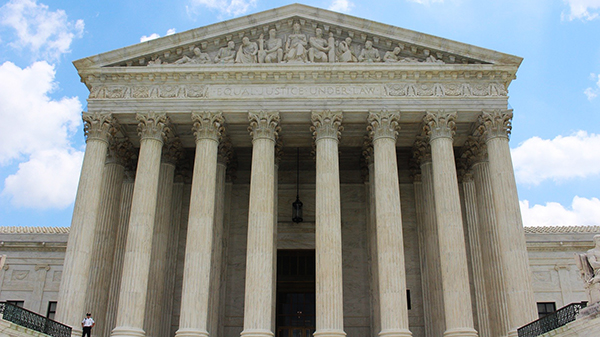
The Alabama Supreme Court gave the citizens of this great state a huge Christmas present Dec. 1, when the court unanimously ruled video gambling slot machines illegal (see story, page 3). Unfortunately it is unlikely the Supreme Court ruling will be the last word on the gambling issue.
Video gambling slot machines have leeched the economic lifeblood out of Alabama ever since the South Carolina courts drove big-time video gambling from that state in 2000. Within days, video gambling parlors began popping up all over Alabama as national gambling forces relocated machines. A year after the South Carolina decision, Jefferson County alone had more than 6,000 video gambling slot machines in nearly 80 locations.
The money involved is too big to think the gambling industry will suddenly become a good citizen just because what it is doing is declared illegal.
How big? In 2005, gambling forces tried to get their video gambling slot machines legalized at Alabama dog tracks. The fiscal note attached to the legislation estimated that one machine with average play would take in $83,120 annually. The bill estimated the dog tracks would have at least 6,000 slots. That means gambling would have sucked $498,720,000 out of Alabama citizens just at the state’s four dog tracks. That is big money.
And, of course, that did not include the unspoken agenda of offtrack gambling parlors or the addition of new dog tracks.
According to University of Illinois economist John Kindt, for every $100,000 taken out of the economy by gambling, the community loses one job. That means the gamblers in the state Legislature would have robbed Alabama of 4,987 jobs, while giving the dog track owners almost $400 million each year after taxes with just one bill.
Kindt declared, "Gambling always fails when there are fact-based tests and cost-based tests. It is simply Economics 101. It takes money out of the rest of the economy." Experience has proven the accuracy of his axiom.
The recent decision is not the first time the Alabama Supreme Court has weighed in on the video gambling slot machine issue. In April 2001, the state Supreme Court issued an advisory opinion, stating, "It is difficult to conceive of any situation where video games of the kind described in Senate Bill (S.B.) 257 would not be considered a lottery under Section 65 … But we specifically find that video games of the sort described in S.B. 257 are unconstitutional."
The opinion seemed clear enough, but it took almost a year (March 2002) before then-Attorney General Bill Pryor declared that all forms of slot machines, including electronic- and video gambling machines, were illegal in Alabama. His finding allowed sheriffs across Alabama to close down gambling parlors — big and small — that had become blights on their neighborhoods.
After the recent ruling, Birmingham Councilwoman Valerie Abbott observed that video gambling slot machines, sweepstakes and other related operations had driven out "legitimate businesses." "Who wants to move their insurance agency in front of a 777?" she asked.
Nationwide citizens are saying no to gambling. In the most recent round of voting, citizens in Nebraska, Ohio and Rhode Island all defeated plans to expand gambling, including video gambling. Although South Dakotans voted to keep video gambling legal, the citizens drive to ban video bingo in the states illustrates that more and more people are waking up to the problems of video gambling.
Video gambling slots have been called the "crack cocaine" of gambling. Video gambling is addictive. It is corrupting. Less that a decade ago, Louisiana politics were rocked with the scandal and payoff schemes linked to video gambling that led to indictments and jail time for public officials.
Still some public officials are intrigued by the promise of easy money without raising taxes. In Birmingham, for example, the city law department was drafting a bill to tax the video gambling slot machines at a rate of $3,000 a piece and then legalize them prior to the December Supreme Court decision.
It is amazing what the clinking of coins in the public coffers will cause some elected officials to contemplate. The fact that it costs society about $3 in social cost for every $1 gained in taxes, according to Kindt, gets overlooked too often.
Gambling interests tried to get around the 2002 decision with a creative Internet scheme called MegaSweeps. And while the courts argued over its legality, gambling owners continued to pocket millions of dollars. Finally the Alabama Supreme Court said no.
Hopefully this is the final nail in the coffin of video gambling slot machines in Alabama. Maybe the gambling crowd will close down here as they closed down in South Carolina but probably not. The gambling crowd has strong friends in the state Legislature and some sat in leadership positions in past years. If that continues, then recent history teaches a major effort to change state law and legalize video gambling slot machines will be made when the Legislature convenes March 6, 2007.
But this Christmas season, the video gambling slot machines will be out of business thanks to the 8–0 decision. That is a wonderful Christmas present that benefits all of Alabama.


Share with others: