
She was a Caldwell, Texas, tomboy who could play tennis or volleyball with the best of the local boys. She was the product of a solid, blue-collar family, with a dad who she thought hung the moon.
In the mid-1970s, Brenda Crim took her God-given athletic ability 30 miles down the road to College Station, where Texas A&M gave her a four-year scholarship to play volleyball as an Aggie. In a college career driven by athletics, Crim always thought she’d one day be the coach of a college team. And she didn’t want to be just any coach, but one of the greatest women’s coaches ever.
Fast-forward to winter 2008. It’s 18 degrees outside with two feet of snow on the ground. Crim tools down an Anchorage, Alaska, road in her silver Toyota pickup.
Since 2005, Crim has served as director of the Baptist Collegiate Ministry at the University of Alaska-Anchorage (UAA) and as a North American Mission Board (NAMB) missionary. Though she never realized her dream of becoming a sports coach, today she coaches young people in the toughest spectator sport of them all — life.
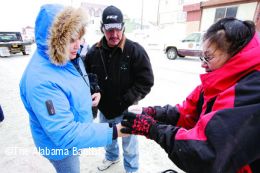
Since arriving in Anchorage, one of Crim’s prized connections is with 22-year-old Melissa Okitkun, the daughter of a Yup’ik Eskimo seal-hunter from the small west Alaska village of Kotlik. Melissa, now a Christian, is a spiritual magnet attracting UAA students to Crim’s “Breakaway” student worship on Tuesdays and to Friday night discipleship dinners at her home.
“Student leaders are the best missionaries to reach other students,” Crim said. “Engaging students in leadership to reach others is a key philosophy in student ministry.”
Every Friday night, Crim hosts a discipleship dinner and Bible study attended by dozens of students — a session that may go until the wee hours of Saturday morning.
“I prepare a home-cooked meal, get the students off campus, give them a place to be and try to create options for some good clean fun. My home becomes full of life and good things always happen.”
The students — many of them, like Melissa, Alaska natives from isolated villages — encourage each other through small groups, revealing the tough lives they left behind when they came to the university in Anchorage. “Some of the things they talk about from home will just tear your heart out sometimes,” Crim said. “It’s wave after wave of bad news, and it’s hard for them to wage the mental battle that goes with it.”
You won’t find the social problems and taboos these students encounter back in their villages mentioned in the Alaskan cruise line ads or on the Travel Channel. Tourists to Alaska would be shocked.
“Sometimes students share their despair in personal conversations,” she said. “Alaska is a leader in the nation in suicide, rape and alcoholism. Many young girls were the victims of rape and incest back in their villages.
“Women are needed here who are willing to be patient, listen, be a friend and walk through life with them,” Crim said. “Even though prime-time television is intrigued with Alaska, Americans don’t hear about our tragic social issues because it’s not popular for tourism or the cruise industry.”
Crim learned firsthand about life in Kotlik when she, Melissa and a few others took the six-hour, 500-mile plane trip between Anchorage and Kotlik, which is located where the Yukon River pours into the Bering Sea on the western coast of Alaska.
When Crim hosted a student retreat during the trip to Kotlik, 40 Yup’ik youths gave their lives to Christ.
Crim said there are some 130 villages in the state of Alaska along the Arctic Circle without a single Christian witness. “That means no Baptists, no Methodists, no anything. That’s why the ‘Melissas’ are so important. We must develop indigenous leaders.”
For more information, visit www.anniearmstrong.com. (NAMB)


Share with others: