
First the silver lining: People of faith are better citizens and neighbors and America is “amazingly” religious compared to other countries, says Harvard University professor Robert Putnam.
Now the cloud: Young Americans are “vastly more secular” than their older counterparts, according to Putnam. “That is a stunning development. The youth are the future. Some of them are going to get religious over time, but most of them are not.”
A celebrated political scientist, Putnam has long been concerned with declining participation in American civic life, as described in his best-selling book “Bowling Alone: The Collapse and Revival of American Community.” When Elks clubs and parent-teacher associations lose members, the ties that bind society unravel, he argued.
But religious people may be God’s gift to civic engagement, Putnam and University of Notre Dame scholar David Campbell argue in their book “American Grace: How Religion Is Reshaping Our Civic and Political Lives,” which is scheduled to be released next year.
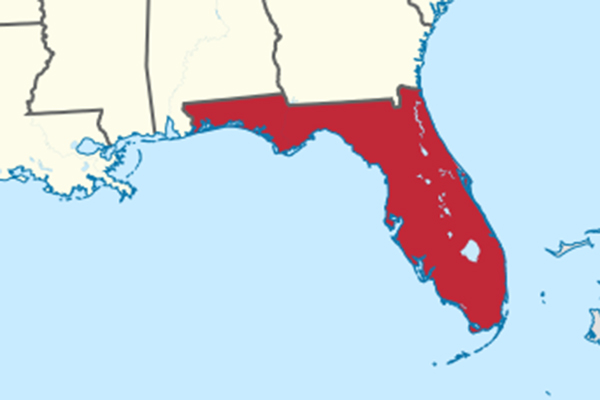
Putnam and Campbell unveiled some of their research at a recent conference in Key West, Fla., hosted by the Pew Forum on Religion & Public Life.
The scholars said their studies found that religious people are three to four times more likely to be involved in their community. They are more apt than nonreligious Americans to work on community projects, belong to voluntary associations, attend public meetings, vote in local elections, attend protest demonstrations and political rallies, and donate time and money to causes — including secular ones.
At the same time, Putnam and Campbell said their data show that religious people are just “nicer”: They carry packages for people, don’t mind folks cutting ahead in line and give money to panhandlers.
The scholars said the link between religion and civic activism is causal, since they observed that people who hadn’t attended church became more engaged after they did. “These are huge effects,” Putnam said.
The reason for the increased civic engagement may come as a surprise to religious leaders. It has nothing to do with ideas of divine judgment or with trying to secure a seat in heaven. Rather it’s the relationships people make in their churches, mosques, synagogues and temples that draw them into community activism.
Putnam called them “supercharged friends,” and the more people have, the more likely they are to participate in civic events, he said. The theory is: If someone from your “moral community” asks you to volunteer for a cause, it’s really hard to say no.
“Being asked to do something by a member of your congregation is different from being asked to do something by a member of your bowling league,” Putnam said.
The effect is so strong, the scholars found, that people who attend religious services but don’t have friends there look more like secularists than fellow believers when it comes to civic participation.
“It’s not faith that accounts for this,” Putnam said. “It’s faith communities.”
But many of those faith communities are dwindling, according to studies of religious membership in the U.S., and those pews are not being replenished by young Americans, Putnam and Campbell said.
The 1950s was “probably the most religious period in American history,” according to Putnam, when 55 percent of Americans attended religious services regularly. Cultural changes — think sex, drugs and rock ‘n’ roll — led to a massive decline in religious observance in the 1960s, the scholars said.
Religion — particularly evangelicalism — bounced back in the 1970s and the 1980s but began to drop off again in the 1990s after the political ascendance of the “religious right,” according to Putnam and Campbell.
“That so-called politicization of religion triggered great hostility toward religion,” leading to a “dramatic growth in secularism and ‘none’s” — sociologists’ term for people who claim no religion. As many as a quarter of young people would be in church — many say they believe in God — but they’re turned off by how political religion has become, according to Putnam. (RNS)

Share with others: