
It is time for (the slot machines being labeled) electronic bingo gambling to be closed down across Alabama. The Alabama Supreme Court has established the criteria for bingo, and it is time for the law of the land to be applied by the district attorneys. The Supreme Court decision dealing with White Hall (Entertainment Center in Lowndes County) applies to VictoryLand in Macon County, Country Crossing in Houston County, the gambling parlors in Bessemer and every other place electronic bingo gambling can be found.”
Those were the words written in the Dec. 10 editorial of this publication. Thankfully, Gov. Bob Riley is trying to enforce the law of the land. In 62 of the state’s 67 counties, electronic bingo gambling does not exist. If it did at one time, it has now been closed down. In Alabama, it is a crime to possess a slot machine, and the ruling by the state Supreme Court clearly defined that the game of bingo is not what these electronic gambling machines play. They are slot machines pure and simple.
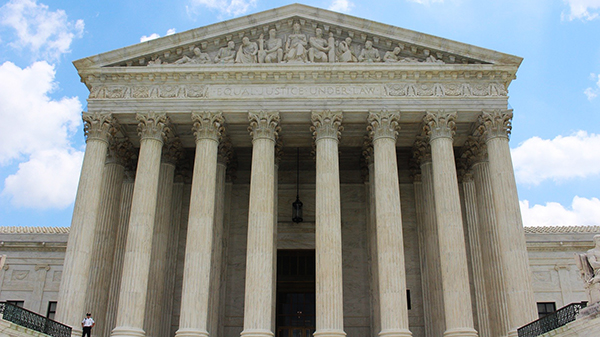
Supreme Court Justice Glenn Murdock said as much when he wrote in November, “the machines operate almost exactly like slot machines.”
In five counties, the law is not being enforced by local authorities, so Gov. Riley is trying to bring the rule of law to these places through the Governor’s Task Force on Illegal Gambling. His efforts have been met with howls of protest by those who want to continue defying state law. If local officials enforced the Supreme Court’s decision, then there would be no need for the task force.
But politics and money explain why in counties like Jefferson, Birmingham was closed to electronic gambling while the Bessemer area continued to protect, even promote, the illegal activity until DA Arthur Green ordered all gambling operations padlocked by 6 p.m. Feb. 5. Green made the announcement despite protests from leaders of several city councils. Why else do these council members and legislators from places like Greene, Macon and Houston counties protest applying state law to the casinolike gambling sites in their areas?
Gov. Riley has the gambling bosses on the run, and they are fighting back like a wounded animal backed into a corner. Recently state police investigators reported being followed as they did their work. Security for the governor and other officials has been beefed up because of reported threats. If the gambling bosses were serious about being good citizens, offering legal and wholesome entertainment, then they would welcome investigators and Alabama would not be in this period of rising tension.
Instead shadows of Phenix City are cast across the state. Anyone familiar with our history knows the hold gambling and crime had on that city. They know about the 1954 murder of Albert Patterson, the Democratic candidate for attorney general, and how it took a declaration of limited martial law by Gov. Gordon Persons, who sent in the National Guard, to break the stranglehold gambling bosses had there. Is that where Alabama is headed again?
A study titled “Casinos, Crime and Community Costs” studied all 3,165 counties in the United States over a 20-year period. Its conclusion: five years after a casino opened, robbery in the community went up 136 percent, aggravated assaults went up 91 percent, auto theft 78 percent, burglary 50 percent, larceny 38 percent, rape 21 percent and murder 12 percent compared to neighboring communities.
Electronic gambling in Alabama is big business. No one knows how big, but one district attorney recently said in a public address he had heard estimates exceeding $1 million a day. No one knows how many gambling machines are in Alabama, but one report says this state has more than Las Vegas.
Is it any wonder the gambling bosses are howling? Leading the gambling bosses is Alabama’s gambling magnate Milton McGregor. McGregor is used to being protected by the state Legislature, where his largesse over the years has won him enormous power. His influence won him the least restricted electronic bingo regulations in Alabama for at least one of his two gambling sites — VictoryLand. He also owns the Birmingham Race Course, which had electronic gambling machines until they were ruled illegal in 2006. When his and the other two horse and dog racing tracks in the state (Mobile County and Greene County) failed, legislators tried to save those businesses by allowing electronic gambling only at some or all of those sites.
Interestingly those legislators did not rush to save grocery stores and furniture stores and other legitimate businesses in Alabama when those kinds of businesses experienced financial difficulty. Obviously money talks. Looking back on Phenix City, Patterson’s son, former Gov. John Patterson, said, “The (gambling interests) had control of the city, the county and even the ballot box. They could put anyone in office they wanted.” One wonders about the role of gambling in today’s Legislature.
Now even McGregor is worried. For the first time, the Supreme Court has put him on the defensive. For the first time, an Alabama governor has taken him on. For McGregor, the stakes are enormous.
True charity bingo is a tax-free endeavor in Alabama. As long as McGregor and others could claim they conducted bingo, they did not have to pay taxes. But when the courts find their machines are not playing bingo but are games of amusement, then all the earnings become subject to the state’s amusement tax. Imagine a tax collector serving McGregor with a claim in the hundreds of millions of dollars based on the enormous amounts of money he has gained over the years. His downfall could be more dramatic than that of former HealthSouth CEO Richard Scrushy. No wonder McGregor is fighting so hard. He could be left with only what he gets from his involvement in Russia’s gambling industry.
In truth, Russia and Alabama both should learn what economists already know and has been reported for years — gambling is a losing bet. A report published by the Institute of Government & Public Affairs at the University of Illinois examined the economic benefit of a casino (low wage jobs, taxes, convenience, etc.) and compared it to the cost of a casino in a community. The value was determined to be “no larger than $40 per adult annually.” The social costs (crime, lost work, family issues) were set at $135 per adult annually.
The author concluded, “Thus casino gambling fails a cost-benefit test by a substantial margin.” The author added, “If casino gambling cannot be offered in ways that cause it to pass a cost-benefit test, then banning it is preferable on economic terms.”
The multimillion-dollar gambling facilities popping up in Alabama are nothing more than casinos. They take millions of dollars from Alabama’s economy every week. They are bad for the economy and society, and they violate the laws of our state.
Gov. Riley deserves the support of Alabama Baptists as he leads the effort to enforce the laws of our state and throw off the chokehold gambling bosses have had on this state for much too long.



Share with others: