
We did a lot of listening today,” Barry Cosper said April 7. “The main question we kept hearing … was ‘Why?’”
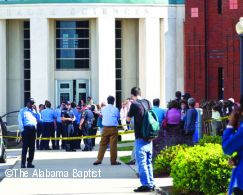
Cosper, director of missions for Tallapoosa Baptist Association, was one of four Alabama Baptist disaster relief chaplains serving at Southern Union State Community College in Opelika following a shooting on campus April 6. At press time, another team of chaplains was set to be on campus April 11.
A shooter killed one person and injured three others in a domestic dispute in a parking lot while students were changing classes. The school’s nursing and Emergency Medical Services faculty responded immediately to assist those who were injured.
The suspected shooter, Thomas Franklin May III, turned himself in and has been charged with capital murder and attempted murder. A trial date had not been set at press time.
The chaplains were deployed by the Alabama Baptist State Board of Missions (SBOM) at the request of the school to meet with faculty and students who needed to talk about the tragedy.
“While we regret this tragedy took place, I am thankful that Alabama Baptists could offer the support of our disaster relief chaplains,” said Mel Johnson, SBOM disaster relief strategist.
Each person the chaplains talked with was dealing with shock, said Jan Autery, a disaster relief chaplain and member of First Baptist Church, Tallassee.
“Those we talked with expressed their feeling that tragedies like this aren’t supposed to happen at a small community college,” she said.
Eric Jackson, a disaster relief chaplain and pastor of New Home Baptist Church, Titus, said, “I felt good about our ministry with the faculty and students.
“An experience like this has a way of waking up past crisis experiences that people have been through,” he said. “We just encouraged them to talk.”
But talking is just the first step to recovery from this type of disaster, said Ray Baker, associate in the SBOM’s office of Christian ethics/chaplaincy ministries.
“We wanted to hear people’s stories, see how they felt about the incident and then help them find some positive action to take,” Baker said.



Share with others: