

In some areas of the state, the destructive storms of April 27, 2011, are now a memory. However, in other portions of the state, such as Tuscaloosa, there are daily reminders of what brief but deadly twisters can do.
When he first saw the ravaged landscape soon after tornadoes ripped through that area of the state, the heart of Billy Gray, interim director of missions (DOM) of Tuscaloosa Baptist Association, ached.
Later after debris had been removed and the remains of homes dissembled, the sight of the barren landscape somehow seemed sadder.
“You get this feeling of sadness,” knowing that a lot of people lost their lives, lost their homes, lost their businesses and, in some cases, lost their way, Gray observed.
Some do not want to build back in the same place because it would just hurt too much, he said.
In Alabama Baptist’s District 9 region — encompassing the counties of Fayette, Lamar, Pickens, Walker and Tuscaloosa — about 60 people perished and many thousands of homes were destroyed that day.
Tuscaloosa was one of several locations in the state to be hit hardest as more than 60 cyclones traversed Alabama.
According to the federal government’s National Oceanic and Atmospheric Administration (NOAA), that 24-hour period was the fourth deadliest for single-day tornado outbreaks in U.S. history.
The death toll in Alabama’s Hackleburg, Tuscaloosa and Birmingham now number among the deadliest single tornadoes in NOAA records.
Fayette Association
One community in Fayette Baptist Association was hit significantly by the double wave of storms that day, said DOM Larry Barnes.
In Boley (also called Boley Springs), four people were killed by the storms that destroyed about 30 homes. Hubbertville also sustained damage. Congregants of Fayette Association — which includes churches in Fayette, Tuscaloosa and Lamar counties — responded quickly and diligently, as did civic groups and churches of other denominations, Barnes said.
Berry Baptist Church, Berry, became a collection and distribution center, Barnes said. The church also helped to coordinate preparation of meals, which were delivered nightly to Boley’s volunteer fire department for two weeks or more, he said.
Fayette Association does not have a disaster relief team, Barnes noted. However, the people of the county assisted their neighbors to such a degree that there was no need for help from outside the area.
In addition, teams from Fayette — involving about 100 people from the association — responded to needs in Tuscaloosa, Hackleburg, Phil Campbell and Cordova, Barnes said.
First Baptist Church, Fayette, continues to have contact in Hackleburg, offering assistance there, he said.
About $6,000–$7,000 was donated by people in the county, money that has been used to help individuals within Fayette, Barnes said.
Those funds paid for items for food kits that were given to each affected household, storage containers, clothes, utilities and materials for repair or construction, he said, noting the association seeks people who need assistance.
Fayette is back to normal, “as much as it can be,” Barnes reported.
Through this crisis, the churches were able to show the love of Jesus to those who were hurting and are maintaining their relationships to affected people, he said.
Lamar Association
“Our county really was not hit,” reported DOM Scott Stokes. But there were storm systems on either side, he stated.
The association did not have a disaster relief team at that time. Nonetheless teams of volunteers from Lamar Association churches aided in Hackleburg, Phil Campbell, Tuscaloosa and Smithville, Miss.
Initially the church teams provided cleanup and food service and gave many items needed by affected households in Phil Campbell, Stokes said. Since then, the focus has turned to ministering and rebuilding.
Stokes said he is “proud of the churches in our association and how they responded” to their fellow Alabamians.
As in so many other parts of the state, the 24 churches of Lamar Association have realized the importance of being ready to help locally and elsewhere when a crisis occurs. Stokes said the association now has a disaster relief coordinator and a trained disaster relief chaplain. Others are interested in receiving disaster relief training, he added.
“All of us have really been challenged to step up and minister,” Stokes said. “It made us aware that there was a need for us to be prepared to help others.”
He said Lamar Association continues to maintain contact in areas of need, seeking opportunities to rebuild and minister.
Pleasant Grove Association
Several sections of Pleasant Grove Baptist Association felt the impact of the tornadoes.
However “we were fortunate in that we weren’t devastated,” DOM Dan Wiggins said.
The morning storms affected Coaling, Vance and McCalla, while the evening storms hit Brookwood, Holt and Surles, said Wiggins, whose association includes churches in Tuscaloosa, Jefferson and Bibb counties.
Wiggins, who served as “incident commander” for Brookwood at the G.G. Hardin Center in the aftermath of the disaster, said many individuals assumed chain saw and other relief duties. Mormons, volunteers from Samaritan’s Purse and the National Guard also served in the area, he said, noting many from the association went into Tuscaloosa to assist because the magnitude of devastation there was so great.
A few days after the storms, a group of chaplains — one of whom was Sardis Baptist Association DOM James Preachers — came to minister in Pleasant Grove Association.
“They were like angels to me,” Wiggins said. “They made over 50 contacts that day.”
More chaplains arrived a few days afterward, said Wiggins, who is team leader for District 9.
Some chaplains served at the Hardin Center, which was the site for distribution and coordination of relief efforts. Later the Hardin Center’s efforts were relocated to the association’s Christian Ministry Center.
The ministry center, which normally distributes food and clothes on Mondays and Thursdays, was open most weekdays and Saturdays to accommodate people in need during this time, Wiggins said. The ministry center gave out tents and water, as well as food and Meals Ready to Eat (MRE’s) supplied by West Alabama Food Bank. In the early part of the relief endeavor, the ministry center was open and distributing items at the same time efforts were going on at the Hardin Center.
Through the work of the ministry center, individuals and churches, a number of people accepted Jesus as Savior in the aftermath of the storms, Wiggins said.
In recent months, Pleasant Grove Association has worked to prepare for the next crisis. It now has a chain saw team and more disaster relief chaplains. Wiggins said a Church of Christ group in Homewood donated chain saws to equip the association’s team.
In addition, Wiggins said others have trained in food service and HAM radio communication. The association office now has a base station, courtesy of Tuscaloosa’s EMA. The association also has cooperated with Brookwood’s mayor, police, volunteer fire department and city inspector in increasing preparedness, Wiggins said, noting the association is trying to raise funds for certain supplies for the chain saw team and for a small feeding unit.
Sipsey Association
The late April tornadoes left their mark in several areas of Sipsey Baptist Association. Among them were the Zion area, where an EF4 cyclone struck; near New Hope Baptist Church, Berry; Boley and Moores Bridge, DOM Max Stripling said.
“Our churches responded well helping them,” said Stripling, whose association includes churches in Pickens, Fayette and Tuscaloosa counties.
Churches within the association assisted in areas that suffered damage and also ministered outside the association. Thirty-two volunteers from Sipsey Association worked in Brookwood and Cottondale in Tuscaloosa County.
They volunteered for chaplaincy, food service, cleanup, recovery and chain saw tasks, Stripling said.
Many others from Sipsey Association who were not trained disaster relief volunteers gave their time as well. Stripling estimates that as many as 90 individuals from the association served in affected areas.
In addition, congregants of Sipsey Association gave monetary resources to help those in crisis, Stripling said.
One small church, Big Hill Missionary Baptist, Gordo, gave $1,000 to each affected household in the Zion community, he said. A sister church, Zion Community Baptist, Gordo, held a benefit and gave the proceeds to people in that region.
“Every church in our association did something to help,” Stripling continued. He gave as two examples Bethabara Missionary Baptist, Northport, which housed volunteers working in the Tuscaloosa area, and Bevan Chapel Baptist Church, Berry, which assisted in Boley.
Assisting after the crisis created a “unity of purpose” and helped individuals to “realize we could help each other and needed to help each other,” Stripling said. “People of the community realized that people of faith cared and reached out to them when they were in need.”
Tuscaloosa Association
Even though 11 months have lapsed since the devastating storms, the reminders of it are prolific in Tuscaloosa. Like so many others in the state, that area experienced more than one storm that day. Billy Gray, interim DOM of Tuscaloosa Association, said the storm system in the morning struck Coaling. In the afternoon, the path went through Tuscaloosa, as well as Holt, Peterson, Rosedale, Forest Lake, Crescent Ridge, Fleetwood and Brookwood.
The most destructive of the tornadoes left a path the width of a mile in some places, Gray explained. “It did a lot of damage” and 52 people lost their lives.
When he first saw the amount of destruction, Gray thought the death toll “was going to be in the hundreds, if not thousands.”
Gray climbed onto the roof of Forest Lake Baptist Church, Tuscaloosa, to take a look. Because so many trees and buildings had been damaged or destroyed, Gray said he was able to see all the way to Alberta, four or five miles away. “Everything in between was wiped out.”
More than 5,360 homes either were damaged or destroyed, reported Donny Jones, chief operating officer of the Chamber of Commerce of West Alabama.
Neighborhoods along entire streets had been flattened, Gray said.
Jones reported that 600 businesses were damaged or destroyed and more than 7,000 individuals became unemployed.
Several Tuscaloosa Association churches — Forest Lake, Alberta, New Eastern Hills, Jesus Es El Camino and Hopewell — sustained damage, Gray said.
The situation that day was unique in that communications of several helping agencies became nonfunctional. Phone lines were down and cell phones did not always transmit.
“We tried to step in and take up some of the slack,” Gray said.
Ministry to affected individuals began immediately. The association’s chain saw unit quickly dispatched. Volunteers gave out food, clothes and supplies and assisted in cleaning up and making repairs, Gray said. The association’s feeding unit set up at Tuscaloosa’s Belk Center.
Churches — even the damaged ones — attended to needs of people in the community, Gray said. “I was extremely proud of our people.”
Money came from churches, individuals and other sources to help the hurting.
Rapidly, volunteers from outside the area began to arrive and have continued to respond ever since, Gray said, noting more than 10,000 volunteers have worked in Tuscaloosa, some from as far away as Washington state and Oregon.
In an effort to reciprocate some of the kindness received, Tuscaloosa Association’s disaster relief volunteers responded after a deadly tornado hit Joplin, Mo., in May 2011, Gray said. The association’s disaster relief team also has assisted in Birmingham and Pleasant Grove.
Even now, the association receives calls almost daily from groups wanting to help. One volunteer, Gray’s wife, Margaret Ann, works basically full-time scheduling volunteer groups and arranging for lodging at churches. Groups are booked into summer 2012.
Three Tuscaloosa Association churches — Cottondale, Forest Lake and Alberta — have established permanent ministry centers to assist those affected by the storms, Gray said.
A lot of other churches in the association are supporting the work of those centers, he added. “We don’t want anybody falling through the cracks” by not receiving the assistance and ministry they need.
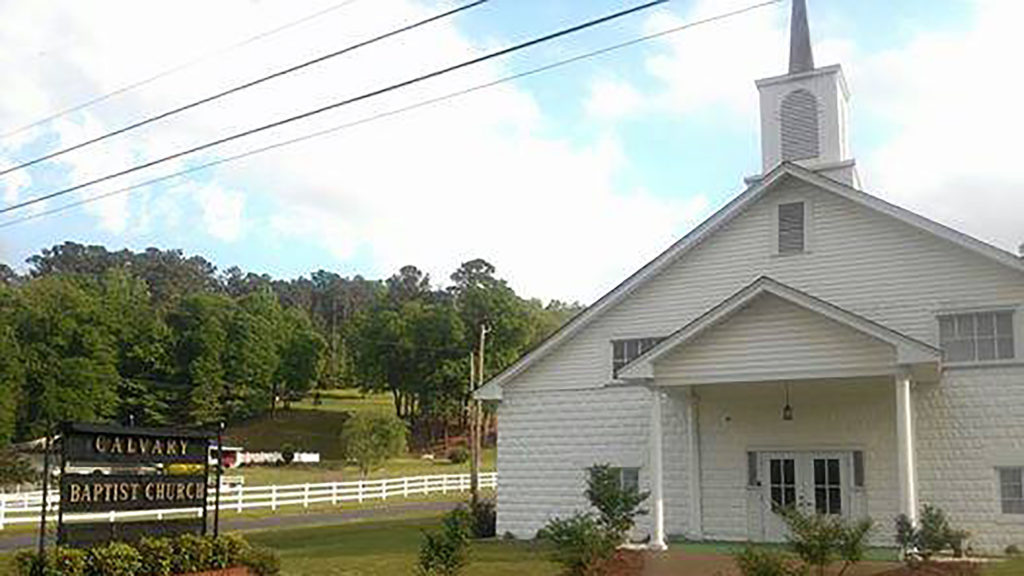
Calvary Baptist Church, Tuscaloosa, another Tuscaloosa Association church, has adopted more than 100 families to aid them with housing needs and to provide necessities. Other churches have supported Calvary in this effort.
Holt Baptist Church, Tuscaloosa, set up a counseling center.
Gray said professions of faith have been reported through the work of the association churches and chaplains.
“Everybody has been so good,” Gray said of churches and individuals.
After a summer of cutting trees and clearing debris, the focus has shifted to repairing and rebuilding, which is likely to take several years to complete, he noted.
Many people are still in temporary housing, which will present a dilemma in a few months. Gray explained that Federal Emergency Management Agency (FEMA) funds that are paying for some housing expires in October.
In the meantime, Tuscaloosa Association and other entities are planning what to do to help when that happens. When asked what is still needed by Tuscaloosa and that area, Gray replied, “Everything.”
Many individuals need assistance rebuilding, especially those who don’t have enough insurance to pay for the entire project. Also there is a need for volunteers at the three ministry centers and for more churches to open their facilities for lodging teams coming to the area to work, he said.
Of course, prayer is vitally important and will continue to be, Gray said.
Pickens Association
The northern part of Pickens County felt the wrath on April 27, as storms damaged about 20 homes. A tornado roughly two weeks earlier had hit Aliceville, reported DOM Gary Farley.
After the late April storms, Pickens Association’s disaster relief team worked to clean up the area and assisted in removing a tree
off a church of another denomination, Farley said. The association office became a collection center, receiving many truckloads of items for affected people.
“We processed tons of stuff,” he said.
So many contributions were received that the surplus was delivered to Sumter, Greene, Choctaw, Winston, Fayette and Walker counties.
“We distributed stuff every day,” said Gwen Davidson, who spearheaded the effort and is a member of New Salem Baptist Church, Reform.
Davidson said deliveries went to small communties that might otherwise have been overlooked like Geiger, Yantley, Zion and places that may not appear on maps. Supplies were also taken to Reform. The items were given to churches for distribution to people in need, she said.
At least 20 people from New Salem Baptist Church; Carrollton Baptist Church and Pickensville Baptist Church, both in Carrollton; First Baptist Church, Reform, and other churches, including a Gordo church helped sort, distribute and deliver. First Baptist Church, Fayette, in Fayette Baptist Association, also provided some donations, she added.
But Davidson noted, “It’s not us doing it. The Lord’s really doing the work through us.”
Other supplies were sent from Rosedale (Tuscaloosa) to Pickens, which transported them as well to Choctaw County, Farley added.
There was even a contribution of 10,000 T-shirts from Eureka Springs, Ark.
Those affected by the storms also were given needed items at the association’s thrift store, Farley said.
Through ministering to the hurting, people of the association were able to tell many about Jesus and give out a lot of Bibles, Farley said.
In addition to the many individuals who gave their time caring for the needs in the county, volunteers from Pickens Association — about 100 in all — helped outside the county.
Volunteers went to Rosedale to help clean up there. In addition, Farley said they ministered in Geiger and Forkland in Sumter County, where they provided food, clothes and health packets.
Farley hopes that the work of association volunteers will help the churches in the different places to have a stronger connection with the members of their communities.
As for Pickens Association itself, the aim is to be better equipped to give crisis assistance next time.
Farley said the association already has been able to purchase a tractor with a lift bucket that will greatly enhance the capabilities of the disaster relief team. One of the goals now is getting a shower unit, Farley said. “We need to get prepared for the next time around because it will come.”
And Davidson recalled after Hurricane Katrina, her son, Jacob Hunter Davidson, who was only three years old at the time, spearheaded a distribution campaign of his own.
He saw on the news that the toys of the children had been washed away. He told his mother he wanted to get toys for the children in need.
To accomplish the task, Hunter set up a lemonade stand for a week at the association office and collected donations.
Hunter collected more than $1,000 in donations as well as mops, brooms, gas containers, food, bottled water, crayons and coloring books. His uncle, Jesse Hughes, donated the use of a trailer to store the donations and later to deliver the items to the affected families.
“My little boy showed me we could do it,” Davidson said.
Walker Association
The double wave of storms claimed at least nine lives in Walker County. However, DOM Lucky Teague said the physical damage seen in Cordova, Sipsey and Jasper was not nearly as much as what surrounding areas experienced.
Many, many volunteers from outside the association arrived quickly to help, Teague said.
And Walker Association’s disaster relief volunteers activated swiftly, addressing chain saw and cleanup needs.
“The Florida disaster relief team was incredible. And they stayed with us a good, long while,” Teague added. “People from everywhere came. … It was not just a Baptist effort.” The Mennonites, for example, served in Walker Association.
Local people gave assistance as well and churches of different denominations came together for one purpose.
Teague said First Freewill Baptist Church, Cordova, took up the cause of meeting needs. “Our people channeled help and aid through them,” Teague said of Walker Association churches.
Individuals from the communities and churches assembled health packets, provided blankets, water, food and meals.
“Our people contributed. I don’t think people went lacking very long,” Teague said.
So much was contributed that truckloads of surplus were taken to Hackleburg and Phil Campbell when members of Walker Association churches traveled into those areas to work, Teague said.
As for Walker Association, “our recovery has been excellent here,” he said.
The association’s volunteers continue to be ready to respond and have helped in the rebuilding phase whenever the opportunity has arisen, Teague said. The association and its churches have sought to meet “all the needs that we know of” and continue to try to take care of all requests.
Share with others: