
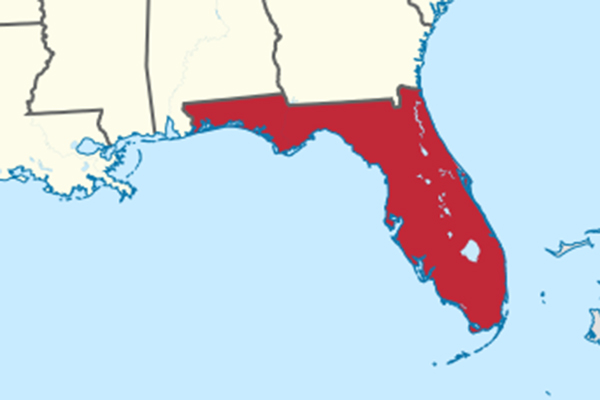
Florida Baptists are assessing their future budgeting after being warned by auditors that their convention could face liquidity challenges as it moves toward a 50/50 split of Cooperative Program (CP) receipts.
“Without increased revenue or decreased expenditures, in the very near future, you will face liquidity challenges,” auditor Mike Lee told the Florida State Board of Missions in May.
Auditors said the Florida Baptist Convention either must increase receipts by $2 million each year or decrease expenditures by $2 million to remain solvent, according to an article by the convention’s communications division published in the Florida Baptist Witness.
Last fall, messengers to the annual meeting of the Florida Baptist State Convention approved a seven-year CP budget plan that would forward 50 percent of CP receipts from Florida churches to national and international missions and ministries of the Southern Baptist Convention by 2018.
Messengers amended the proposed budget plan to eliminate the shared expenses designation from the split and incorporate shared ministry funding into the state convention portion of the budget.
A second part of the amendment clarified that the 50/50 split was not contingent on increased CP giving by the churches. Florida currently forwards 40.5 percent of its CP receipts.
In two columns published by the Witness, Florida Baptist leaders have voiced divergent views for what to do in light of the liquidity warning.
Danny de Armas, who served as chairman of the Imagine If Great Commission Resurgence Task Force in Florida that made the 50/50 recommendation, wrote in favor of proceeding with the mandate.
“Most of the lost people in the world don’t live where we live,” de Armas wrote.
“Your Task Force concluded that less property, streamlined programming and fewer employees would not mean we are ineffective or even less effective.” Addressing liquidity and achieving a 50/50 split are not incompatible objectives, he wrote.
Darin Kress, a member of the Florida State Board of Missions serving on the budget-allocations committee, wrote, “Florida Baptists should not apologize for making sure we have the necessary funding to expand our base of ministry here at home.”
The ministry base, he said, provides funding for the Florida Baptist Children’s Homes, The Baptist College of Florida, church plants, evangelistic events, training and missions partnerships — all of which have international implications.
“The North American Mission Board (NAMB) estimated that only 4 percent of the people of south Florida are Christians,” Kress wrote.
“As a percentage, there are fewer Christians in south Florida than communist China (5.0) and south Florida has the same percentage of believers as the especially repressive communist country of North Korea.”
Since 2005 the Florida convention has cut $10 million from its budget, downsizing staff by more than 50 employees, according
to John Sullivan, executive director of the Florida Baptist Convention.
In 2014, as NAMB shifts its funding strategy, Florida agencies and institutions will have to “share the pain” of additional budget cuts, he said.
(BP)
Share with others: