
Citing their suppression of religious minorities stigmatized as “cults” or “sects,” the State Department has included Belgium, France and Germany among countries that have violated religious freedom in the last year.
But the government said the worst repression of religion existed in a handful of countries including China and traditional foes such as Cuba, Vietnam and North Korea along with Myanmar and Laos.
According to the department’s fourth annual report on international religious freedom released Oct. 7, the three European countries are guilty of adopting “discriminatory legislation or policies that stigmatize certain expressions of religious faith by wrongfully associating them with dangerous ‘sects’ or ‘cults.’”
Secretary of State Colin L. Powell said the report “shines a much needed light on governments that flout international law and basic decency by making it difficult, and even dangerous, for their people to follow the dictates of their conscience and to practice their faith.”
The department said that in Germany “sect filters focused on Scientology are used by some local governments and private firms in hiring and contracting.”
In Belgium and France, the report said, the establishment of “government-mandated agencies” dedicated to tracking so-called cults had helped give rise to an “anticult” legal trend in Western Europe and beyond, also citing Israel, Saudi Arabia and Pakistan.
Pakistan was cited for “state hostility toward minority or nonapproved religions,” namely Shiite Muslims, Christians and other non-Muslim groups. Israel was included among countries that have “favored certain religions and placed others at a disadvantage.”
Department officials said Saudi Arabia was “a tough call.” Although the report said that “freedom of religion does not exist in Saudi Arabia,” the country was not singled out as one of the worst offenders.
According to the report, “The [Saudi] government requires all citizens to be Muslim and prohibits all public manifestations of non-Muslim religion.”
Widespread persecution
Based on accounts by hundreds of State Department, Foreign Service and other U.S. government employees around the world, the report detailed religious persecution in 195 countries and grouped the worst offenders into five categories depending on the nature of their suppression of religious groups.
However, it stopped short at this time of identifying which, if any, additional countries would be designated “countries of particular concern” — the department’s highest censure.
The International Religious Freedom Act of 1998, which mandated the annual report, requires U.S. diplomatic intervention, economic sanctions or other stringent measures toward the condemned countries.
John V. Hanford III, a State Department official, indicated that last year’s watch list — China, Myanmar, Iran, Iraq, North Korea and Sudan — would retain their status among the worst offending countries. He would not speculate on which countries might be added to the list this year. Without elaborating, he said, “There are perhaps an ally or two that we could view as candidates for countries of particular concern.”
The U.S. Commission on International Religious Freedom, an independent federal agency advising the administration and Congress, has pressed the State Department to double the list of most egregious violators to include India, Pakistan, Laos, Saudi Arabia, Vietnam and Turkmenistan.
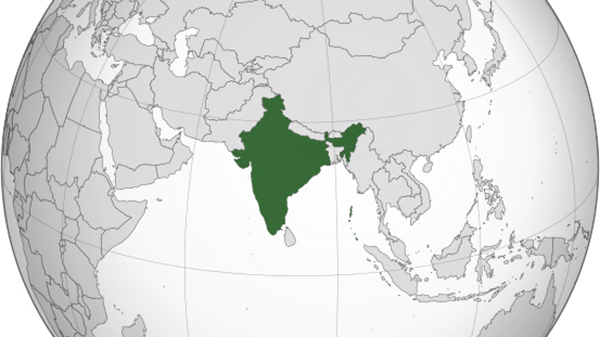
India, the world’s most populous
democracy, drew international criticism for its failure to quell religious tensions that led to massive Hindu-Muslim rioting in the state of Gujurat in March and April this year. The State Department report listed it among countries guilty of “state neglect” of religious freedom. The only country that the report cited as having shown “significant improvement in the area of religious freedom” within the past year was Afghanistan, which, under the Taliban, was included for the highest censure.
“The United States categorically rejects the notion that the security or stability of any country requires the repression of members of any faith or precludes the promotion of religious tolerance,” Powell told reporters. (RNS)

Share with others: