
For more than 100 years the Pledge of Allegiance to the United States flag has been as much a part of the Americana tradition as apple pie and Fourth of July fireworks.
The wording comes natural for most Americans. In fact, the country’s youngest citizens learn to recite the 31 power-packed words during their first year of education.
The authorship of the pledge can be traced to Francis Bellamy of Rome, N.Y., who penned the words in August 1892 for part of the official program for the National Public Schools’ Celebration of Columbus Day.
It was the quadricentennial (400 year) celebration of Christopher Columbus’ discovery of America and the citizens of the United States were eager to acknowledge the occasion in a commemorative fashion.
Bellamy, a Baptist minister, was chairman of the committee of state superintendents of education in the National Education Association. He was in charge of organizing the public schools’ observance of the much celebrated national holiday. He decided to structure the schools’ program based around the flag-raising ceremony and the introduction of a salute to the American flag – his Pledge of Allegiance.
The pledge was first published in the Sept. 8, 1892, issue of The Youth’s Companion, a leading family magazine of the era similar to today’s Reader’s Digest.
One month later, more than 12 million schoolchildren recited the words for the first time in schools across the nation.
Bellamy’s original words were: “I pledge allegiance to my flag and (to) the republic for which it stands, one nation, indivisible, with liberty, and justice for all.” (The word to prior to the Republic was added in October 1892.)
The rendition of the current Pledge of Allegiance has under-gone four evolutions since its origination.
On Flag Day June 14, 1892, delegates to the first National Flag Conference met in Washington D.C. Part of their agendas was to evaluate the words to the Pledge.
Because of the large influx of immigrants into the United States at that time, there was no concern that confusion would arise when reciting the words “my flag.” Thus the words were changed to incorporate “the flag of the United States.” The following year the words “of America” were added.
Although the Pledge of Allegiance had been recited daily for more than 50 years by schoolchildren across the nation, it wasn’t until 1942 – when the United States was in a patriotic fervor as a result of World War II – That Congress included the Pledge in the United States Flag Code.
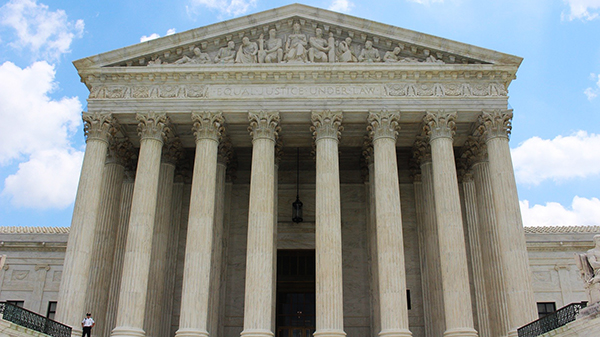
The following year the U.S. Supreme Court rule that schoolchildren could not be forced to recite the Pledge as a part of their daily routine. In 1945 the Pledge received its official title known as The Pledge of Allegiance.
The last change to the Pledge came on Flag Day 1954, when President Eisenhower approved the addition of the words “under God.”
His explanation for allowing this change was, “In this way we are reaffirming the transcendence of religious faith in America’s heritage and future; in this way we shall constantly strengthen those spiritual weapons which forever will be our country’s most powerful resource in peace and war.”


Share with others: