
For an outsider looking in at Sequoia Heights Baptist Church, Manteca, Calif., it would be hard not to ask the question, “Who are the Kisi?”
Signs in each hallway and bathroom implore members to “pray for the Kisi;” the church website features the Kisi people; photos and prayer guides are on many members’ refrigerators and bedside tables. In services church members pray for the Kisi and speak of Kisi individuals by name. It is evident that the Kisi (pronounced KEY-see) are deeply embedded in the hearts of the church members.
Why? Because the members of this small church have committed to bringing the light of salvation into the spiritual darkness that surrounds the Kisi people.
In spring 2011, pastor Mark Mahaffie returned from a missions conference thinking it was time for his church to take the next step in missions.
He then read David Platt’s book “Radical” and felt God’s call confirmed. He presented the idea of people group engagement to the congregation and, after praying, the church supported the idea with a unanimous vote of approval.
Once a decision was made the church connected with the International Mission Board (IMB) to learn more about choosing a people group and the process of engagement. The IMB website, gettingthere.imbresources.org, showed a map of the 3,400 people groups around the world that are less than 2 percent Christian. Those groups have no known evangelism among them.
Donnie Land, a member of the church’s missions team, said, “The goal is to connect with them emotionally and spiritually so that we can share the most important thing … the love of Jesus Christ.”
The church chose Acts 1:8 as its missions verse and started thinking about how it could obey that specific command from God.
Mahaffie said, “The Scripture says to go … to the ends of the earth. We looked at that list [of 3,400 people groups] and said, ‘God, what do you want us to do?”
The church began by looking at its history and the direction God had been leading it up to that point. Church members saw trends that indicated Africa and they eventually settled on Tanzania, where one of their church members was serving as a missionary. That decision narrowed their list of people groups significantly, and they prayerfully moved from a list of 30, to seven, to three and then one.
Working together
Ultimately God sent the church to the Kisi people of southern Tanzania.
Choosing the Kisi was an exciting step that spurred the California church to a year of prayer, research and planning. The whole church is working together to obey God’s command to reach the Kisi for Him.
Carol Jones, a Southern Baptist representative, said, “It is important to have the whole church behind the mission.” Jones helps train and facilitate churches working with sub-Saharan African people groups. “They need a lot of people involved: praying, giving, going.”
Engaging a people group does not work as a project championed only by a church’s leaders or a specific Sunday School class. As leaders change, engagement with a people group can be threatened.
“In 3 John, we read that we should send them out in a manner worthy of the gospel,” Jones said. “I don’t know what all that might have entailed … but to me it means a great deal of prayer support as well as financial support. … Some people can’t go because of health reasons, but they can all pray.”
Jones’ husband, Daniel, is an affinity research strategist responsible for researching people groups and making sure they are engaged. Southern Baptists’ gifts to the Lottie Moon Christmas Offering and Cooperative Program enable the Joneses to help churches like Sequoia Heights Baptist follow God’s call to engage unreached people groups.
Pastor’s wife Lanell Mahaffie said, “I think our church feels very much like a team. Everybody is not going to go [to Tanzania] and everybody is not going to stay home, but we do feel united in what we’re doing.”
Carmen Baugh volunteered to help the church with one of the more worrisome parts of their planning: the finances. Initial calculations showed that for their church to send three teams a year they would need to raise roughly $36,000 on top of their normal budget. That amounts to $700 a week beyond normal tithing.
“We figured we can’t do 500 carwashes or anything like that because there’s just no way to earn that amount,” Baugh said. “So we prayed about it and did a pledge drive.”
With roughly 200 members, the church knew the project could not be funded without serious help from the Lord. The ministry has been funded for more than a year now, and the congregation sees their financial success as evidence of God’s blessing on their work.
Prayer efforts
John Garza took charge of the prayer efforts for the Kisi and leads the church in around-the-clock prayer coverage each time a team goes out to the Kisi. From the time team members arrive on Tanzanian soil until they’re safely back on a plane to the United States, a member of the church body is lifting them up to the Lord, asking for their safety and the wisdom to act according to God’s will.
Sequoia Heights has been among the Kisi six times so far. Eleven church members have set foot in Kisi villages, but the entire church has taken part in the ministry.
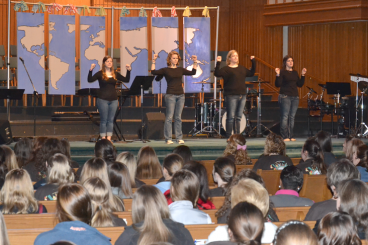
In addition, the youth engaged in missions training and spent more than a month learning about witnessing and how to use it in their lives as well as among the Kisi. Children and teenagers are encouraged to pray and sacrifice financially for the project just as the adult members do.
Dan Mahaffie said, “It’s unbelievable that God is allowing us to do this. And it’s all because … we say ‘yes’ to the Lord with no exceptions. He has blessed that.
“The greatest adventure of your life is just about ready to start if you will say ‘yes.’”
EDITOR’S NOTE — Names have been changed for security reasons. (IMB)
Share with others: