
The word “casino” conjures up images of Las Vegas-style glitz and glamour, and Alabama’s Wind Creek Casino and Hotel in Wetumpka certainly strives for that feel. For example in April 2014 the casino debuted an impressive 16,000-gallon shark tank built and featured by the Animal Planet TV show “Tanked.”
The Poarch Band of Creek Indians (PCI) who operate Wind Creek, as well as casinos in Montgomery and Atmore, have a lot to gain if they enter into a compact with the state of Alabama to share revenue from its facilities. They also have a lot to lose if a case currently on appeal to the 11th Circuit Court is decided in favor of the state of Alabama.
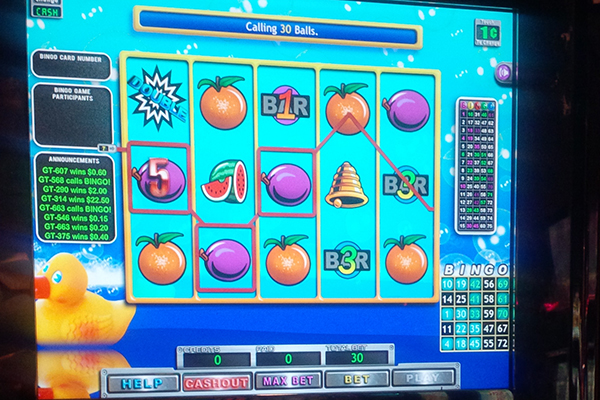
The Poarch Creeks are the only Native American tribe in Alabama recognized by the federal government. Within their three casinos, rows of arcade-like machines light up, music plays throughout the cavernous room and bells ring to signal winners. While operators claim gamblers are playing electronic bingo, gambling opponents argue the machines are really slot machines.
Definition of bingo
In November 2014 the Alabama Supreme Court ruled bingo-like games played on electronic or computerized machines do not meet the accepted definition of bingo, thus making the machines that fill PCI casinos illegal under state law.
However, the tribal casinos claim they are not bound by state law, but instead fall under the provisions of the 1998 Indian Gaming Regulatory Act (IGRA), a federal law that establishes a framework for allowing gambling on American Indian lands.
Under IGRA, American Indian tribes are the chief regulators of Class II gambling, primarily consisting of bingo, whether on paper cards or electronic machines. Class III gambling, which includes slot machines, blackjack, craps and roulette, can only occur when such gambling is legal in the state in which the tribe is located and if the tribe and state have negotiated a compact that has been approved by the U.S. Secretary of the Department of the Interior.
Alabama has no compact with the Poarch Creeks, though Gov. Robert Bentley has expressed his willingness to consider such an agreement. As governor, Bentley has the authority to enter into an agreement with the PCI, the conditions of which would depend on the terms negotiated by both parties. No vote would be required by either voters or the Legislature, though the agreement would require approval by the Secretary of the Interior.
In an April 30 interview Bentley expressed his desire to limit gambling to what is already in place, which he said could be accomplished by a compact.
However, Alabama Citizens Action Program Executive Director Joe Godfrey would like to see all forms of gambling made illegal in the state, which he believes could happen if the governor and the Legislature wait until a ruling is issued in Alabama v. PCI Gaming Authority, the case brought by Attorney General Luther Strange on behalf of the state that is currently on appeal to the 11th Circuit Court. That case could find that the Poarch Creeks should not be governed by IGRA and thus are subject to state law. Such a ruling would shut down electronic bingo statewide, Godfrey said.
“The Poarch Creeks stand to gain a whole lot if a compact gets signed,” Godfrey said.
Godfrey added that an exclusive agreement with the Poarch Creeks could shut down gambling at Alabama’s four greyhound tracks as well but would probably lead to more battles between the state and nontribal gambling interests.
“They will want to protect their interests, too,” Godfrey said.
__________________________________________________
Who regulates Indian gambling?
American Indian tribes are the primary regulators of Class II gambling. Regulation of Class III gambling may be addressed in the Tribal-State compacts and varies by state with the tribes remaining the primary regulator in most states. Both Class II and Class III gambling are subject to the provisions of the Indian Gaming Regulatory Act and oversight by the National Indian Gaming Commission (NIGC).
What process must a tribe follow to operate a gambling facility?
The tribe must determine whether the state in which the gambling facility is to be located permits such gambling. If the state permits gambling by any person, organization or entity, then tribes are allowed to conduct Class II gambling activities without state approval. If the tribe wishes to conduct Class III gambling, a Tribal-State compact must be negotiated.
American Indian gambling must be conducted on American Indian lands within a tribe’s jurisdiction. American Indian lands are defined as all lands within the limits of any American Indian reservation and any land’s title which is either held in trust by the United States for the benefit of any American Indian tribe or individual or held by any American Indian tribe or individual subject to restriction by the United States against alienation and over which an American Indian tribe exercises government power.
The tribe must submit a tribal gambling ordinance to NIGC. The ordinance must provide, among other things, that: (1) the tribe will have the sole proprietary interest and responsibility for conducting gambling, (2) net revenues will be used for specific purposes, (3) annual outside audits will be conducted and (4) a process for licensing and conducting background checks is in place. The NIGC chairman must approve an ordinance before gambling can occur.
Share with others: