
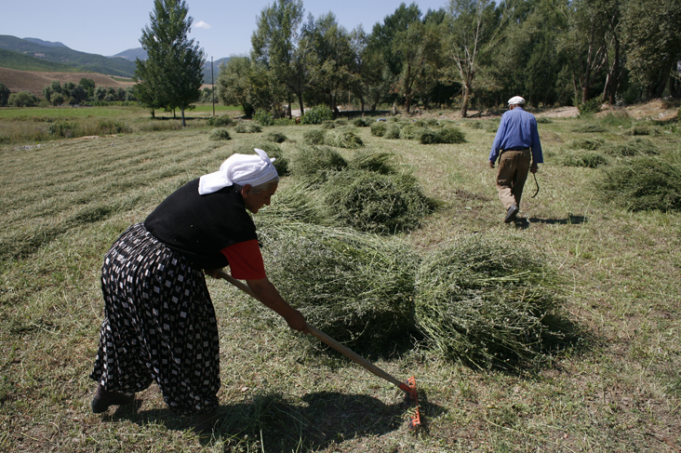
Imagine traveling throughout the entire state of Alabama and meeting less than 40 Christians on your journey.
It’s an apt comparison to what Baptist representatives who work among the 3 million or so predominantly Muslim Zaza people in Central Asia face, said Brian Gay, minister of missions at First Baptist Church, Montgomery.
“The task to share the hope they can have in Jesus Christ is so urgent,” Gay said, which is why a group of volunteers formed the Zaza Alliance in 2010. The Zaza Alliance is a coalition of churches who have committed to pray for the Zaza people and help mobilize volunteers to go to Central Asia. Gay serves as president and First, Montgomery, is a major supporter of the organization.
Ten years ago no Christian workers were engaging the Zazas at all, so the ministry is still in its early stages, said a Baptist representative in Central Asia. Yet every once in a while he sees how God is at work among this little known people group.
Mehmet is a good example. Though he is Muslim, Mehmet often hosts Christians in his home to share a meal and a cup of chai tea. One night the Christian workers told Mehmet stories about Jesus’ teachings on helping the poor, explaining that while we were poor in our sins, Jesus reached down and helped.
Hospitable culture
The next day Mehmet was walking in town and saw two women sitting on the steps of the local government building. He noticed their distress and stopped to talk to them. He learned that the woman’s husband had beaten her and kicked her and her mother out of their home. They were seeking government help but had been turned away. Mehmet offered to introduce them to a friend who might employ the younger woman. When Mehmet shared the story of the encounter with his Christian friend, his enthusiasm was uncontainable.
“He got this big smile on his face telling me about the women and how before, he would have walked past them,” the Baptist worker said. “He said the difference this time was that he thought about what the Bible said about helping poor people. He said it just felt so good to help people, and in that little tea house there was a little flash of the Spirit moving and (I saw) what it could look like out there.”
Many in the Zaza community are very sociable and they enjoy opening their homes to Americans to share a meal and tea. The hospitality of the culture provides great opportunities to share Bible stories as well.
“We have 20 or so seekers who are willing to read the Bible with us, talk about the stories and hear our testimonies,” said the Baptist worker. “Many are even willing to believe in Jesus but as one of many gods.”
Baptism is often the “line in the sand,” he said.
“They are willing to read the Bible and consider Jesus a prophet or spiritual teacher, but when it comes to talking about substitutionary atonement or the Trinity, the conversation starts to break down.”
Discipleship needed
For the handful of Zaza believers who have been baptized, there is no church to disciple them which is why one of the major missions efforts by the Zaza Alliance is a discipleship conference to be held in Central Asia in November. Gay would like to see more Alabama Baptist pastors involved.
“The conference is part training, part discipleship and part vision trip,” Gay said. “It’s in the homeland of the Zaza people, so it’s a chance to go out and see where they live and to experience what life is like among them.”
Richard Alford, who is helping organize the conference, said one major emphasis of the gathering will be teaching volunteers how to evangelize with storytelling.
“We will be led by a very experienced seminary professor who will be training volunteers in the use of storytelling and then teaming American volunteers with local leaders to move us into a genuine alliance between believers in the two countries,” Alford said.
Trips in the summer and fall will include medical work as well as a focus on ethnographic research and prayer walking in order to more effectively plan future work among the Zaza people, Alford said.
The goal of each trip is to build relationships that will open the door for more work among the Zazas, he noted.
“We are looking for ways we can do more for the Zazas and are praying that these efforts will be the starting point for a new church plant.”
Workers in Central Asia would like to see more churches praying persistently for the work in Central Asia, as well as more teams who are willing to come and interact with the people, the representative said.
In 2014 a women’s group from First, Montgomery, did health work in the area. Every member of the group had two stories memorized and in the evenings they went into homes and shared those stories.
“They didn’t have to be theologians and didn’t have to know the language,” the respresentative said. “They just had to be willing to share a story. We could use more teams like that for sure.”
For more information about the Zaza Conference and efforts to Central Asia, go to www.montgomeryfbc.org/zazaconference.



Share with others: