
Pro-family voters scored wins at the polls Nov. 3.
Houston overturned a measure that granted protected status to homosexuals and transgendered persons. Both Kentucky and Mississippi elected governors who are pro-life and opposed to same-sex “marriage” and Ohio defeated recreational marijuana.
Ryan Anderson, a senior research fellow at The Heritage Foundation in Washington, wrote in an online commentary that Election Day 2015 disproved the “conventional wisdom … that social liberalism is an electoral winner.”
“That’s not true,” Anderson wrote. “At least not in the swing states of Kentucky and Ohio, and not even in the liberal city of Houston. And definitely not [Nov. 3]. There’s a lesson to be learned: Conservatives can win when they refuse to be bullied by elites into silence. Making the public argument against bad policy and in support of good policy can win the day. It just did.”
In Texas, the Houston Equal Rights Ordinance (HERO) was repealed by a 62–38 majority, Houston’s KHOU television reported. The ordinance — passed by the city council in May 2014 but stayed by a judge pending the repeal vote — would have extended civil rights protections to individuals based on their sexual orientation and gender identity.
Consciences ‘not steamrolled’
The repeal marked the culmination of an 18-month legal battle between city officials and HERO opponents who sought to place the measure’s repeal before voters. In July, the Texas Supreme Court ordered Houston’s city council either to repeal HERO or send it to voters. In August the council opted for a public vote.
Russell Moore, president of Southern Baptists’ Ethics & Religious Liberty Commission, said in a statement, “Months ago when Mayor Parker attempted to subpoena the sermons of Houston pastors, I argued then that the preaching of the church of God does not belong to the government and we will not hand it over. Not now. Not ever.
“Here the people of Houston have spoken and said the same is true of the conscience. The defeat of this proposition ensures that the consciences of men and women will not be steamrolled, and that unsuspecting citizens will not be put into vulnerable situations.”
In Kentucky, Republican Matt Bevin defeated Democrat Jack Conway by a 53–44 margin despite “trailing in every public poll since winning the Republican primary,” according to the Lexington Herald-Leader. Bevin’s running mate, Lt. Gov.-elect Jenean Hampton, became the first African-American to win a statewide election in Kentucky.
Social issues focus
A traditional marriage supporter and abortion opponent, Bevin defended Kim Davis, a county clerk in eastern Kentucky, after she was jailed for refusing to issue marriage licenses to same-sex couples. The Washington Post said Bevin’s focus “on social issues, including promises to defund Planned Parenthood and defend Kim Davis, helped drive the conservative base to turn out.”
Southern Baptist Theological Seminary in Louisville, Kentucky, reported Bevin made a significant donation to help establish the seminary’s Bevin Center for Missions Mobilization in 2012 in honor of his daughter, Brittiney, who was killed in a 2003 car accident at age 17.
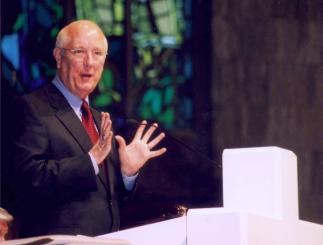
The Bevin Center website includes a video of Matt Bevin speaking during a 2012 Southern Seminary chapel service about his daughter’s passion for missions and asking students to listen for God’s call to missions.
Kentucky Baptist Convention (KBC) executive director Paul Chitwood said Bevin’s “interviews and speeches seemed to strike a chord with evangelical voters and the election results indicate they turned out on this Election Day.”
In Mississippi, Republican Gov. Phil Bryant won a second term by a 67–32 margin over Democrat Robert Gray. Bryant is pro-life and opposes same-sex “marriage.”
In Ohio, residents voted 64–36 to reject a state constitutional amendment that would have legalized recreational marijuana. Despite losing the fundraising battle $20 million to $1 million, marijuana opponents won even “large urban counties” where legalization advocates “had hoped their support would rest,” the Cincinnati Enquirer reported.
Rejecting marijuana
In Colorado, voters approved to send $66 million in tax revenue from the sale of legalized marijuana primarily to school construction. The first $40 million will go to school construction and $12 million will be designated for youth and substance-abuse programs. The remaining $14.1 million will go to discretionary accounts controlled by lawmakers.
Anderson, of The Heritage Foundation, said many of 2015’s election results teach a lesson politicians should remember in 2016: “Stand on principle. Make the public argument. Defeat bad policy. Enact good policy.”
(BP, TAB contributed)


Share with others: