
What does the average American think about major moral issues these days? To some extent it depends on what church or synagogue you attend — or whether you are religious at all.
Each May since 2001, the annual Gallup Values and Beliefs Poll measures attitudes of nonreligious individuals and the nation’s four largest religious groups — Jews, Catholics, Protestants and Mormons — with regard to moral issues. Gallup recently released cumulative poll results for the past 15 years representing telephone interviews with more than 16,700 adults. In the poll Gallup asks respondents whether each of 16 practices or concepts is morally acceptable.
In its most recent poll Gallup reported that the widest disparity among these groups is on the issues of abortion, doctor-assisted suicide, cloning animals, gay-lesbian relations and having a baby outside of marriage.
No religious preferences
“Jews and those with no religious preferences have virtually identical views on the morality of abortion, doctor-assisted suicide, gay-lesbian relations and cloning animals,” Gallup’s Jeffrey M. Jones wrote in announcing the poll results. A majority of Jews and the nonreligous view all of the aforementioned as morally acceptable except for cloning animals, an issue on which both groups were split 50–50.
“Mormons, Protestants and Catholics believe that abortion, doctor-assisted suicide and cloning animals are not morally acceptable practices,” Jones wrote. “Mormons are more conservative than Protestants and Catholics on abortion, gay-lesbian relations, doctor-assisted suicide and out-of-wedlock births, but not on cloning animals.”
Poll results sometimes indicate a marked difference between a religious group’s opinion and respective church doctrine, Gallup reported.
All five groups generally agree that divorce, the death penalty, wearing clothing made of animal fur and medical testing on animals are morally acceptable. They also agree that suicide, cloning humans, polygamy and extramarital affairs are morally unacceptable.
Mormons diverged most from the other groups of respondents on the issues of gambling, premarital sex and stem cell research, with Mormons being the only group to consider all three unacceptable, according to the poll. “Jews and nonreligious Americans are more liberal than Protestants and Catholics on these three issues. A solid majority of Catholics believe each is morally acceptable, while at or slightly more than half of Protestants agree,” Jones reported.
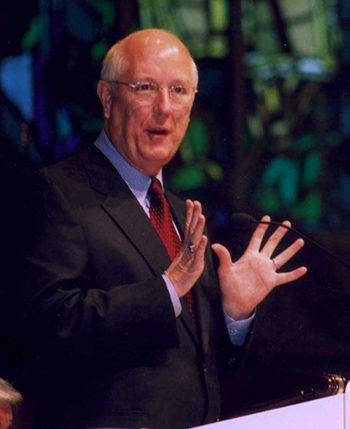
Leith Anderson, president of the National Association of Evangelicals, questioned putting all Protestants under the same umbrella.
“Evangelical Christians appear to be lumped in with all other American Protestants even though our moral convictions are often very different from those of liberal mainline Protestants,” Anderson said. “My guess is that evangelical moral attitudes are closer to the attitudes of Mormons than to those of the other religious groups polled.”
Practicing religion
Anderson also noted that there’s a big difference between people who merely identify with a certain religion and those who actually practice it. “Keep in mind that each group probably has a significant divide between those who regularly attend their church or synagogue and those who rarely or never attend,” he said.
Gallup suggested that Americans are becoming less religious and more liberal over time, but Anderson said the data indicate that some things appear to actually be settling down. “The research is interesting and mostly predictable,” Anderson said. “One noticeable result is that views on moral issues haven’t changed in this-year-to-last-year comparisons. After past years of shift there is a current stability.”
Scott McConnell, executive director of LifeWay Research, agreed that evangelicals tend to be much more conservative than mainline Protestants. “Among the two lists of moral issues where Gallup found differences, we would expect evangelicals to differ significantly from other religious groups as well. Our studies at LifeWay Research of evangelicals that have addressed a couple of these topics have shown that evangelicals tend to be much less permissive.”
McConnell said that evangelicals consult the Bible as their moral authority. “Culturally, evangelicals find themselves surrounded by many who have a completely different moral compass,” he said. “Evangelicals feel the pull of the precepts they read in Scripture while many others feel a stronger pull toward what they personally feel is right.”


Share with others: