
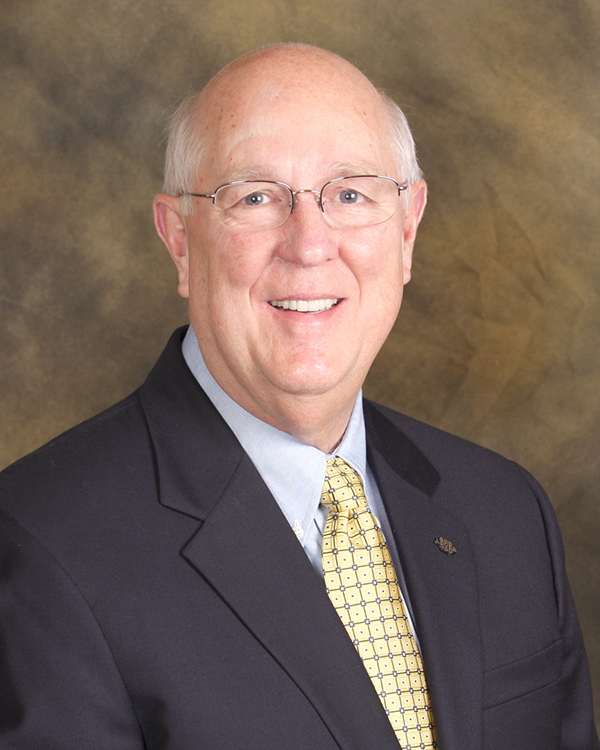
Terrence Jones asked a question during the recent State Evangelism Conference that deserves an answer. Speaking during the Tuesday morning session, Jones asked why Alabama Baptists and Southern Baptists take such definitive action to disassociate themselves from churches that support homosexuality but allow cooperating churches to practice racism without a convention response.
The question was not the primary point of Jones’ sermon but the question may have been the most prophetic words uttered during the entire meeting.
Jones, pastor of the multiracial church Strong Tower at Washington Park, Montgomery, did not question the convention’s opposition to homosexuality. Nor did he challenge the actions taken by Baptists against churches which demonstrate support for the practice. In fact, he affirmed that he shares the opposition to homosexuality expressed in convention resolutions and actions.
What he asked about is why Alabama Baptists and Southern Baptists do not take similar steps against churches demonstrating overt racism as we take against churches supporting homosexuality. Remember, racism is using power structures to dominate others based on the categories of race.
Jones asked a valid question. Why don’t we act toward racism as we do toward homosexuality?
Amended constitution
In the early 1990s a sprinkling of Baptist churches began considering ordaining homosexuals to ministry or performing same-sex “marriage” ceremonies. In response the Southern Baptist Convention (SBC) amended its constitution declaring, “Among churches not in cooperation with the Convention are churches which act to affirm, approve or endorse homosexual behavior.” The wording has been changed since being adopted in 1993 but Article III of the Southern Baptist Convention (SBC) Constitution titled “Membership” still prohibits membership of any church friendly to homosexuality.
When the Baptist Faith and Message was revised in 2000, the writing committee felt homosexuality was such an important issue that wording was added to affirm marriage between one man and one woman for life and to oppose homosexuality in any form (see Article XVIII).
Churches in several states, including Alabama, have had SBC membership withdrawn from them over this issue.
In 2015, Weatherly Heights Baptist Church, Huntsville, was kicked out of Madison Baptist Association and the Alabama Baptist State Convention after a volunteer staff member from the church performed a same-sex wedding and it was learned the pastor was sympathetic to same-sex “marriages.”
At the time, Alabama Baptist State Board of Missions Executive Director Rick Lance said in a written statement, “Our position is that any church that allows staff members to perform marriage ceremonies for same-sex couples has demonstrated that they are no longer in like-minded fellowship and friendly cooperation with Alabama Baptists and Southern Baptists.”
Alabama Baptists affirmed that position during the 2015 annual meeting in withdrawing fellowship from the church.
Obviously, Southern Baptists and Alabama Baptists have staked out a clear position regarding homosexuality and have acted to uphold that position.
Words condemning racism have been equally strong from both Southern Baptists and Alabama Baptists. Racism has been labeled “a deplorable sin” and “antithetical to the gospel.” At the 2017 SBC annual meeting, messengers said racism and ethnic hatred are “a scheme of the devil intended to bring suffering and division to our society.”
Through resolutions, Alabama Baptists have called “racism in all its forms contrary to the gospel.” Another resolution urged Alabama Baptists to “intentionally seek to destroy barriers of racism and build bridges of racial reconciliation to unify the body of Christ.”
The words are strong. They reflect biblical teaching. They are consistent with the Baptist Faith and Message which says, “Every person of every race possesses full dignity and is worthy of respect and Christian love” (Article III).
But where are the actions of Baptists to back up this position like we back up our position on homosexuality? Why have we been content to hang our heads and say “that is just the way it is” or to sit silently and say nothing when cooperating churches commit intentional acts of racism?
This is not an issue confined to the Civil Rights Era of the 1950s and 1960s. Racism remains a problem today. Jones referenced incidents in the last two months where Alabama Baptist pastors were told not to baptize certain children because of their race.
Is it time for Baptists to act to put in place a way to respond to churches guilty of such practices like we respond to churches that support homosexuality? Is it time to say churches that practice overt racism have “demonstrated that they are no longer in like-minded fellowship and friendly cooperation with Alabama Baptists and Southern Baptists?”
Honestly, there is a danger in this approach because once one starts down this road there is no stopping place. As an autonomous body, the state convention or the national body could insist on a common position on everything from who can take the Lord’s Supper to the end times.
Conventions could become creedal bodies insisting on what churches have to believe and do.
That is not the Baptist way.
But 25 years ago Baptists decided the threat of homosexuality was so great they were willing to risk adding this stipulation to the SBC Constitution. Baptists wanted to do more than pass resolutions. They wanted to be able to act and they have.
Should we practice discipline?
Racism is equally wrong and it must be resisted. Alabama Baptists have called on members to “intentionally seek to destroy barriers of racism.” Can we begin within our own fellowship by having the possibility of discipline for churches that practice intentional racism?
What kind of message would it send to cooperating churches, to the Christian world, to our nation and beyond if Alabama Baptists and Southern Baptists not only said racism is wrong but acted so that no church which practiced overt racism could be a member of our conventions?
Share with others: