
By some estimates, 1 in 3 people over the age of 50 have either osteopenia, reduced bone density, or osteoporosis, a disorder characterized by significant bone deterioration leading to an increased risk of fractures.
Bryan Crutcher, assistant professor of kinesiology at Colorado Christian University, studies how bones grow, how they functionally provide movement and structure to the human body, and how movement and strength training affect bone density and strength.
The process
“Understanding all of the mechanics allows me to really understand how the bones react when we exercise and how that can be helpful in preventing or treating osteoporosis,” Crutcher said.
One of the biggest issues with osteoporosis is that there aren’t always early warning symptoms, he said. Women are at a higher risk of osteoporosis due to the estrogen drop at menopause, he said, and genetics is another big factor.
“If you have no family history, that does not negate the possibility of still receiving a diagnosis of osteoporosis,” Crutcher said.
Your medical provider can advise you on a testing schedule based on your age and risk factors, especially for those age 65 and up.
Those with a family history may need to get a baseline bone density screening in their 40s or 50s to help monitor changes through the years, he said.
The most accurate way to diagnose osteopenia or osteoporosis is through dual-energy X-ray absorptiometry (DEXA or DXA) or a special CT scan. Regular screening can help individuals know their risk and what steps, like strength training or nutrition, might help slow bone loss.
Preventative treatments
Though osteoporosis is usually considered a concern for older individuals, that doesn’t mean that it should be ignored until reaching 50 years old. Many treatments for osteoporosis are also preventative.
Doctors may recommend an increase in calcium intake either through diet or supplements. Calcium citrate and calcium carbonate are commonly suggested to help reduce bone mineral density loss.
Vitamin D also plays a role.
“Vitamin D is also really important for bone health because vitamin D increases calcium’s absorption within the body. So if your vitamin D levels are low, your body may not be absorbing calcium at an effective rate,” Crutcher said.
There also are medications that help prevent bone loss or rebuild weak bones, though many are expensive and most have side effects.
Other important therapies for those at-risk or diagnosed with osteoporosis are balance and reaction-time training.
“People with osteoporosis want to be very careful walking on unstable surfaces, in places where they have a higher risk of falling. That’s why I usually do a lot of balance and reaction-time work to help them improve in that area.
“I want them to be able to react a little bit quicker, maybe catch themselves so they don’t fall. I want them to be able to have a better and more reactive balance. Those are two areas I would really want to improve,” Crutcher said.
He warns that these activities should be done in a controlled environment with a trained professional, like a physical or occupational therapist, an exercise physiologist or a strength and conditioning coach, so the risk of falling is lessened or eliminated.
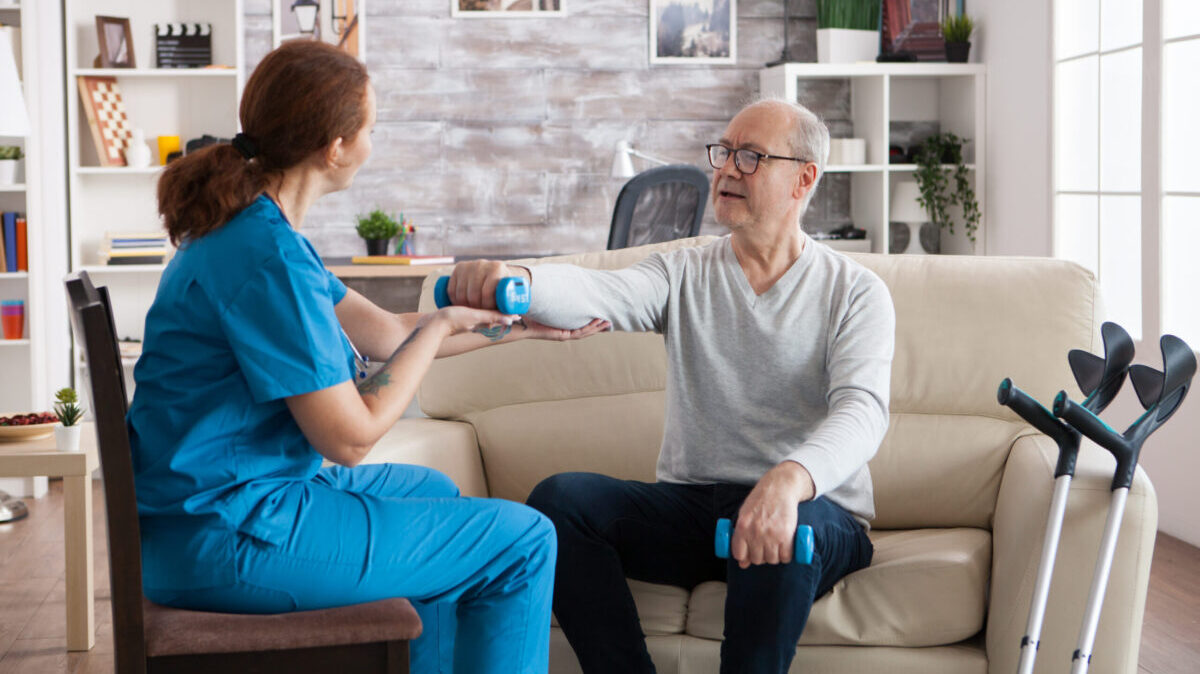
For those who are able, walking and other weight bearing exercises and strength training, even using hand weights or bands, can be positive steps, though there is no cure for bone loss, Crutcher said.
Battle of genetics
“There are people that can be very active, do all the right things and still be diagnosed with osteoporosis because sometimes genetics is very hard to battle against,” he said.
“Not to say it’s a cure-all, but we see so many benefits from physical activity.
“I never want people to think that they are automatically resigned to receiving the diagnosis if there is a family history. But if you work hard and do all the right lifestyle management behaviors, there is a very good possibility that even though your genetics presents a history of the disease, you can still overcome it with physical activity.”


Share with others: