
The wide appeal of Kate Campbell should attract her diverse fans to a new CD that recalls Birmingham’s troubled past. Her clear voice, thought-provoking lyrics and musical warmth draw listeners from a variety of backgrounds.
Though her fifth and latest CD release, “Wandering Strange,” contains soulfully arranged hymns and original songs of faith, Campbell cannot be rightly labeled “a Christian singer.”
“I resisted it a long time,” said Campbell, of the gospel CD she recorded in three days with friends in Muscle Shoals. “This is not contemporary Christian music; this is Kate Campbell doing what I want to do.”
Her folk-country-blues-shaped music and philosophical openness make her at home in both churches and the music clubs she visits across the country and beyond.
What she did first was sing “On Jordan’s Stormy Banks” as an encore while touring England with Emmylou Harris. Fans suggested she record some of the hymns she has sung since her early church days in Sledge, Miss.
As the oldest child of former Southern Baptist Convention president Jim Henry and his wife, Jeanette, much of Kate’s music has been shaped by church experiences and growing up in a time of racial unrest. Social justice is a theme found on her recording projects.
So it’s not surprising the CD that started out as a collection of hymns now includes powerful original compositions like “10,000 Lures” that wrestles with the struggles of temptation, and “Bear It Away” that focuses on the deadly 1963 bombing of Birmingham’s Sixteenth Street Baptist Church.
“Every time I saw pictures of the four little girls (killed in the bombing), it upset me,” said Campbell, sitting outside the Birmingham Civil Rights Institute and facing the brick church where the tragedy occurred. As a songwriter, however, she “couldn’t find a way to put it together.”
But writer Flannery O’Conner’s use of the words, “The violent bear it away,” taken from the Gospel of Matthew, gave Campbell the phrase she needed. “It was one of the hardest songs I’ve ever written,” said Campbell whose husband, Ira, a hospital chaplain, helped shape the lyrics.
Starting with a catchy phrase — what Campbell calls “Nashville-style song writing” — is evident throughout her impressive collection from heart-wrenching songs to her lighter works like “See Rock City,” “Jesus and Tomatoes” and the oft-requested “Funeral Food.”
“I just see things and think, ‘That’s a story that’s got to be told,’” Campbell recently told a coffeehouse crowd at Birmingham’s The Church at Brook Hills. And not all of her songs deal with life’s harshest moments.
“My mother doesn’t know if I’m serious or not — and she’s afraid that I am,” said Campbell with a grin before strumming her sunburst Tahamime cutaway guitar and singing the song based on a roadside sign proclaiming, “Jesus and Tomatoes Coming Soon.”
“My mother is the musical person in our family, and my father is the storyteller,” said Campbell.
“I used to love going to church, and I loved the singing more than the preaching — but don’t tell my daddy,” Campbell said.
“There is an artistic, mystical side to her,” said Henry of the daughter he calls “Kitty.” “Some of her music leaves you wondering — wondering what she is saying.” (ABP)
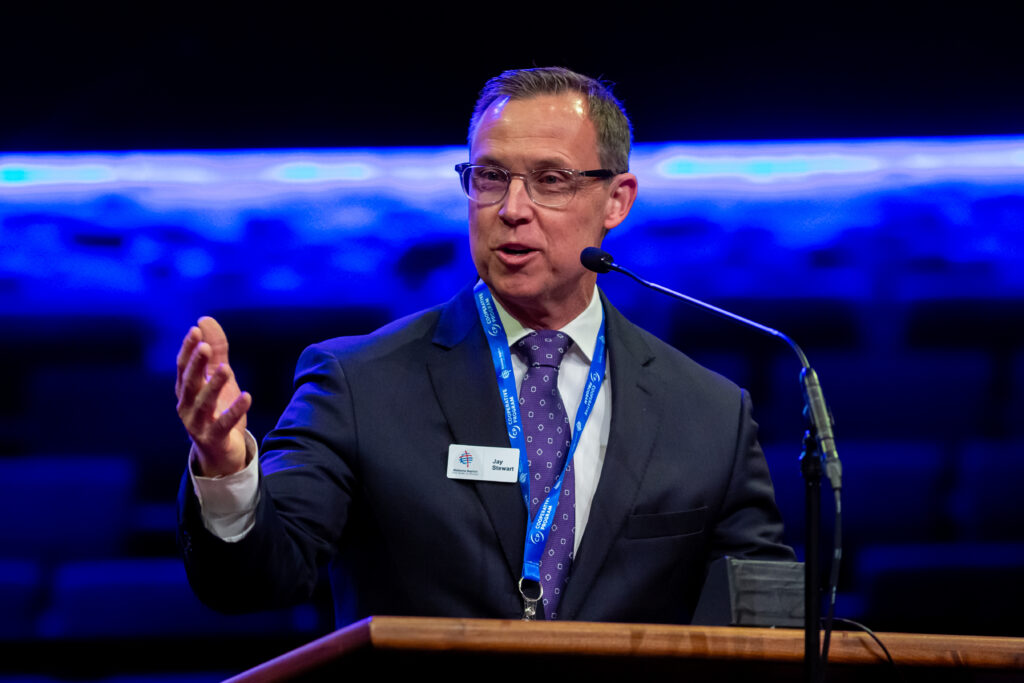
State missionary Stewart taking new Alabama-focused role with GuideStone
The state church engagement manager position is a pilot program designed to strengthen GuideStone’s ministry partnership with Southern Baptist churches, pastors and ministry leaders through dedicated, in-state engagement.

Clergy Act signed into law: Britt ‘thrilled’ ministers can re-enroll for key benefits
President Donald Trump signed the Clergy Act into law on Tuesday (Sept. 20), creating a temporary opportunity for eligible ministers who previously opted out of Social Security to elect future participation in the program.

Latest news: Former Lifeway employee charged; pastors weigh in on challenges of preaching; Mo. Supreme Court tackles question of explicit books in public schools
Check out these recent headlines reported by The Baptist Paper.

How a legacy of faith is impacting IMB’s gospel work
Rebeca Couto moved from one volcanic archipelago to another, leaving Portugal’s Azores islands to anchor her life in Japan. The
Share with others: