
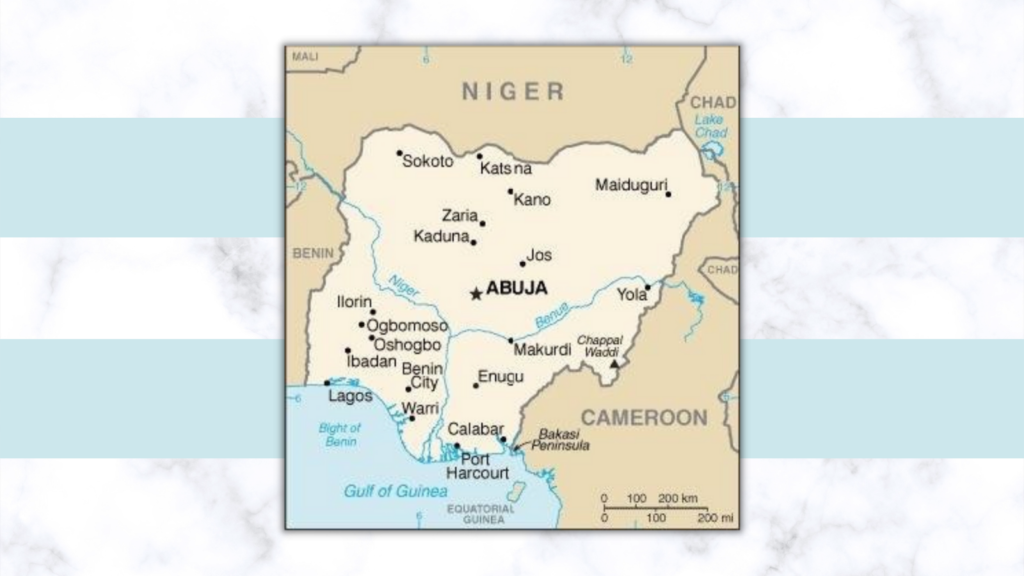
Even though most sources maintain that approximately 40 percent of Nigerians are Christians, carrying out the task of spreading the gospel in the nation is not easy. In some parts of the country, it can be downright dangerous, said Samson Adedokun, assistant to the general secretary of the Nigerian Baptist Convention (NBC).
He reported that in some areas of Nigeria, Muslims work to prevent the spread of the gospel. In others, the influence of Catholicism and traditional religions such as animism and ancestor worship hinders the work of Baptists.
In the Northwest and Northeast sections of Nigeria, Muslims have made deliberate efforts to curtail Christian work, Adedokun said. “Where churches currently exist in these areas, they are confined to a particular geographical spread. Any attempts to plant churches are usually suppressed by any means possible.”
The Muslim presence here is so strong that Islamic law —known as Shariah — supersedes national law. Legal under Nigeria’s constitution, parts of Shariah are in effect in 12 of Nigeria’s 36 states.
The United States Institute for Peace, a nonpartisan group funded by Congress, published a special report on Shariah in Nigeria, Iran and Indonesia. The report explained that the Quran contains commandments that Muslims must apply in their daily lives. These commandments address religious issues such as prayer and fasting as well as political, economic and social matters.
Although Shariah is supposed to apply only to Muslims, the U.S. State Department reported in 2005, “The non-Muslim minority has been affected by certain social provisions associated with Shariah, such as the separation of the sexes in public schools, and health and transportation services.”
Additionally the State Department reported that Christians in the Northern states alleged that local officials used zoning laws to prevent the establishment of new churches.
Adedokun pointed out, “There is great need of prayer support for this region. We are convinced that if people all over the world will pray about the spread of Islam, God will raise a movement to halt it.”
In addition to prayer support, Adedokun called for more practical means of reaching these impoverished people. “One means of reaching these communities with the gospel is to provide physical infrastructure that will impact their lives. In a region that is lacking in clean water, the provision of boreholes can open doors for sharing the gospel.”
In the North-central region of Nigeria, according to Adedokun, the gospel message has spread more but not without cost to the new believers. “Unfortunately the people of this region have been subjected to persecution,” he said. “Our convention lost some of its members, as well as property, to these disturbances.”
In this region, Ayuba Iliya, moderator of the Philadelphia Baptist Association in Jos, Nigeria, and a lecturer at Baptist Pastor’s School in Jos, has seen this violence firsthand.
“The [Nigerian] Christians earnestly want the gospel to spread speedily but there is much opposition,” Iliya said. “The Muslims do not like for one among them to become a Christian. If one accepts Christ, he will be killed.”
In southern Nigeria, the NBC’s work is growing and many new churches are being planted, Adedokun said, but evangelization is often hindered by a strong Catholic presence that is tolerant of traditional African religious practices.
“Given that Catholics are sympathetic to certain practices, it is often difficult for the people to open up to Baptist doctrine,” he said.
In spite of the challenges, the NBC is strong and vital. The convention, formed in the early 1900s with help from the Foreign Mission Board (now the International Mission Board, or IMB), is now self-supporting and self-governing. It is dedicated to spreading the gospel in Nigeria and other parts of the world, Adedokun said.
The theme for the NBC for 2006 is Kingdom People: The Agents of Transformation. “Every Nigerian Baptist is expected to be like salt, to preserve the truth,” he explained.
This is urgently needed in today’s world, said S. Ademola Ishola, NBC general secretary. “The current moral climate in the world, the secularized global village where anti-biblical teachings pervade the society, makes it mandatory for Nigerian Christians to spread the gospel, the power of God to transform lives,” he said.
In working to spread the gospel, NBC works closely with the IMB, said IMB missionary Becky Stonecypher.
Stonecypher and her husband, Mike, whose home church is First Baptist Church, Glencoe, were appointed to serve as liaison to the NBC in 2004. Mike Stonecypher has served as a missionary to Nigeria since 1982, with Becky joining him in 1988 following their marriage.
“Our work with the NBC can best be described as building relationships and supporting … the work going on within the NBC,” Becky Stonecypher explained. “We offer training opportunities and help request personnel and other volunteers for specific jobs the NBC needs. We serve as a link between the IMB personnel serving in Nigeria and West Africa and the NBC leaders and churches.”
The work of the Stonecyphers and other IMB missionaries helps keep strong ties between the IMB and the NBC, Iliya said. “The relationship between the IMB and the Nigerian Baptist workers is so sweet. The IMB truly supports the workers of the NBC in spreading the gospel.”
To continue its work, the NBC needs both prayer and practical support, Iliya and Adedokun said. According to Iliya, inadequate transportation prevents travel to the nation’s more remote sections that have rough terrain and few roads. “We have some villages that the gospel has not reached,” he said. “To visit such places, one needs strong vehicles to use.”
Adedokun added that in northern Nigeria, Christians are rebuilding churches that were destroyed. “There is dire need for prayer for Baptists and other Christians not to faint and become discouraged,” he said.
Militants murder 43 Nigerian Christians
ABUJA, Nigeria — Militants killed at least 43 Christians in Nigeria, as ongoing violence has prompted thousands to gather together
Christian man sentenced, fined for ‘undermining’ faith of Muslims
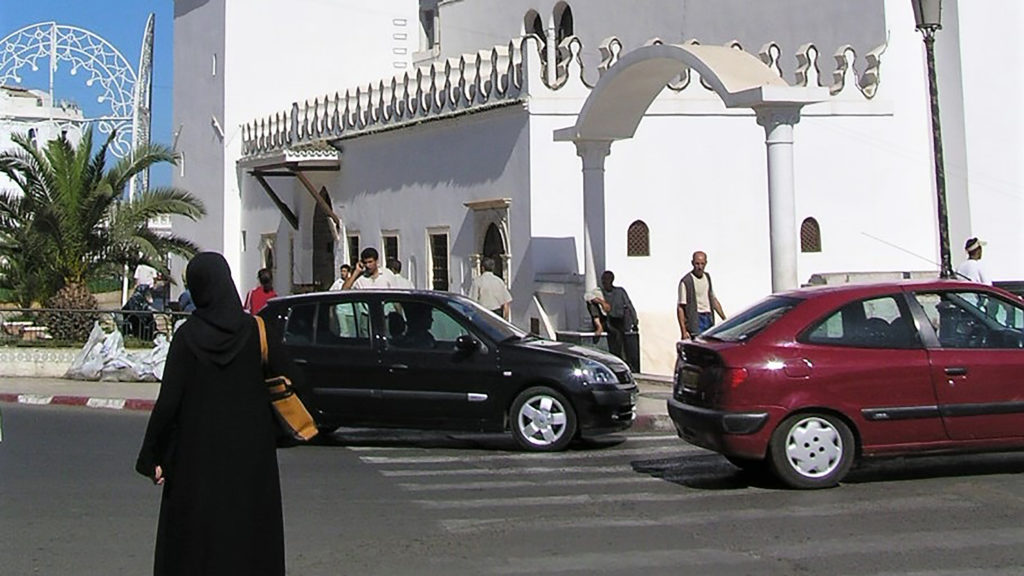
AIN-DEFLA PROVINCE, Algeria — An Algerian court sentenced and fined a Christian man July 8 for allegedly accepting unauthorized donations
Muslim husband in Uganda beats wife for becoming a Christian
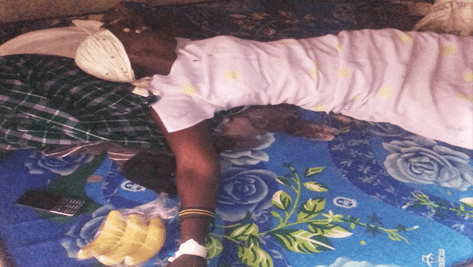
BUGIRI DISTRICT, Uganda — A Muslim husband beat his wife and forced her to ingest a toxic pesticide because she
Ugandan pastor killed after radio broadcast comparing faiths
ADUKU, Uganda — Muslim extremists in Uganda killed a pastor Oct. 31 following a radio broadcast in which he compared
Share with others: