
A judge’s own religion may influence how he or she rules in cases involving religious liberty, and the amount of that influence varies by denomination, according to new research by Barbara Yarnold of Florida International University.
Federal appeals court judges who are Baptist or Catholic, she finds, are more likely than other judges to take “pro-religion” positions in cases involving the First Amendment to the U.S. Constitution.
Yarnold’s findings are reported in the September 2000 issue of The Review of Religious Research. Her study analyzed 1,356 federal appeals court decisions between 1970 and 1990 in cases dealing specifically with either the First Amendment’s free-exercise or establish- ment clause. She compared religious affiliation of judges with the outcomes of these cases.
Rulings that favored religious activity or expression were coded as “pro-religion,” while cases that disallowed religious activity or expression were coded as “anti-religion.”
“Baptist and Catholic judges were more likely to render decisions that were pro-religion in cases involving religious liberties than were other judges,” Yarnold explained.
Lutheran judges were more likely to take an anti-religion position, although this tendency was not as statistically strong as the Baptist and Catholic finding.
Judges of all faiths were inclined toward a pro-religion position, Yarnold said, but only the Baptist and Catholic judges stood out with strong statistical significance.
“Being not religious did not make a significant difference in the outcome, since the nonreligious still, in general, adopted a pro-religion position,” she added.
Also, “the fact that judges were of the same denominations as the ones concerned in the cases did not significantly increase the chances of winning, though it did make a pro-religion decision more likely.”
Yarnold theorizes that Baptists and Catholics may be bent more toward affirming religious practice because of the minority status and persecution these religions have endured in the past.
Whether the findings of this study are good news or bad news depends entirely upon one’s perspective, Yarnold said. “To those who tend to be more concerned with free exercise by this country’s many religions, this outcome may be perfectly appropriate. To those who are more concerned with the non-establishment mandate of the First Amendment, these results may be troubling.” (ABP)
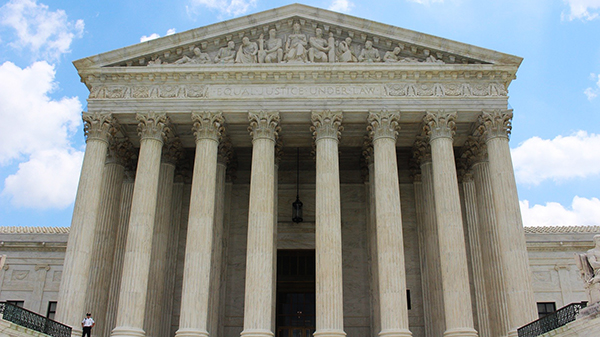
High court blocks NY coronavirus limits on houses of worship
As coronavirus cases surge again nationwide the Supreme Court late Wednesday barred New York from enforcing certain limits on attendance

FIRST-PERSON: After the election
EDITOR’S NOTE: J.D. Greear is pastor of The Summit Church in the Raleigh-Durham, N.C., area and president of the Southern
Christians urged to show grace postelection
By Maggie Walsh The Alabama Baptist This presidential election has been perhaps the most inflammatory in history. In the days,
Americans unconcerned about politicians’ morals
WASHINGTON — More than 70 percent of white evangelicals think that when politicians commit immoral acts in their private lives
Share with others: