
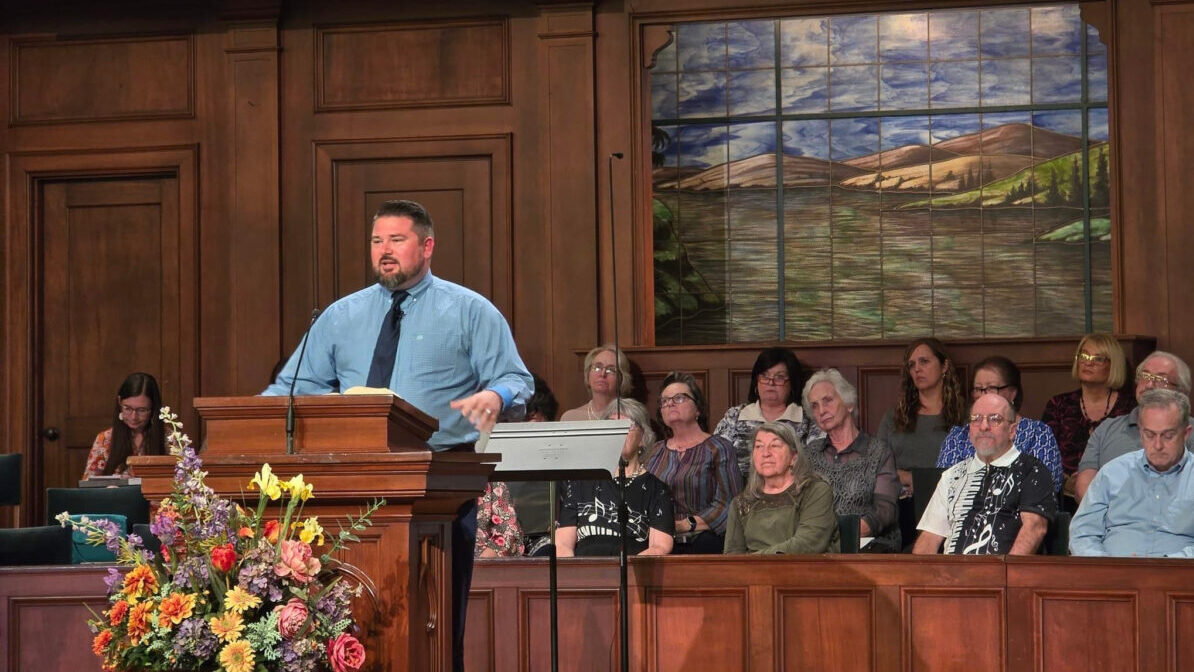
For the past 25 years, Keith Crouch has stood behind the pulpit of Belmor Baptist Church in Mooresville nearly every Sunday. And on the weekdays — at least up until he retired last year — he was also behind the wheel of a UPS truck.
“At about age 29, I was serving as a deacon and Sunday School teacher at my church, and the Lord just convicted me that I needed to do more,” Crouch said. “I felt the unmistakable call that He was calling me into the pastoral ministry.”
Subscribe to The Alabama Baptist today!
He didn’t have any ideas of what that would look like, but soon he heard of a need for someone to preach at Belmor Baptist while they looked for a pastor. He started filling in there, and it wasn’t long before he and Belmor — a small church that could only offer a part-time pastorate — agreed that maybe God wanted him to stay.
So during the week Crouch would deliver packages, and on Sundays he would deliver a message. He did that on repeat for nearly a quarter century.
“I’ve had people ask me, ‘Why have you not ever tried to be a full-time pastor?’ And I tell them that churches like mine need pastors too,” Crouch said.
He’s right, according to the numbers.
‘Staggering’ numbers
Bryan Blass, director of the office of LeaderCare at the Alabama Baptist State Board of Missions, said 60 to 70% of Alabama Baptist churches are led by bivocational pastors.
“When you realize that there are more than 3,000 Alabama Baptist churches, and 60 to 70% have a part-time staff, that number is staggering,” he said.
That means hundreds of men in the state are juggling a career and a ministry calling every week, something that brings with it joys and challenges, Blass said.
Challenge #1 — Doing member care
Andrew Brock, pastor of Kyuka Baptist Church in Attalla, said the greatest difficulty he has is caring for people who are sick or in the hospital during the week.
“Making it to those sorts of things is difficult,” said Brock, who teaches agriscience at his local high school. “I wish I could be there for people a little bit more.”
Crouch said he has also faced that struggle.
“Having people who were having a surgery that you needed to be at was challenging sometimes — I couldn’t always get off work,” he said.
Joy #1 — Seeing members step up
But Brock said for him, even though the pastoral care element of bivocational ministry is the most challenging, it’s also the source of one of his greatest joys.
“It’s an opportunity for the church itself to pick up some of that, and my church does a great job of that,” he said. “When you have deacons and leaders in your church that will help out with that sort of thing and check on each other, the church really picks up a lot of that ministry because they help each other and minister to each other.”
Crouch agreed.
“One of the greatest joys has been teaching and equipping our people how to minister to each other and be there for each other,” he said. “They are realistic, and they know ‘he’s not full time, and he can’t always be there, so we’ve got to do what the Scriptures tell us to do.’”
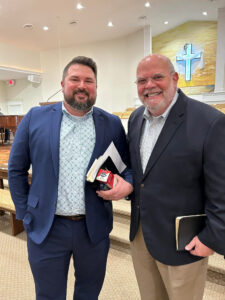
Crouch said he “couldn’t ask for a better committee of deacons,” and it’s been great to watch the whole church grow “to where if something is going on, Bro. Keith doesn’t need to be there right then.”
Kenneth Wells, pastor of Shiloh Baptist Church in Scottsboro, said he also was grateful to have a congregation that understood the demands of his full-time job in insurance compliance.
“Six years ago when they called me to the pastorate, I told them, ‘I have a full-time job, and I’ve signed a code of conduct that during the day, my core work hours are theirs,’” Wells said. “I asked our church, ‘If you need me, please call me at night unless it’s a major emergency.’ And they have been so respectful of my time over the years.”
Challenge #2 — Sermon prep
Wells said another time management challenge for him as a bivocational pastor has always been finding time for sermon and Bible study preparation.
“One thing that helped me was knowing what resources were out there,” he said.
Many bivocational pastors haven’t attended seminary, and Wells said what he learned to do was to ask other trusted pastors what books and commentaries they use and let them mentor him in that.
He said other than that, discipline is a big factor in getting his sermon prep done.
“There are days when you get off work that you just want to eat and watch the Braves, but you need to prepare because Wednesday’s coming or Sunday’s coming,” Wells said.
He said he has to discipline himself to get into “digging” mode.
“It’s hard to make yourself find the time, but once I get in that mode, I’m into it,” he said. “I love discovering things that help the congregation with their spiritual walk. It just takes discipline to get started.”
Finding time to prepare has been a challenge for Crouch over the years too, especially at the beginning of his ministry when he had young children.
“For me, the best thing has been to study a little bit every day; don’t wait until the weekend and try to put it all together,” he said.
When Crouch was working at UPS, he would stay up a little later on Tuesday and Thursday nights and study, and by Thursday evening he would have most of his sermon together.
“I did that purposely because I wanted my Friday and Saturday to be available for my family. I didn’t want my weekend to be trying to cram a bunch of prep in,” he said. “I don’t think you do the Scripture justice when you do that, but also I think it robs you of time with your family.”
Brock said one thing he has done to maximize his time is to listen to commentaries and podcasts while he’s commuting to and from work.
“There’s a lot of multitasking in bivocational ministry, and I learned a few years ago that I could get a little bit more creative and listen while I’m driving,” he said.
Joy #2 — Seeing members grow
Wells said even though finding time for prep is difficult, the joy of seeing church members grow spiritually is worth it.
“It is wonderful seeing prayers answered, seeing God do things within our congregation and watching people grow in their faith,” he said.
Crouch agreed.
“Seeing our people grow in their knowledge of Scripture and theology and having a passion for it is a joy,” he said. “I love seeing people grow to that point where they enjoy that and have a hunger to learn. Those things have really been a joy over the years and continue to be a joy.”
Challenge #3 — Having community
Crouch said his church is “really like a family,” and he’s enjoyed the friendships he has been able to have in his church over the years. He called it a “luxury” of the small-church pastorate.
But Blass said there’s something he continually hears from bivocational pastors — they miss connecting with other pastors and ministers because their work schedules won’t allow it.
“They crave fellowship. It’s not that their church family doesn’t love them — they do,” Blass said. “But say the associational director of missions has a Monday meeting for pastors — bivocational pastors can’t go because they’re working.”
He said he’s working to offer more opportunities for those connections, like the Bivocational Ministers/Spouse Retreat, which happened in February and will soon be scheduled again for 2026.
Wells is also president of the Alabama Baptist Bivocational Ministers association, which is working to find ways to connect bivocational pastors around the state.
“We’re trying to get more guys involved, to let them know there are more resources out there,” he said. “Sometimes, as a bivocational pastor, you feel like you’re on an island.”
Joy #3 — Being in the community
But Blass said even though that’s a challenge, there’s a benefit too that comes with the bivocational setup. In their secular jobs, pastors are getting to know members of the community in ways they otherwise wouldn’t.
“They’re getting to rub shoulders with some people who will never walk in a church, build relationships with them and then say, ‘Come to my church where I pastor,’” Blass said. “They have their finger on the pulse of what’s going on in their community because they’re in their community. The people around them know, ‘That guy’s not afraid to roll his sleeves up and work with me.’”
Crouch said for him, when it comes to bivocational ministry, the joys definitely outweigh the challenges.
“I’m a cup-half-full kind of guy when it comes to bivocational ministry,” he said. “It’s what the Lord has called me to do, and there’s never more joy than being in the center of where God wants you to be.
Alabama Baptists face a crisis of raising up bivo ministers
Craig Carlisle said even though most Alabama Baptist churches are small enough that they can only afford part-time staff, the pile of resumes he has to offer doesn’t reflect that.
“The issue is not just for bivocational pastors, it’s bivocational worship pastors and student pastors too,” said Carlisle, director of missions for Etowah Baptist Association and president of the Alabama Baptist State Convention.
He said someone recently came to his office from an area church and said they were looking to hire a part-time minister of music and youth, and “the cupboard is bare for me to be able to recommend people to those positions.”
What Alabama Baptists have on their hands is a crisis, he said.
“One of the challenges we face is raising up local bivocational ministers,” Carlisle said.
By that he means men who have careers that can support them who feel a call to also serve a small church near them that can’t afford a full-time minister. About 60 to 70% of Alabama Baptist churches fall into that category.
For younger men who might be feeling a call into the ministry, Carlisle recommends considering a degree in a secular field that could give them a stable career while they serve a smaller church.
For men who are further along in their career, he suggested considering a new calling that wouldn’t pull them away from their work.
“We need to call out newer but not necessarily younger pastors,” Carlisle said. “It’s not necessarily an age thing — churches are crying out for pastors, period. These men may be in their 50s or early 60s who might be willing to go serve these churches.”
He also suggested that the staff of larger churches disciple men to follow the call of God to smaller churches who need them.
“It’s one of the greatest needs we have today,” Carlisle said. “If we don’t see an uptick in some bivocational ministry, a lot of churches will close.”
For more information about the need and how to respond, visit callingoutthecalledal.org.

Share with others: