
Sunday by Sunday, week by week, month by month and year by year, churches do “their thing.” Perhaps it seems a little harsh to express what churches do in such a common way. So let’s revise that phrase to say that churches function.
Some churches function incidentally, some accidentally and some intentionally. So, how does your church function? Perhaps you are wondering what it means to say that churches function incidentally, accidentally or intentionally.
To say that a church functions incidentally may or may not be a compliment. Incidentally, probably a majority of the churches in America and yes, in Alabama, function incidentally. Many churches do what they do because that is what they have always done.
Without a doubt, that can be quite complimentary because many churches have been functioning faithfully and biblically for an extended period of time. God has blessed and God continues to bless the life and ministry of churches who are functioning incidentally.
On the other hand, even the most effective incidental churches should be reminded from time to time that they should evaluate why they are doing what they are doing. Are they “on target” with what God has called them to do and has uniquely designed them to do?
In God’s Word we are continually admonished as individuals to pause and to consider whether we are headed in the right direction. Likewise, churches, as living organisms should be encouraged and perhaps even insistently admonished to consider regularly God’s desire, God’s design and God’s direction. Where are we headed?
When Alice of Wonderland fame was questioned by the Cheshire cat, she articulated the position of many persons and many churches. You will recall that Lewis Carroll causes the Cheshire cat to ask Alice where she is going. She replies that she does not know. He wisely asserts the obvious fact, “Any road will take you there.”
Does your church know where it is going? Or, is your church, for the most part, an incidentally functioning church? The most obvious downside of such a way of operation would be taking God’s activity for granted or in some cases missing God altogether. We like to think that we would never allow that to happen. The church at Laodicea in the book of Revelation may have thought the same thing.
The second method of church operation might be classified as accidental. Accidental? We generally agree that accidents are incidents that came along unexpectedly. In fact, that seems to be somewhat foundational in consideration of what an accident is. It is something unexpected in the midst of the normal routines of life.
All of us have experienced those occasions we call accidents. Everything seems to be going along in life as expected when a surprise interrupts the regular flow. Some accidents can be good. But for the most part, that which we declare to be an accident falls into the less than desired category. We learn early in life to avoid accidents — “Be careful.” But, we are reminded that, “Accidents do happen.”
How does this apply to churches? How can a church be said to be functioning accidentally?
Churches function accidentally when they simply proceed from incident to incident, occasion to occasion, even mishap to mishap. Someone may astutely observe that this looks a lot like the incidental church. To a degree, the accidental church bears similarity to the incidental church.
However, the accidentally functioning church more often than not moves from peak to peak, valley to valley, with many ups and downs. Crises are common, some great and some small. The church moves from critical occasion to critical occasion. Or, the church fails to move at all.
Along the way, from time to time, God is allowed to work. However, much energy is expended dealing with many less than positive accidents and some really serious accidents. When something really good happens it can often be short-lived because there is very little energy left to celebrate or to build on the positive accident.
Anyway, who knows when another less than positive thing is going to present itself?
There is a better way. We all knew that, didn’t we?
The third and best way for churches to operate may be expressed as intentional. Churches function intentionally when they take the time to discover God’s desire, God’s design and God’s direction. There must also be a conscious decision to do what God directs. And there must be a determination to keep on doing that which God directs even when that becomes challenging.
The foundation for the church that functions intentionally involves a commitment to two basics. These basics provide an unshakeable stability when they are genuinely established and embraced. Our next installment will help us see what the commitment basics are and why they are often neglected.

Carey Baptist Association opens new thrift store
Carey Baptist Association is blessing the community through a new thrift store at 82030 Highway 9, Ashland.

Birmingham after-school program making a difference in the lives of children
Discovery Clubs, an after-school program in 23 schools in the Birmingham Metro area, is all about sharing the redemptive story of Scripture with children who might have no other exposure to the gospel.
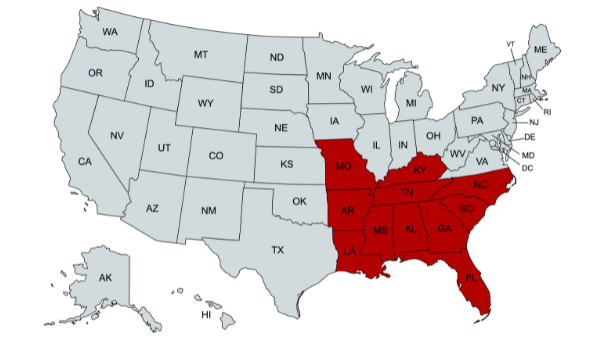
Headline news from around the Southeast for September 30
Arkansas Seeking a creative way to engage with students at the start of the academic year, Mark Parsley, student pastor
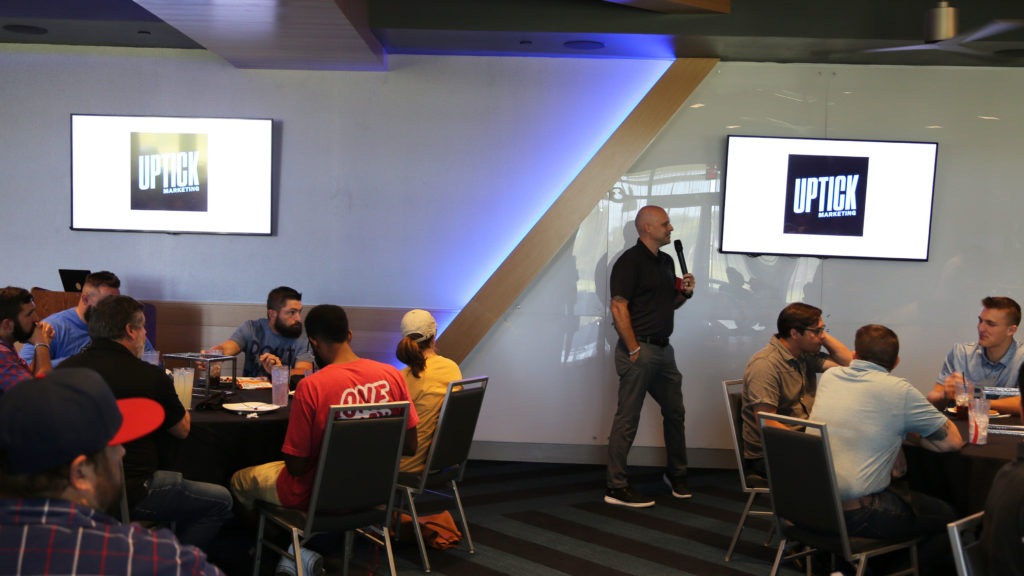
First Priority of Alabama seeing students ‘hungry’ for fellowship, spiritual answers
Supporters of First Priority of Alabama joined together for the Topgolf challenge Sept. 9 in Birmingham. The lunch event drew
Share with others: