
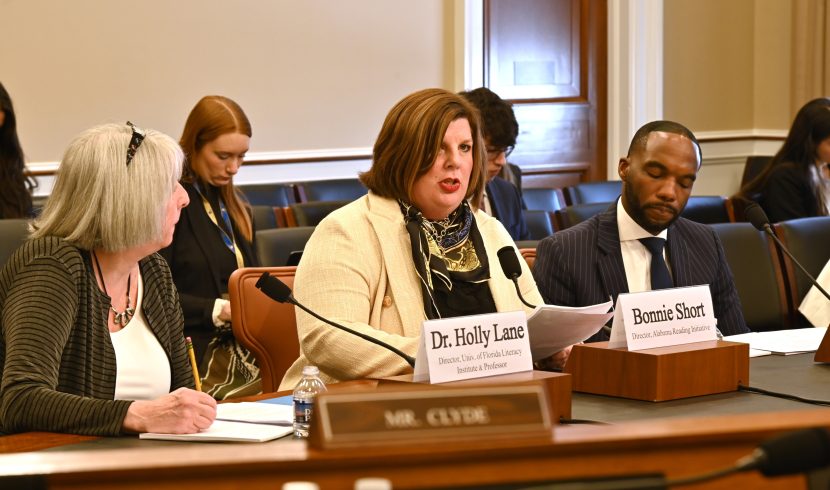
Alabama’s efforts to improve literacy were on full display on Capitol Hill Tuesday (Feb. 10) as Bonnie Short of the Alabama Reading Initiative detailed to House appropriators how the state’s efforts have helped students become better readers.
As states look to overhaul how they teach students to read, lawmakers examined the “science of reading” and the federal government’s role during a House Appropriations subcommittee hearing, led by Rep. Robert Aderholt, R-Haleyville.
Subscribe to The Alabama Baptist today!
SIGN UP for our weekly Highlights emails.
The “science of reading” approach involves five pillars for teaching children to read: phonemic awareness, phonics, fluency, vocabulary and comprehension.
Alabama’s reading gains have garnered national attention recently as the state’s fourth-grade reading ranking has risen from 49th in 2019 to 34th in 2024. A fact that was mentioned repeatedly during Tuesday’s hearing.
“This record of success also underscores the importance of a bottom-up approach to education reform, rather than a top-down mandate from Washington,” Aderholt said.
Short, who testified in front of the subcommittee, said Alabama’s success has stemmed from strong collaboration between education leaders and state leadership.
“…it comes from coherent policy paired with long-term, job-embedded implementation supports that help educators deliver strong instruction, identify risk early and respond quickly when students need additional support,” Short said.
Alabama’s reading policy has focused on improving five key areas. Those include strengthening core literacy instruction, investing in professional learning, targeting assessments, providing students additional support and maintaining literacy coaches, Short said.
Full story.
EDITOR’S NOTE — This story was written by Alex Angle and originally published by Alabama Daily News. Alabama Daily News’ Trisha Powell Crain contributed to this report.




Share with others: