
The Mayan civilization is mysterious and fascinating with sites found that date back to approximately 1000 B.C. Millions of descendants of the Maya still remain in Guatemala today.
By the time the Spanish explorers discovered the area that is now Central America in the 1500s, the Mayan civilization was already in decline. The Maya were no match for the Spanish invaders with their horses, guns and armor.
Catholic priests and Franciscan friars soon followed, coming in the 15th and 16th centuries to Guatemala and other Central American countries to convert the indigenous population to Christianity. They impacted Guatemala’s population to the point that “[h]istorically, the country was overwhelmingly Catholic,” according to the U.S. State Department in its International Religious Freedom Report 2005.
By the 1700s, Spain was firmly in control of the area that included modern-day Guatemala. The Mayan people were forced to work for the Spanish or driven out of the most desirable areas. The population declined from an estimated 800,000 to 100,000.
In 1821, Guatemala declared its independence from Spain. It briefly became part of the Mexican Empire and then belonged to a federation of other Central American nations until it broke up in 1840.
For the next 150 years, Guatemala went through a succession of dictatorships, coups and military rulers, punctuated by brief periods of elected representative government. In 1944, growing widespread social unrest led to the overthrow of Gen. Jorge Ubico who was leading the country as dictator. Civilian President Juan Jose Arevalo was elected and installed in 1945.
The period that followed has been referred to as “Ten Years of Spring” because of the reforms instituted by Arevalo and his successor, Jacobo Arbenz, including unionization, land reforms and new political parties.
Arbenz also permitted the Communist Guatemalan Party of Labour to achieve legal status in 1952. This led the United States to back a revolt by Col. Carlos Castillo Armas in 1954 that overthrew Arbenz and installed Armas as president. This began a tumultuous period of an ever-changing government, generally military or backed by the military.
Beginning in 1960 and continuing for 36 years, civil war raged between the right-wing militaristic governments and left-wing guerillas. According to the State Department, the guerilla groups conducted economic sabotage and targeted government installations and security forces in armed attacks. In 1968, guerrillas assassinated U.S. Ambassador John Gordon Mein in Guatemala City.
In 1982, the four major guerilla groups combined to form the Guatemalan National Revolutionary Unity (URNG).
Following a 1982 coup led by the military, retired Guatemalan Gen. Efrain Rios Montt declared himself “President of the Republic,” embarking on a campaign to defeat the insurgents with economic reforms and military force. This self-described “rifles and beans” approach is considered the most violent period of the war, in which an estimated 200,000 civilians died.
In 1983, Gen. Oscar Mejia, Rios Montt’s minister of defense, deposed him and became president.
A 1986 election brought democracy back to the war-torn country.
The killing, however, continued along with widespread corruption and restrictions on civil liberties.
This time — from Rios Montt’s regime until the 1990s — is sometimes called the “Silent Holocaust” because of the extreme bloodshed. Several hundred Mayan villages were destroyed. Torture was commonplace and hundreds of thousands of civilians became refugees.
Beginning in 1996, the United Nations sponsored negotiations between the government of Guatemala and the URNG, finally ending in a peace accord that year.
In today’s Guatemala, life is slowly improving. The violence has lessened and the URNG is now a legally registered political party.
Guatemala’s economy has been slow to rebound from the civil war, however. The State Department reported that potential investors, both foreign and domestic, cite a variety of barriers to new business including “corruption, lack of physical security and a climate of confrontation between the government and private sector.” A collapse in coffee prices in the late 1990s further worsened the plight of the poor, who depend on the income from raising or picking coffee beans.
An estimated 75 percent of the population lives in poverty, according to the CIA World Factbook. UNICEF reported that “67 percent of indigenous children suffer from chronic malnutrition.” And although Guatemala self-reports a literacy rate of 70 percent, UNICEF and others believe it is much lower, placing the country’s literacy and infant mortality rates among the worst in the Western Hemisphere.
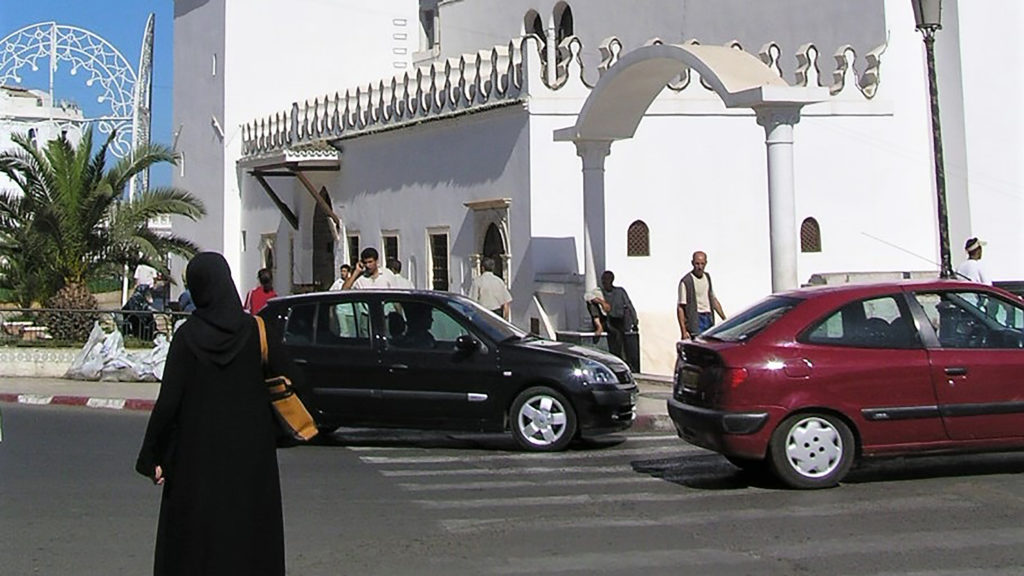
Christian man sentenced, fined for ‘undermining’ faith of Muslims
AIN-DEFLA PROVINCE, Algeria — An Algerian court sentenced and fined a Christian man July 8 for allegedly accepting unauthorized donations
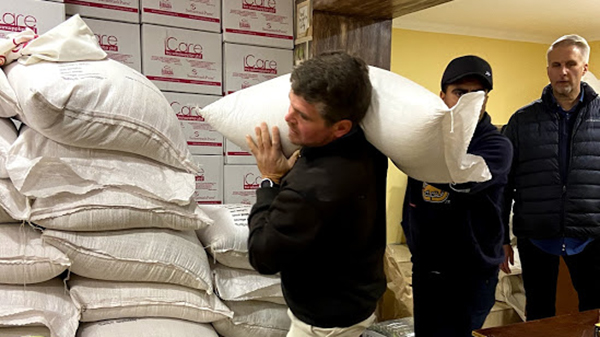
Cease-fire holds but Armenian refugees feel effects of conflict
Desperation and a sense of deep sadness continue. Since the Azerbaijani military launched air raids and artillery attacks Sept. 27
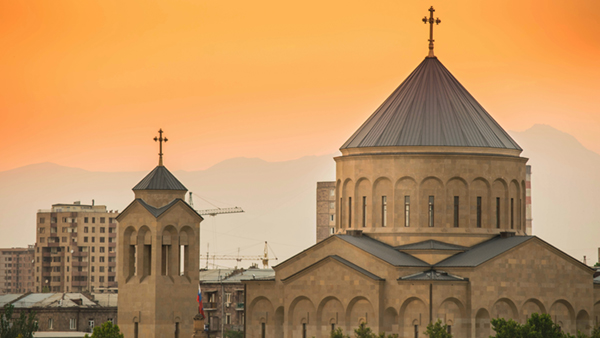
Armenians displaced from Nagorno-Karabakh fear their medieval churches will be destroyed
A six-week war in Nagorno-Karabakh, a mountainous region in the South Caucasus, ended on Nov. 9 after Russia brokered a peace
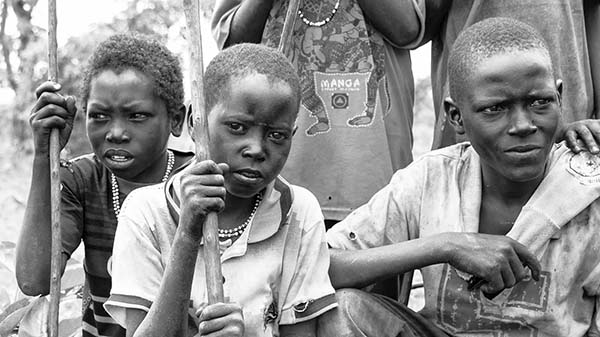
Nigerian violence sparked by history, grudges, poverty and religion
While some religious freedom advocates characterize the violence in Nigeria in very black-and-white terms — nothing short of Muslim persecution
Share with others: