
By Sondra Washington
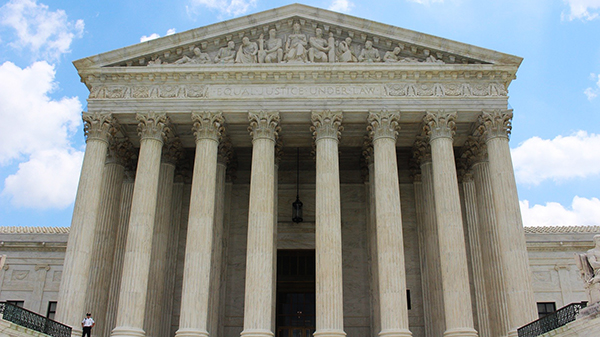
In December, the United States Supreme Court will review another controversial case concerning a 50-year-old Virginia law banning cross burnings meant to frighten or intimidate.
Although the high court’s decision will determine if this law violates the Constitution by prohibiting free speech — therefore setting a precedent for similar state laws — it should not affect Alabama, which has no law against cross burnings.
The first cross was burned atop Stone Mountain in Georgia in 1915 and the act has since become the Ku Klux Klan’s notorious method of intimidation. This is according to the Southern Poverty Law Center (SPLC) Intelligence Project, which was started to monitor the hate activity of the Klan.
Formerly known as Klanwatch, the group now tracks the activities of more than 600 racist and neo-Nazi groups.
“Today, a cross is burned nearly every week (nationally), most typically at the homes of interracial or black families,” said Mark Potok, SPLC director of information and publication. “We’ve recorded 20 cross burnings in Alabama since 1986. There are a number of states that have outlawed cross burnings but now, that is all in question.”
Ranked fifth in the country in the number of known hate groups, with 36, Alabama has two laws that may be applied in cross burning cases. According to Attorney General Bill Pryor’s office, one law passed in 2000 carries up to a 10-year prison term “for those who threaten violence or property damage with the intent to terrorize someone.” The other, less severe, law pertains to menacing, where a person “by physical action … intentionally places or attempts to place another person in fear of imminent serious physical injury.”
Serious crime
Once treated as minor crimes or annoyances, cross burnings are being taken more seriously by both the authorities and victims according to the SPLC. “I think we’ve seen a definite trend toward people being more harshly punished for … cross burnings,” said Potok.
“In one case, a grand dragon of the Klan received nine years for burning a cross in the yard of a black family. In another case, the two people who burned the cross were charged with a federal criminal civil rights violation. The first one was in Albertville in March 1991. The second was in Graysville in November 1998.”
Other cross burnings in Alabama listed by SPLC occurred in Fort Payne in 1999 and Citronelle in 1996 — both at the residences of interracial couples — and in Tuscaloosa in 1996 at the University of Alabama.
Many pastors were contacted for comments but most declined to speak. However, Kenneth Galyean, pastor of Brindlee Mountain Baptist Church, Lacey’s Spring, said, “I think that what they [cross burnings] represent and remind people of is a great prejudicial background tying to the Ku Klux Klan. It promotes hate and racism. I am definitely not for that.” The pastor is also against adding more legislation to oppose cross burnings. “You can’t legislate morality,” he said. “I would like to see the current law enforced without adding more laws.”
Jeremy McCoy, pastor of New Bethel Baptist Church, Elkmont, equates cross burning with flag burning. “I’m definitely against cross burning, and I would be for any legislation that would ban it,” he said. “I believe the First Amendment has been abused to allow people to say and do things that are obscene and offensive to the majority of American citizens. I would be ashamed to call myself a pastor and not oppose cross burnings.”


Share with others: