
A baby grows and develops daily as he is fed and nurtured by his parents and other significant adults. He learns to live with rules, and he learns to be more self-controlled and self-disciplined. Growing up is normal. Change is normal.
As a disciple, you grow and change daily as you are fed by God’s Word and nurtured by the Holy Spirit and your church family. You learn to live by biblical principles and to be controlled and disciplined through the guidance of the Holy Spirit. He uses the Bible, prayer, the church and Christian friends to help you along the journey. Growing up is normal, but too often Christ’s disciples are stuck in infancy, childhood or adolescence.
As you invest your time and attention to studying God’s Word, praying, serving others and sharing your faith, you give control of your life to Him to use those experiences to form Christ in you — to be transformed or changed. You grow in spiritual maturity.
Being a healthy disciple is serious business. There is no quick fix or fast food line to spiritual wellness. It is a lifelong, day-by-day, minute-by-minute obedient process toward becoming all God wants you to be. Being mostly obedient is not enough. Obedience comes with spiritual discipline. Richard Foster in his book "Celebration of Discipline" categorizes the disciplines as inward, outward and corporate.
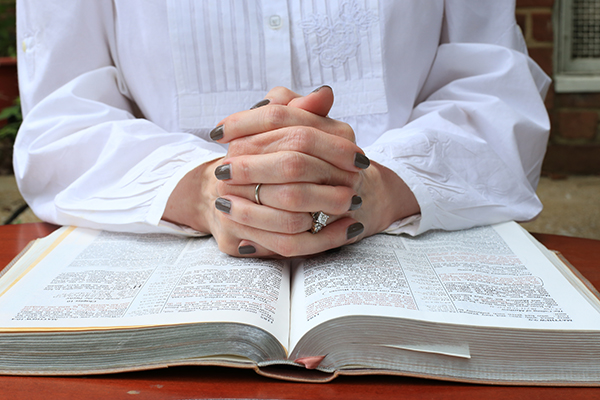
In this article, we will focus on the best known but often ignored and neglected inward disciplines or practices: a personal quiet time with Bible study and prayer.
These practices put you in the presence of God and help you develop an intimate relationship with Him. Spending time with Him builds character — the evidence of Christ in you. (Check out other spiritual disciplines such as worship and stewardship. They are no less important.)
Jesus went to a solitary place to be alone with His Father (Mark 1:35). He set the example for us. The answer to the question of whether you are a healthy disciple may well be determined by whether you develop a daily quiet time.
As His disciple, you need to pull away from the busyness of life to spend personal, private time with Him. You cannot develop a personal, intimate relationship with your spouse, your child or a friend if you do not spend time with them. In the same way, the more time you spend with God, the more you get to know Him — and He helps you know yourself better. Remember, He is your friend and He wants to have an intimate relationship with you. He yearns for you to spend time with Him.
But there are more reasons for a disciple to have a daily quiet time. Let’s explore some of the benefits that a disciple receives by spending time with the Father.
The Holy Spirit will seize those opportunities for teachable moments. As we talk with Him and meditate on Scripture, the Holy Spirit teaches us, encourages us and calls us to be on mission with God.
A disciple must learn the truths and the commands before he can obey them. As you learn what the Bible teaches, the Holy Spirit will teach you how to apply God’s truths to your life.
He may also correct you or discipline you so you will stay on the journey without stops or detours along the way.The more you get to know Him, the more you will want to know Him. You will sing with the psalmist, "As the deer panteth for the water, so my soul longeth after thee" (Ps. 42:1). You will enjoy being with God just for the joy of spending time with such a treasured Friend.
The more you get to know Him, the more you will want others to know Him. You will want to talk about your Friend in everyday conversations at home, at work and as you go. You will seize every opportunity to share the good news of Jesus with everyone you meet.
You will be strengthened in your faith and empowered for the journey when you spend time alone with God. Jesus promised that His disciples would receive power after the coming of the Holy Spirit. You must be in His presence to receive His power.
A daily quiet time is not the same as a spur-of-the-minute communication with God that can and should occur throughout the day. It is an intentional, planned, private meeting with your Lord. Make it truly a quiet time. Shut out everything and everyone but the Person with whom you have the appointment. This may sound simplistic to some of you, but the following to-do list may encourage others of you to:
• Decide on a time of day when you are most alert; you do not want to fall asleep or have your mind wandering during this conversation.
• Determine the length of time you will spend each day. Spiritual disciplines involve practice and perseverance. Paul encouraged New Testament Christians to have patience to run the distance.
• Designate a specific place.
• Delegate space for your Bible and study materials. Always have a journal, a pen and markers handy. Your journal may be a notepad or a purchased spiritual journal.
• Develop a code (or borrow one) so that you can note questions, what you really want to remember, or a truth you need to pray about or practice. (This code will serve you well as you listen to sermons and participate in Bible studies — even your Sunday School lesson.)
An effective quiet time
There are at least three elements in a quiet time:
1. Read the Bible to get to know God. Remember, these are His words, so hear Him. Both Old and New Testaments are the uniquely inspired Word of God. Jesus often quoted Scripture and applied it to everyday life. So should His disciples.
2. Meditate on what you have read (Josh. 1:8). Let it penetrate your mind, your heart and your will. It is the transforming Word of God. Allow Him to renew your mind and transform your life to please Him (Rom. 12:1–2).
3. Pray — talk to God and listen to Him. Include praise for who God is and thanksgiving for what He has done. Confess your sins and receive His forgiveness and instruction. Intercede for others and ask Him to supply all of your needs. As you begin, you might follow a simple prayer guide such as ACTS: Adoration, Confession, Thanksgiving and Supplication.
Your self-discipline alone is not enough. It is God’s grace that works in you as you yield your life and your time to meet with Him in the Word and in prayer (Phil. 2:12–13). His Spirit works in and through you to produce spiritual growth — to be more and more transformed into His likeness (2 Cor. 3:18).
Select two or three favorite passages to go to when you are discouraged or need a reminderthat you must spend time alone with God. Some favorites might include John 15:1–17 or Psalm 1:1–3. Remember, your church wants you to be a healthy disciple. So invite your Sunday School class teacher, small group leader or a member to be your encourager/accountability partner. When you want to give up or give in, that encouraging word or human touch can keep you on track.
Are you a healthy disciple? Are you investing time to be alone with God and feeding on His Word? Are you conversing with Him as you would with an intimate friend? Is He building Christlike character in you as you are transformed into who He wants you to be?
Check out the third article about healthy disciples next week when we open a bag of M&M’s: maturity, multiplication, ministry, missions and more.
Editor’s Note — Sonya Tucker is an associate in the discipleship and family ministries office of the Alabama Baptist State Board of Missions.



Share with others: