
Electronic gambling invaded Alabama almost a decade ago and has managed to consistently wiggle, squirm and maneuver its way past the legal system since arriving. Opposition voices such as Alabama Citizens Action Program (ALCAP) work diligently to hinder the state’s gambling industry, but this year, the industry is attacking at full force and from within a tangled web of confusion and complexity.
About 10 different pieces of legislation dealing with electronic gambling, specifically bingo, at various locations across the state have been filed by representatives and senators. The bills, which seemingly contradict and conflict with each other, have gambling opponents up late attempting to read between the lines and understand what is taking place.
They all deal with defining, regulating and officially legalizing the widely popular form of gambling, but each has a specific slant that would benefit one area of the state over another. With this added layer of complexity and confusion, most of the bills seemingly cannot co-exist. But is it really a winner-take-all competition?
That is yet to be decided, but in the meantime, gambling guru Milton McGregor and the Mobile racetrack owners are working hard to cash in on the winnings — however they fall.
The legislation promoting their gambling facilities was the first one out of the gate as it — House Bill (HB) 577 — passed out of the House of Representatives Tourism and Travel Committee March 5 without opposition and with one amendment.
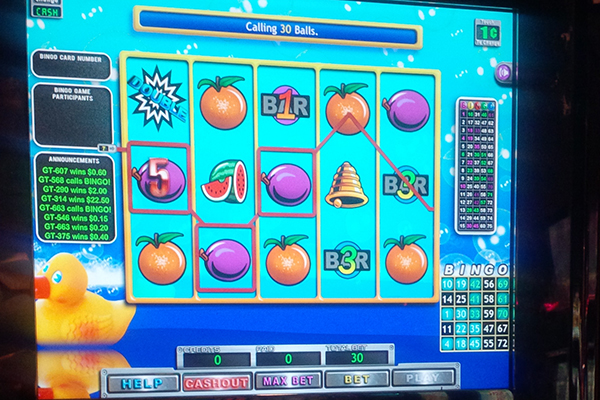
The original 24-page bill, sponsored by Rep. Marcel Black, D-Tuscumbia, seeks to authorize high-stakes, fast-paced electronic “bingo for profit” only at the Birmingham and Mobile racetracks. It also requires operators to designate 20 percent of gross revenues, an estimated $55 million annually, for the Alabama Medicaid program.
In addition, the bill prevents any other bingo operation in the state from using the same casino-style gambling machines, except in Lowndes County.
Initially there were no exclusions, but after a suggestion by “trial lawyers,” the bill was amended in committee to protect Lowndes County’s bingo industry.
Reacting to questions about why Lowndes County garnered the exception, Rep. James Thomas, D-Selma, who represents the county, said, “I guess they want to appease me (noting his role as committee vice chair). They don’t want to touch Lowndes County.”
Thomas indicated “governance” concerns even though he voted to pass the amended bill out of committee. “I want to make sure it doesn’t say one thing and do another.”
HB 577 is a constitutional amendment and would have to be approved by voters in the state before becoming law. While Alabama’s other racetracks — Greenetrack in Greene County and VictoryLand in Macon County — already have legalized electronic bingo, it is unclear how this bill will affect them.
But even with the confusion, committee member A.J. McCampbell, D-Demopolis — who is sponsoring a bill highlighting Greene County’s electronic bingo — still voted to pass HB 577 out of committee.
This is a different position for McCampbell from last year when he voted against a similar piece of legislation sponsored by Black.
“Last year, the legislation would have hurt the people in my district,” he said.
Unofficial reports indicate last year’s legislation on this topic was defeated in part by Greenetrack and/or Greene County supporters because Greenetrack was left out of the bill.
Those same reports indicate a compromise has been reached this year between Greenetrack and the Birmingham racetrack, but these reports could not be confirmed by press time. Neither could details of the compromise be confirmed.
Birmingham attorney Eric Johnston said, “There are a lot of strategies being carried out in the Statehouse, and we don’t know exactly what they are.
“All you can do is see how the lobbyists are reacting and how people are voting to figure out who’s on whose side.”
As far as HB 577 goes, Johnston said, “I believe they’ve written this bill in a very complicated, convoluted way for the purpose of not revealing entirely what they plan to do.
“The bill is written like a puzzle, and they know the key to putting it together,” he said. “So when … it appears to have conflict or not make sense, that’s because we don’t have the key to understand it.”
Still the legislation is being marketed as an opportunity to “contain” electronic gambling to locations that have already legalized gambling.
Black said the bill would stop the proliferation of gambling around the state, citing specifically the explosion of electronic bingo in Walker County.
But when one committee member questioned the bill’s impact on charity bingo operations, Black said those would not be affected.
He said they could continue to operate as they currently do even though many of them use electronic bingo machines similar to those described in HB 577.
However, former U.S. congressman and Birmingham attorney Earl Hilliard said charity bingo operations should be concerned.
According to his understanding, the proposal will eliminate all electronic bingo operations except in the areas noted.
“What (Birmingham and Mobile racetrack owners) are trying to do is get a monopoly,” he said.
Representing “a bingo group” out of Walker County, Hilliard told The Alabama Baptist, “(My clients) do not want to be eliminated.”
And according to the bill’s wording, bingo operators other than in the specified locations using anything other than paper cards or slower, less-sophisticated electronic machines could be guilty of a Class C felony.
Dan Ireland, executive director of ALCAP, is urging legislators to kill this bill.
Supporters of the legislation say they are only voting to allow the people the right to vote, Ireland said, “But the people didn’t ask to vote on this bill. It is not coming from the people.
“HB 577 is just another step to open the door for expanded and increased gambling,” he said. “It will hurt the ones that can least afford it. The money they talk about (going to Medicaid) comes from the pockets of losers.”
Other gambling bills currently going through the legislative process deal with:
- a statewide gambling commission,
- a statewide gambling board,
- the legalization of casino gambling in major cities,
- bingo expansion and regulation in Macon County and
- elimination of electronic bingo in Walker County.
To contact your representative, call 334-242-7600.
To contact your senator, call 334-242-7800.


Share with others: