
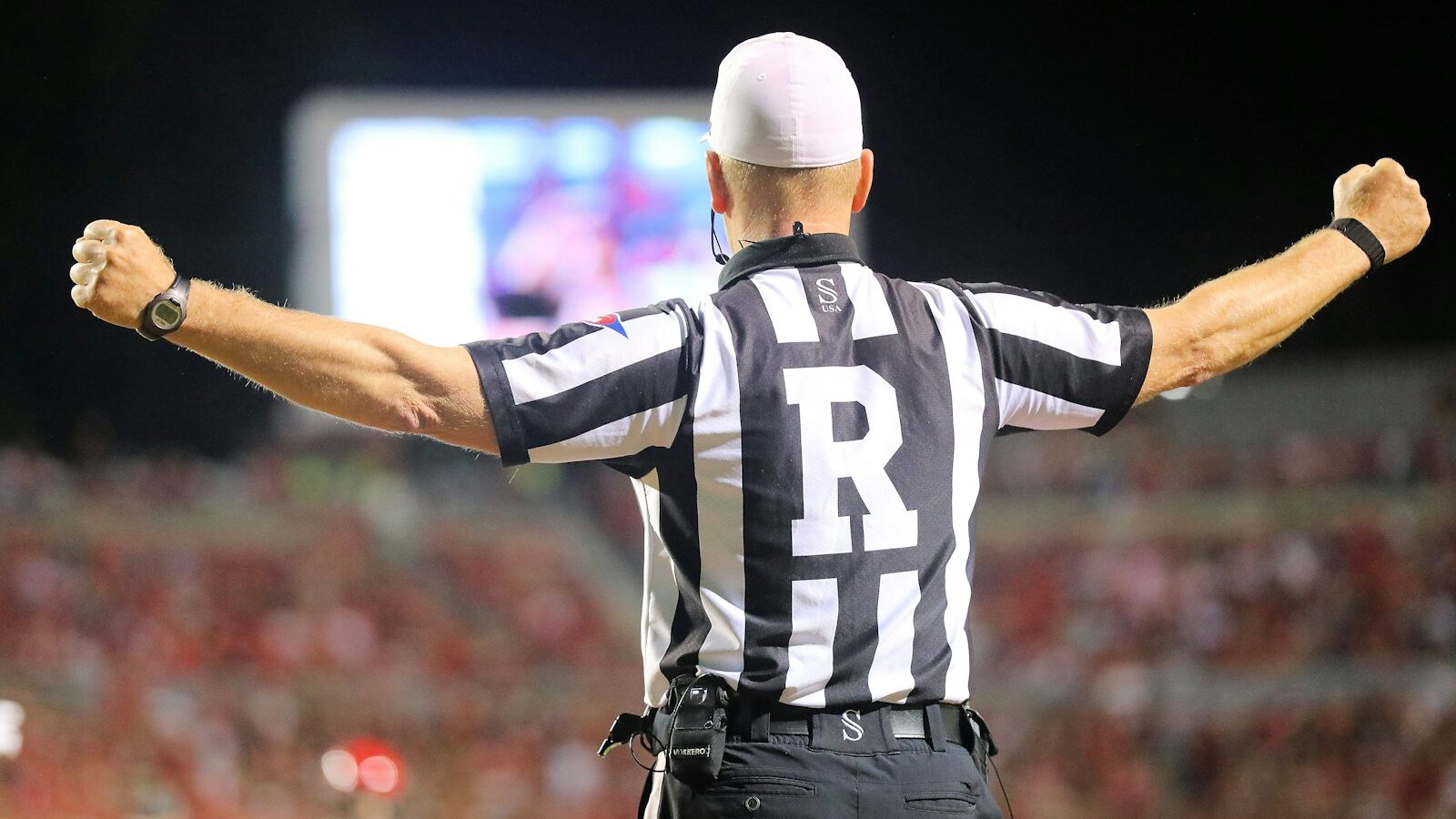
This past weekend’s Auburn–Georgia football game troubled me as a Christian. In full transparency, I have been an Auburn fan since the early 1980s, so I know there are times where my bias on what happened in the game is obvious. But it revealed in me a greater problem we have in the U.S. in how we approach sports, both as fans and as Christians.
The Oct. 11 game between the Tigers and Dawgs was filled with questionable officiating, but what happened Saturday was not just about one bad call or one missed review. That’s part of the game. A clear Auburn touchdown was ruled a fumble. A targeting call and roughing the passer call was debatable and repeated clock stoppages seemed to hand Georgia extra opportunities.
Look to the coaches
One of the most talked about moments came when Georgia Head Coach Kirby Smart made what looked exactly like a timeout signal. Officials honored it, but Smart later insisted he was clapping to alert the referees to get back his time out and not be penalized with a delay of game penalty.
Anyone who has seen him actually clap knows the difference, and his actions were completely different as he explained it to the officials afterwards. When Smart denied it afterward, that was not just evasive, it was dishonest.
A few weeks earlier, in Auburn’s game against Oklahoma, a player feigned leaving the field to score on a wide-open pass. SEC officials later admitted the play was illegal, and it should have been caught. Yet the Oklahoma coaching staff never corrected it publicly. These may seem like small things in the bigger picture of sports, but the bigger picture is the point: what are we teaching when winning matters more than integrity?
‘Cultural idols’

Sports in America have long been more than games. They have become cultural idols. Coaches are hired and fired based on their record, fans pour out money and have emotional breakdowns, and parents rearrange family schedules around youth leagues and tournaments. I have seen Christian parents and fans chase officials into parking lots and hurl racist insults at high school players. I have seen Christian families skip church multiple weeks for Sunday games. We say faith matters most, but our calendars and our tempers often tell a different story.
When Christians excuse “doing what it takes” to win in sports, we are really bowing to the idol of winning. Scripture is clear that all of us fall short, but repentance requires truth. If a coach lies to cover a questionable timeout, that may seem minor compared to other sins, but the message it sends to young athletes is major. If a player cheats by deception and the coach stays silent, the silence speaks louder than any sermon. Kids notice.
Crossing the line
Some may argue that sports are just games, and games have always involved pushing the limits of the rules.
There is some truth to that. Baseball once allowed spitballs until the rule changed. Football once tolerated far more contact before pass interference was defined. There is a difference between exploiting a loophole in the rules and outright cheating. But the line matters, and Christians especially ought to know when it is crossed.
The pressure to win at all costs is not confined to college stadiums. In 2005, Colleyville High School in Texas saw nine players admit to using steroids, and in 2013, ESPN reported a clinic distributing performance-enhancing drugs to high schoolers.
When parents are willing to risk children’s health or even human life for trophies, something has gone terribly wrong.
Can still be tough
I have acted wrongly (especially before I was a Christian), in playing and coaching sports myself, as a Christian I had to repent and turn from that. I will continue to push my players to be tough and fight through adversity, but who they are in Christ is more important now.
We must be honest about what this is: idolatry. It is no different from the ancient Israelites fashioning a golden calf. The object of worship has changed from statues to scoreboards, but the heart problem is the same.
Be honest no matter what
So, what should we do? Fans need to be honest even when it hurts. Georgia fans should admit the officiating was poor. Oklahoma fans should pressure their program to address a cheating play. Auburn fans like myself should acknowledge our own program’s history of scandals. Coaches should speak truthfully, even when it costs them credibility. Programs should discipline players who cheat, even if it means a game lost.
And Christian parents should reconsider what message they send when they push youth sports above church or threaten officials in the name of their child’s success. We should be more concerned with teaching kids to follow Christ than teaching them to hit a curveball.
Winning at all costs is not winning at all. True victory is found in honoring God, even when the scoreboard says we lost. Our children, our culture and our witness depend on it.
EDITOR’S NOTE — Peter Demos, president and CEO of Demos’ Brands and Demos Family Kitchen, is the author of three books, including “On the Duty of Christian Civil Disobedience,” where readers are invited to think critically about their decisions to act or remain silent in the face of unjust policies. He’s also the host of “Uncommon Sense in Current Times.”




Share with others: